The USS Abraham Lincoln crushed their deployment and will return home soon as part of a planned rotation. Details will come but let me be clear: the safety and security of our Sailors and Marines always comes first.
Mission accomplishment. Troop Welfare. This is how we lead.
The Lincoln was extended because the mission demanded it. Deployments are hard. Combat operations make them harder. War is hell and normal routines are disrupted. One of the hardest aspects about warfighting beyond knowingly placing our service members in harm’s way is that even with the best planning and communication, change and uncertainty will always be in play. Our success depends on how we adapt.
Sailors and Marines are expected to dig deep—and they always do. A leader’s responsibility is to take care of their people the best they can while balancing mission requirements. During this deployment we have seen both: the job is getting done and our leaders are taking care of their people.
Unfortunately, the media are trying to paint our warriors as victims. Not only is that dishonest but it takes away the focus on the enemy and the threat it poses against our nation, people, and way of life.
Here is the truth—
266 days deployed.
200 days in a combat zone.
10,000+ sorties.
1.5M lbs. of ordnance dropped.
And retention rates on the ABE are amongst the highest of all carriers.
It is also true—
A small number of mental health cases were treated with no loss of life.
Meal plans were adjusted when fresh resupply was unavailable, without a single meal being missed.
Calls home were limited when the operational threat was too high.
There is no question our young men and women have been pushed to their limits—but they have never broken. They are rightly tired—but have never been out of the fight. However, it is clear, knowing the whole story, our force and their families are not victims. They are the epitome of American strength and resilience.
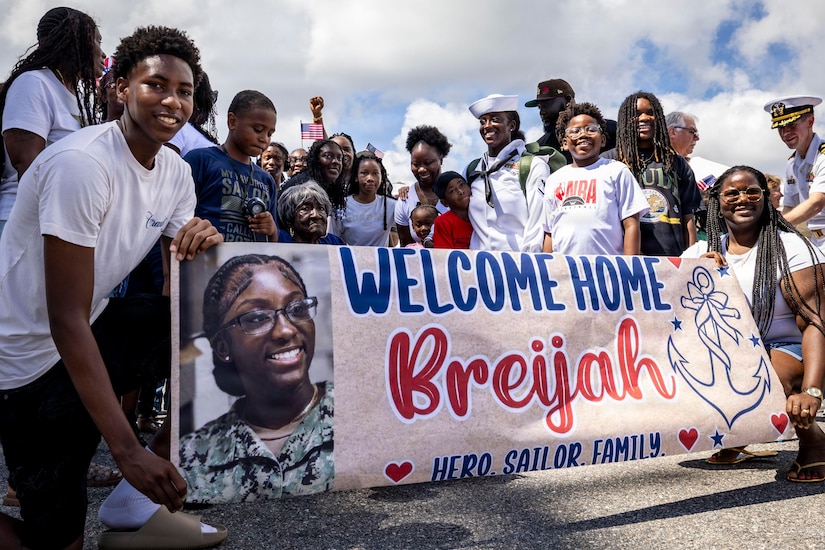
So, when the USS Abraham Lincoln pulls into the pier, join me and stand proudly with a grateful heart and give our Sailors and Marines the Hero’s Welcome they deserve. Semper Fi and Hooyah.
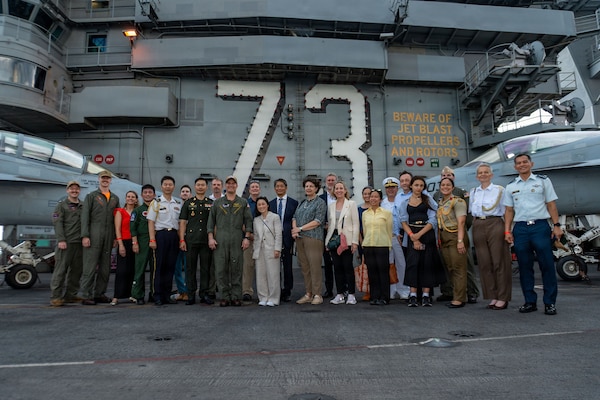
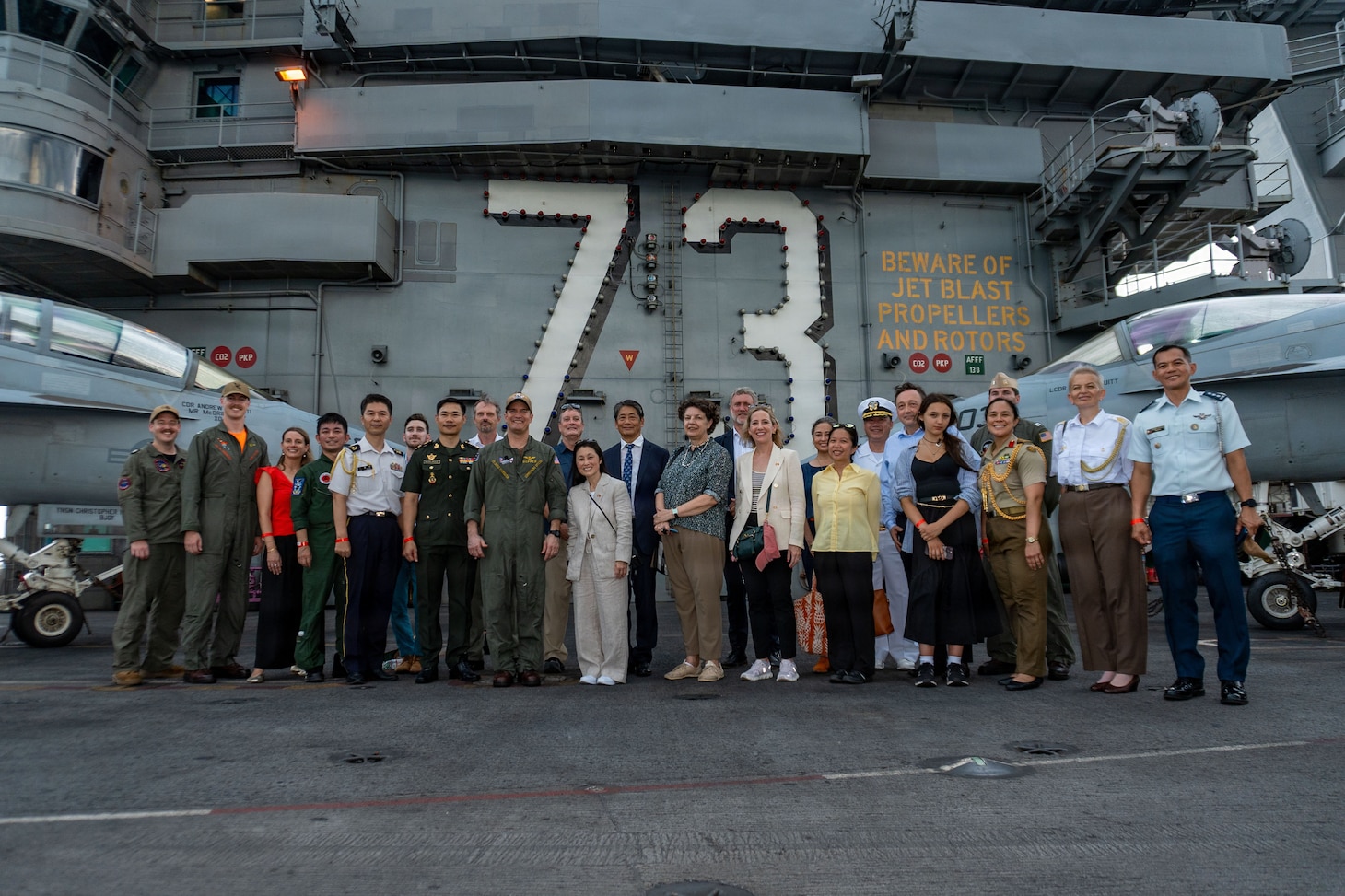
Nimitz-class aircraft carrier USS George Washington (CVN 73), flagship of Carrier Strike Group (CSG) 5, Carrier Air Wing (CVW) 5, Ticonderoga-class guided-missile cruiser USS Robert Smalls (CG 62), and Arleigh Burke-class guided-missile destroyer USS Shoup (DDG 86) departed Da Nang, Aug. 5, 2026, concluding a scheduled port visit that reinforced the enduring partnership between the U.S. and Vietnam.
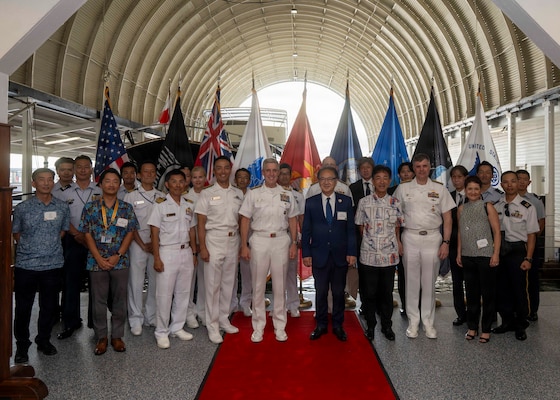
Capt. Nicholas DeLeo, commanding officer of Nimitz-class aircraft carrier USS George Washington (CVN 73), center, poses for a group photo with distinguished visitors on the flight deck during a scheduled port visit to Da Nang, Vietnam, Aug. 3, 2026. George Washington is the U.S. Navy’s premier forward-deployed aircraft carrier, a long-standing symbol of the United States’ commitment to maintaining a free and open Indo-Pacific, while operating alongside allies and partners across the U.S. Navy’s largest numbered fleet. (U.S. Navy photo by Mass Communication Specialist 2nd Class Tyler Crowley)
Upon departure, the George Washington Carrier Strike Group (GWA CSG) and forces from the Vietnamese People’s Navy conducted a bilateral search-and-rescue (SAR) exercise at sea. This cooperative maritime exercise allowed both nations to build upon relationships formed ashore and practice coordinated communication, emergency response, and life-saving procedures in the maritime domain. The U.S. and Vietnamese maritime services work together to improve Vietnam’s ability to maintain bilateral maritime domain awareness.
During the port visit, the leadership and crew of George Washington engaged in a robust schedule of key leader engagements with military counterparts to include a reception with 400 guests from Vietnam, a friendly soccer game between US and Vietnam Sailors, U.S. Seventh Fleet Band concerts, and ship tours for over 450 guests aimed at building trust and highlighting the strengthening U.S.-Vietnam partnership. Each iteration serves to further deepen the network of cooperation that represents the critical importance of maritime partnership.
“Whether we are navigating the complexities of an at-sea rescue exercise or playing a spirited game of soccer on a local field, the goal is the same: building human connections,” said Capt. Nicholas DeLeo, commanding officer of George Washington. “The hospitality shown to our Sailors by the people of Da Nang was world-class. Through these cultural exchanges and cooperative training events, we strengthen the bonds that help maintain peace and stability throughout the region.” The U.S. Navy looks forward to the continued work with the Vietnam People’s Navy and across the Vietnamese Ministry of Defense to advance a free, open, secure, and prosperous region.
The GWA CSG is operating in the U.S. 7th Fleet area of operations. George Washington is the U.S. Navy’s premier forward-deployed aircraft carrier, a long-standing symbol of the United States’ commitment to maintaining a free and open Indo-Pacific, while operating alongside allies and partners across the U.S. Navy’s largest numbered fleet. U.S. 7th Fleet, the Navy’s largest forward-deployed numbered fleet, routinely interacts and operates with allies and partners in preserving a free and open Indo-Pacific.
A multidisciplinary team of recent NPS graduates from the space systems, physics and electrical engineering programs developed a Terahertz Imaging Camera, combining their individual thesis research efforts into a functioning payload set for launch to the International Space Station in 2027. (U.S. Navy photo by Mass Communications Specialist Second Class Abreen Padeken)
At the Naval Postgraduate School (NPS), a team of students and faculty is demonstrating how space innovation is not the product of a single discipline, but the result of tightly coordinated teamwork across time and academic disciplines. Their project, the Terahertz Imaging Camera (TIC), set to launch to the International Space Station (ISS) in 2027, stands as a powerful example of how NPS transforms defense-focused education and applied research into real-world operational capability.
From its earliest stages, the TIC effort has been defined by integration, not just of hardware and software, but of people, expertise and ideas. Several students from NPS’ space systems, physics and electrical engineering programs each took ownership of a piece of the system, working collectively to build a complex payload designed to operate in the harsh environment of space.
“Space systems are inherently multidisciplinary,” said NPS Space Systems Academic Group (SSAG) chair Dr. Wenschel Lan, co-principal investigator (co-PI) for the TIC. “This project gives our students the opportunity to work together with subject matter experts to design, build, test and operate real spaceflight hardware. That collaborative experience is critical to solving real-world problems.”
The project is a low-cost, space-based terahertz (THz) imaging system for remote sensing of atomic oxygen emissions in Earth’s upper atmosphere. These emissions are critical for understanding upper atmospheric dynamics and winds, which impact satellite communications.
They can also be used for identification of human-induced sources of THz radiation, such as spacecraft launch and reentry, as well as other phenomena of interest to the defense and intelligence communities.
The THz band that the TIC surveils lies between microwave (radar) and infrared (thermal imaging) wavelengths and is generally very difficult to detect, according to Dr. Fabio Alves, professor of physics and co-PI for the TIC project.
“We are building a sensor based on metamaterial films that can absorb terahertz waves of specific frequencies with high efficiency,” Alves explained. “The terahertz sensor, designed with the help of physics professor Dragoslav Grbovic and 2025 graduate U.S. Air Force Lt. Col. Jennifer Nolta, is a matrix of more than 3,000 pixels that heat up on terahertz absorption. The heat of individual pixels is probed by an infrared camera on the backside, constructing an image of the terahertz scene.”
Additionally, Alves adds, the focalization optics for the terahertz and infrared portions was designed by U.S. Air Force Maj. Daniel Nelson, also a 2025 graduate.
The TIC was one of seven projects selected through NPS’ inaugural Digital Trident AI Challenge in 2025, with partial funding and in-kind support provided by the NPS Foundation and Alumni Association. Chosen from 38 entries, each of the seven projects takes on key operational problems critical to U.S. national security.
In addition, Alves notes, TIC was selected by NPS’ Consortium for Robotics and Unmanned Systems Education and Research (CRUSER) for seed project funding focused on the study of autonomous surveillance to be implemented in future terahertz sensors.
“The Digital Trident AI Challenge is part of NPS’ effort to explore, experiment with, and operationalize emerging technologies that will have an immediate and advantageous impact on national security challenges,” said Kaitie Penry, director of the NPS Emerging Technology and Innovation Office (ETIO).
Putting that vision into practice, the TIC payload reflects the combined expertise of the interdisciplinary team behind it.
It incorporates a novel microelectromechanical (MEMS)-based sensor, an intricate optics assembly, custom electronics, and a structure engineered to survive launch and on-orbit conditions. Each component represents a specialized challenge, but the true difficulty lies in bringing them all together into a single, functioning system.
Members of the Terahertz Imaging Camera (TIC) team — U.S. Navy Ensign Yvonne Fu and Lt. Joshua McCowan and Marine Corps Lt. Col. Brian Neri, from left — review the technology’s concept of operations in the space systems lab. The TIC is a low-cost, space-based terahertz (THz) imaging system for remote sensing of atomic oxygen emissions and other human-induced sources of THz radiation. (U.S. Navy photo by Mass Communications Specialist Second Class Abreen Padeken)
“The optics assembly, the sensor, the structural design, the electronics … They’re all individual problems,” Lan explained. “But integrating everything into a functional instrument is where the team effort really comes in.”
For the students, that integration began in the classroom and quickly evolved into a shared mission. Many joined the project through coursework before continuing into thesis research, creating a pipeline of contributors who built on each other’s work.
“When I came onto the project, there was a gap in how we interfaced the camera with the onboard systems,” said U.S. Navy Lt. Joshua McCowan, a June 2026 graduate in space systems operations. “That became my role, and from there it grew into my thesis. Everyone kind of found their niche and contributed where they were needed.”
U.S. Marine Corps Lt. Col. Brian Neri, a dual degree graduate in space systems operations and applied physics, said the collaborative nature of the project was one of its biggest draws.
“You’re not just working on your own piece in isolation,” Neri said. “You’re constantly working with others to make sure everything fits together and meets the overall objectives.”
Neri was among a select group of students who had the chance to brief NASA Artemis II pilot and NPS alumnus U.S. Navy Capt. Victor Glover, when he returned to campus in June after his historic lunar mission. Glover picked up on the camera’s potential naval applications, including its ability to detect objects leaving or entering space, and was keen to learn more as the system is finalized and prepared for launch early next year.
Each student’s contribution to the TIC was distinct, but none stood alone.
McCowan focused on camera calibration, ensuring the imaging system could maintain accuracy despite thermal fluctuations in orbit. Neri developed the concept of operations, bringing together NASA requirements, hardware capabilities, and software constraints into a cohesive plan for how the payload will function on the ISS.
Neri’s thesis, entitled “Concept of Operations and Functional Testing of Terahertz Imaging Camera 2.1,” earned an NPS Outstanding Thesis award upon his graduation in June 2026.
“The concept of operations really pulls everything together,” Neri said. “It takes everyone’s work and defines how we actually use the system to achieve the mission.”
Meanwhile, following the steps of 2025 graduate Nolta’s sensor design, Ensign Yvonne Fu worked in the cleanroom fabricating the focal plane array, a delicate sensor built layer by layer from silicon and metals, designed to detect terahertz radiation. Her work required precision and patience, with each step building on the last.
“It’s a long process with a lot of opportunities for things to go wrong,” she said. “But knowing that what you’re building will be part of the final system makes it worth it.”
Ensign Justin Williams approached the project from a modeling perspective, simulating the terahertz signatures the sensor is designed to detect. His work provided critical insight into how the payload will perform once in orbit.
Ensign Andrew Oleson, meanwhile, ensured the entire system could survive launch and operation in space, conducting structural analyses that tied together the physical integrity of all components.
“My work depends on everyone else’s,” Oleson said. “And their work depends on mine. It really shows how interconnected everything is.”
The TIC team didn’t just divide and conquer individual tasks; rather, the team worked continuously to integrate their efforts. Weekly meetings with faculty advisors and other SSAG faculty and staff, provided a forum to share progress, troubleshoot challenges, and refine designs.
“We were constantly presenting what we had done and getting feedback,” McCowan said. “That helped us stay aligned and build off each other’s work.”
This iterative process mirrored real-world engineering environments, where collaboration and communication are essential to success. For Neri, one of the most important lessons came from navigating trade-offs as a team.
“We had to balance complexity, risk and timeline,” he said. “Those decisions weren’t made in a vacuum. They involved discussions across the team, and understanding how one choice would impact everyone else.”
The complexity of the TIC project inevitably brought challenges, many of which required collective problem-solving.
Ensign Justin Williams and Lt. Joshua McCowan demonstrate the Terahertz Imaging Camera (TIC) system’s casing in the space systems lab in NPS’ Bullard Hall. The TIC was one of seven projects focused on key operational problems selected for funding through NPS’ inaugural Digital Trident AI Challenge in 2025, supported by the NPS Foundation and Alumni Association. (U.S. Navy photo by Mass Communications Specialist Second Class Abreen Padeken)
McCowan encountered discrepancies between the camera’s documentation and its actual capabilities, requiring coordination with manufacturers and adjustments to the team’s approach. Williams faced the challenge of learning specialized software with little existing expertise on campus, reaching out to external researchers for guidance while sharing his knowledge with the team. And Fu dealt with the realities of fabrication, where a single mistake could undo hours of work, all while Oleson reconciled simulation data with real-world testing, ensuring the payload’s structural integrity.
Through it all, the team relied on each other.
“Everybody was working toward the same goal,” Neri said. “That made it easier to push through the tough parts.”
Students consistently pointed to the NPS environment as a key enabler of collaboration. Access to specialized labs, equipment and computing resources allowed them to tackle complex problems, while faculty mentorship ensured they had the guidance needed to succeed.
“Everyone here is willing to help,” Neri said. “Whether it’s faculty, staff or other students, there’s always someone you can go to.”
The structure of the program also supports teamwork. Dedicated time for thesis work, combined with regular interactions with advisors and peers, creates a battle rhythm that encourages collaboration rather than competition.
“There’s a shared sense of purpose,” Fu said. “Seeing how hard everyone else is working motivates you to do the same.”
For SSAG leadership at NPS, learning by doing is a hallmark of their approach, exemplified by the group’s active CubeSat program where students conceive, design, build, test, launch, and operate satellites for real missions in orbit. The TIC project builds on this philosophy where the result is more than a technical achievement — it also develops the technical talent of graduates destined to be leaders in the space domain.
“Our goal is to educate our students to understand space fundamentals, apply this knowledge to real-world problems, and inform the fleet on how space affects the users of these assets,” Lan said. “Regardless of where our graduates go for their next tour, they hit the ground running and are able to contribute meaningfully.”
Graduates from the TIC team are already transitioning into their new roles across operational commands and advanced training pipelines, bringing with them the collaborative skills they developed at NPS. Meanwhile, the TIC payload moves closer to deployment on the ISS, representing more than just a technological milestone, but also a collective accomplishment.
For the students, the most memorable aspect of the project wasn’t any single component or breakthrough. It was the experience of working together. “Seeing all the pieces come together into a single system was incredible,” Fu said.
Neri echoed that sentiment.
“We had a phenomenal team,” he said. “Everyone was dedicated, everyone cared, and we were all working toward something bigger than ourselves.”
That spirit of collaboration, built in classrooms, labs and meeting rooms across campus, is what ultimately made the TIC project possible. And as it prepares for launch, the payload carries with it a clear message … At NPS, teamwork isn’t just part of the process — it’s the driving force behind innovation.
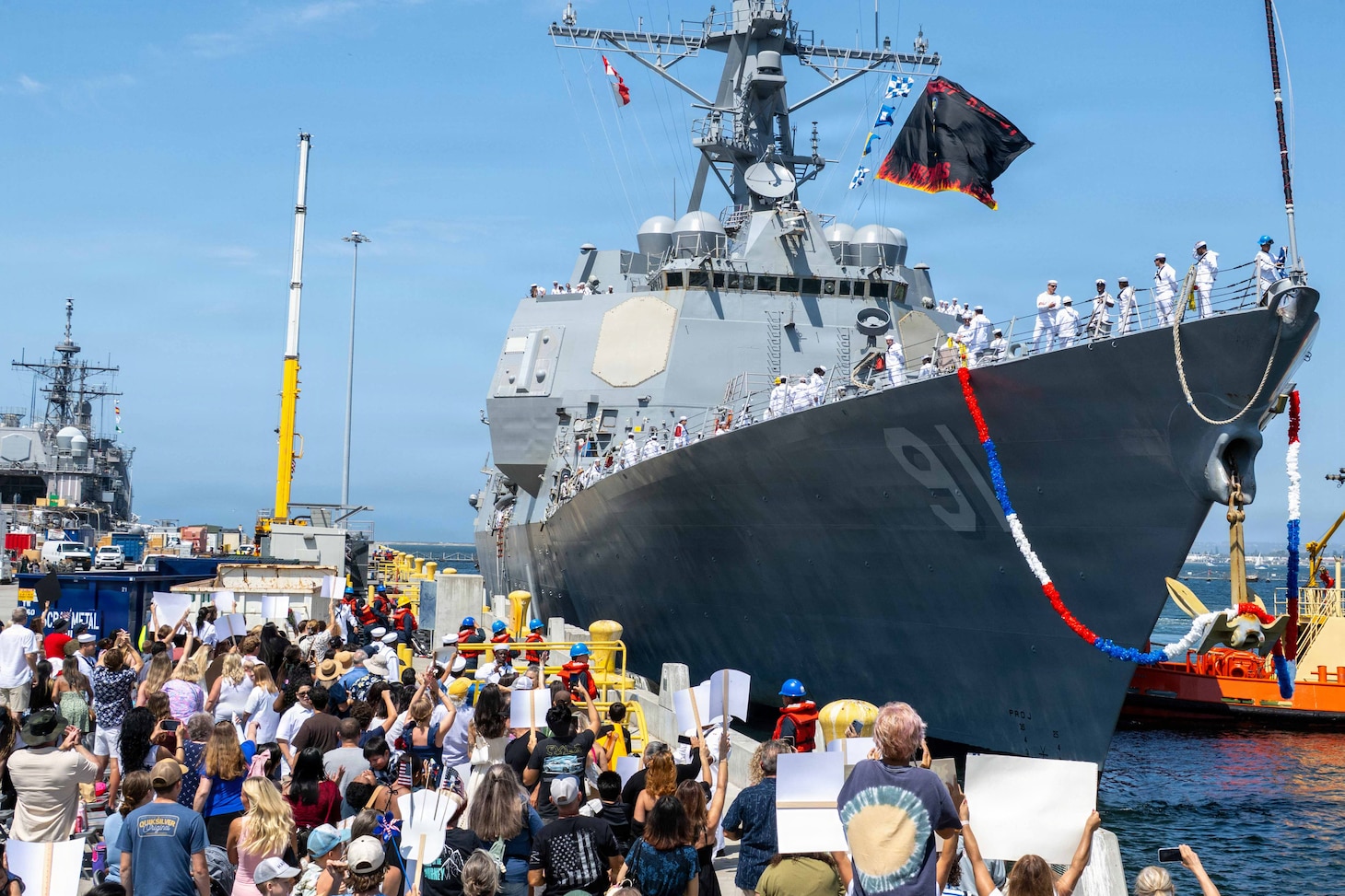
SAN DIEGO – Arleigh Burke-class guided-missile destroyer USS Pinckney (DDG 91) returned to its homeport of Naval Base San Diego, following nine months of operations supporting regional security and combat operations in the Indo-Pacific and Middle East, Aug. 9, 2026.
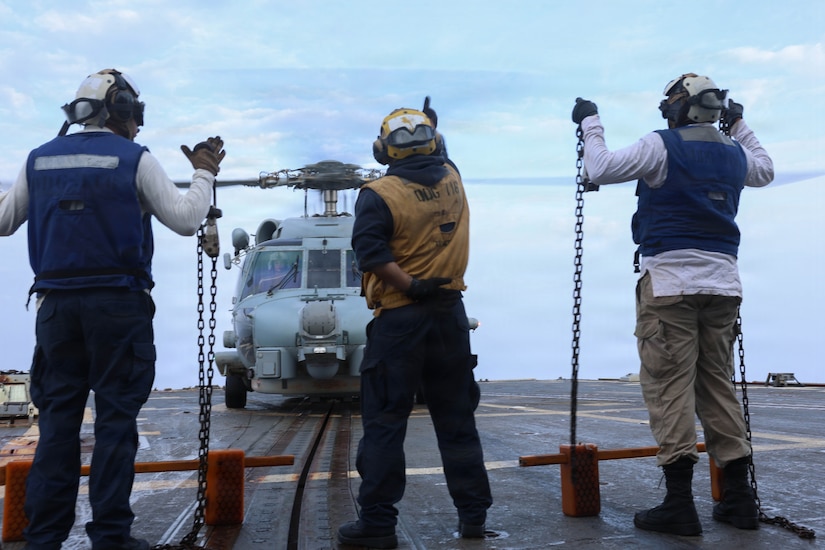
Arleigh Burke-class guided-missile destroyer USS Pinckney (DDG 91) returns to its homeport of Naval Base San Diego, Aug. 9, 2026. An integral part of the U.S. Pacific Fleet, U.S. 3rd Fleet leads naval forces in the Indo-Pacific and provides the realistic, relevant training necessary to execute the U.S. Navy’s role across the full spectrum of military operations. U.S. 3rd Fleet works together with allies and partners to advance freedom of navigation and overflight, the rule of law and other principles that underpin security for the Indo-Pacific region. (U.S. Navy photo by Aviation Boatswain’s Mate (Launching and Recovery Equipment) Airman Aprentice Ethan Oase)
After departing San Diego on Nov. 25, 2025, Pinckney, along with an air wing detachment from Helicopter Maritime Strike Squadron (HSM) 37, conducted operations to strengthen regional partnerships and demonstrate the U.S. Navy’s commitment to achieving peace through strength in the U.S. 7th Fleet.
During a scheduled port visit to Singapore, the crew successfully completed a ship repair and maintenance exercise, showcasing the crew’s ability to conduct maintenance and repair in forward locations. Pinckney’s operations were highlighted by key leader engagements with the U.S. Ambassador to Singapore; Republic of Singapore Navy Commander, First Flotilla; and U.S. Navy Commander, Task Force 76.
As operational requirements evolved, Pinckney’s mission shifted to support operations in the U.S. 5th Fleet. The crew worked alongside other U.S. Central Command (CENTCOM) joint forces in successfully carrying out strikes in support of Operation Epic Fury. During the U.S. naval blockade of Iranian ports, Pinckney and HSM-37 conducted precision maritime interdictions, compelling 11 commercial vessels to comply with CENTCOM directives.
“Pinckney’s Firewalkers answered every mission with professionalism, resilience, and unwavering commitment,” said Cmdr. Timothy DeVall, commanding officer of Pinckney. “Whether operating in the Indo-Pacific or supporting combat operations in the Middle East, our Sailors consistently demonstrated the readiness and adaptability required to execute our mission. I couldn’t be prouder of what this team accomplished.”
Pinckney steamed more than 48,000 nautical miles across U.S. 3rd, U.S. 7th, and U.S. 5th Fleets; completed 534 flight hours; executed 24 replenishments-at-sea; and transited through five strategic waterways.
An integral part of the U.S. Pacific Fleet, U.S. 3rd Fleet leads naval forces in the region and provides the realistic, relevant training necessary to execute our Navy’s role across the full spectrum of military operations – from combat operations to humanitarian assistance and disaster response. U.S. 3rd Fleet works together with allies and partners to advance freedom of navigation and overflight, the rule of law, and other principles that underpin security for the region.
For more news from U.S. 3rd Fleet, visit https://www.dvidshub.net/unit/COM-US3rdFleet. For more news from CSG-3 and Pinckney, visit https://www.dvidshub.net/unit/CSG3.
U.S. 4th Fleet Hosts Multinational Forces for PANAMAX 2026
By L.t.j.g. Paul Archer
MAYPORT, Fla. – “Securing the Western Hemisphere requires seamless cooperation and a unified effort between partner nations,” said Sardiello. “PANAMAX strengthens effective hemispheric command and control so that our combined forces can effectively secure strategic key terrain like the Panama Canal. Safeguarding this maritime crossroads is not just a regional defense priority, but a cornerstone of global economic stability.”
More than 150 Sailors, Marines, and public security forces from 19 separate nations will serve on the CFMCC staff under the leadership of U.S. Navy Rear Admiral Carlos Sardiello, Commander USNAVSOUTH.
This year’s exercise is designed to conduct stability operations in support of a fictitious United Nations Security Council resolution. It provides intensive interoperability training for participating multinational staff and builds partner nation capacity to plan and execute complex operations.
“PANAMAX 2026 is an unparalleled opportunity for partner nations to sharpen their tactical edge and deepen interoperability,” said Mr. Patrick Cooper, Lead Planner for PANAMAX 2026. “This exercise rigorously tests our integration, ensuring our combined forces are fully prepared for any future shared endeavors. In addition to the operational gains, the personal connections made among our partners in the AOR will pay dividends for a generation.”
PANAMAX delivers unique, simulated training opportunities incorporating scripted, event-driven scenarios to maximize interoperability. These scenarios address key aspects of combined operations, such as technology standardization and shared operating procedures.
PANAMAX began in 2003 with three countries—Chile, Panama, and the United States—focusing solely on the maritime security of the Panama Canal. Since that time, it has grown to become the region’s largest coalition command post exercise, ensuring the defense of one of the most strategically and economically crucial pieces of infrastructure in the world.
As the exercise host for the Joint Force Maritime Component Command, USNAVSOUTH/4th Fleet supports SOUTHCOM’s joint and combined military operations. By employing maritime forces in cooperative security operations, the command maintains access, enhances interoperability, and builds enduring partnerships to promote peace, stability, and prosperity throughout the Caribbean, Central, and South American regions.
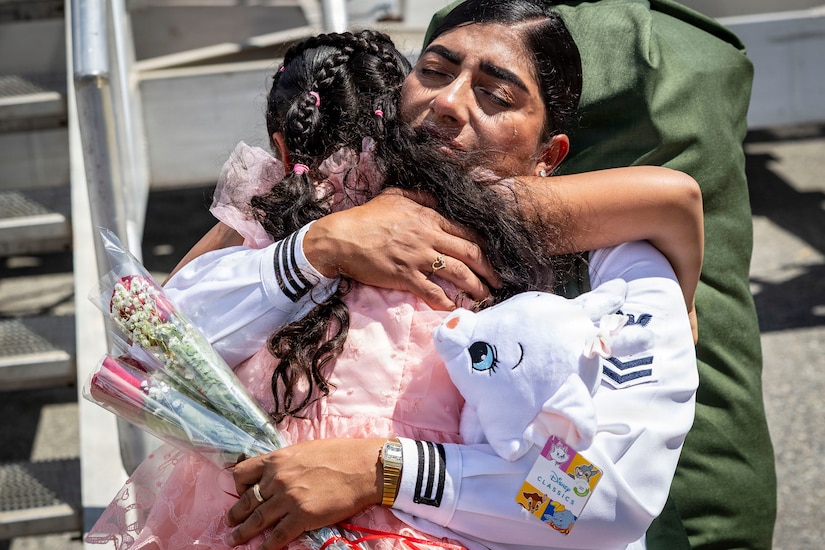
The guided-missile destroyer USS Thomas Hudner returned to Naval Station Mayport, Florida, Aug. 9, concluding an almost nine-month deployment across multiple geographic theaters, including the U.S. 4th, 5th and 6th Fleet areas of operations.
During the deployment, the crew demonstrated exceptional resilience and tactical proficiency across three different fleets, said Navy Cmdr. David Cook, the USS Thomas Hudner commander.
“Their dedication is unmatched, and we are absolutely thrilled to be back in Mayport to reunite with the families and loved ones whose unwavering support made our success possible,” Cook said.
The USS Thomas Hudner is a multimission guided-missile destroyer capable of air warfare, antisubmarine warfare, naval surface fire support and surface warfare. The ship carries approximately 300 sailors.
The ship bears the name of Navy Capt. Thomas J. Hudner Jr., a Medal of Honor recipient who received the nation’s top military honor for his heroic and selfless actions while attempting to save the life of his wingman, Navy Ensign Jesse L. Brown, during the Korean War.
The U.S. 2nd Fleet, reestablished in 2018 in response to the changing global security environment, develops and employs maritime-ready forces to fight across multiple domains in the Atlantic and Arctic to ensure access, deter aggression and defend U.S., allied and partner interests.
From Mass Communication Specialist 1st Class Brian G. Reynolds
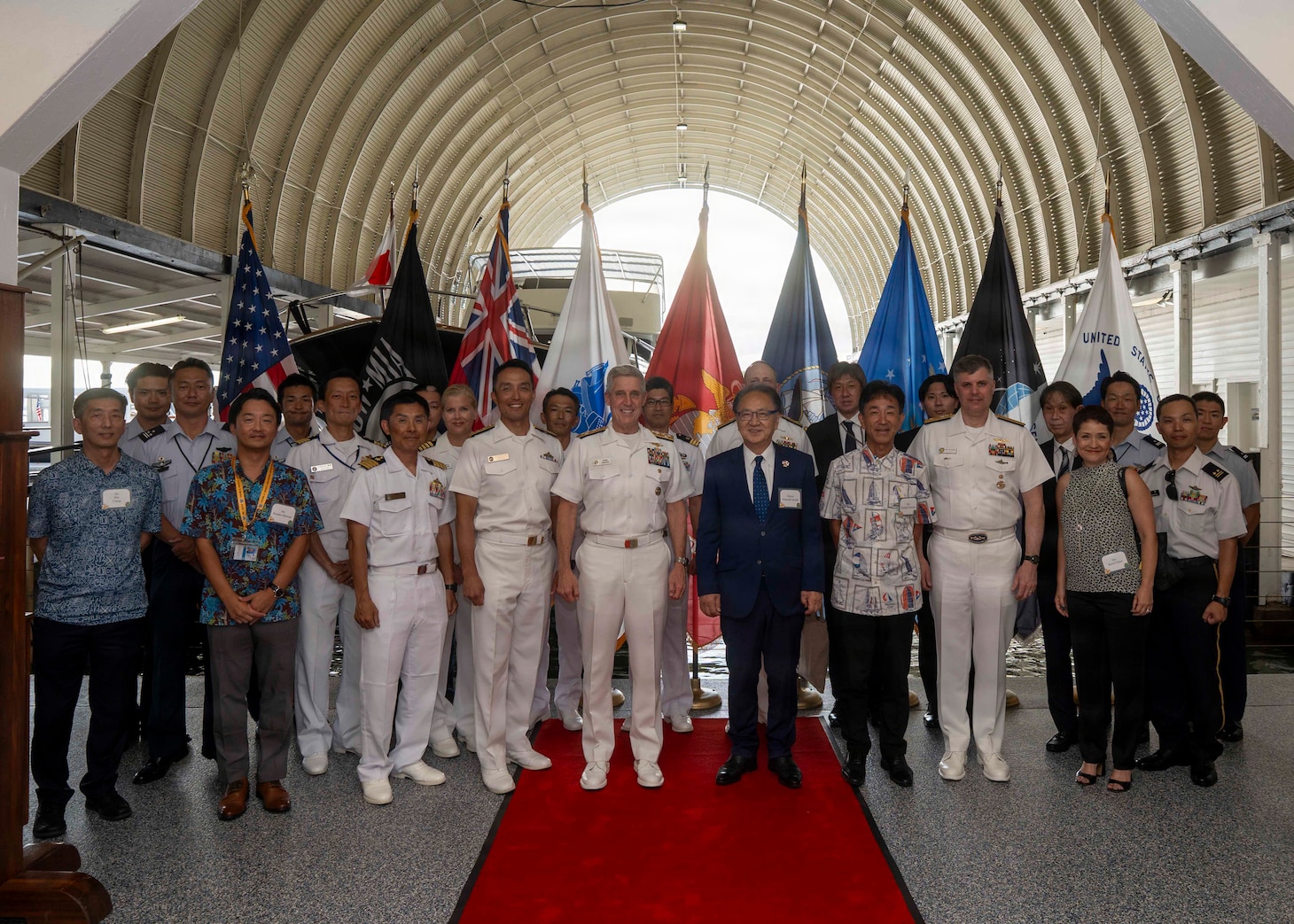
From July 25 to Aug. 1, 2026, the U.S. Navy provided Mayor of Yokosuka Katsuaki KAMIJI a rare opportunity to see the inner workings of the alliance during a trip to Washington D.C. and Hawaii. He was accompanied by Rear Adm. Ian Johnson, commander, U.S. Naval Forces Japan/Navy Region Japan (CNFJ/RJ) and representatives from Commander, Submarine Group 7 and Commander, U.S. 7th Fleet.
U.S. Navy Adm. Steve Koehler, commander, U.S. Pacific Fleet, center left, Katsuaki Kamiji, mayor of the city of Yokosuka, Japan, center right, members of Koehler’s staff, and sailors from the Japan Maritime Self Defence Force pose for a photo at the PACFLT boathouse on Joint Base Pearl Harbor-Hickam, Hawaii, July 29, 2026. Mayor Kamiji is visiting U.S. Navy and U.S. government leaders, demonstrating the key role the city of Yokosuka plays in the U.S.-Japan security partnership. PACFLT delivers combat-ready naval forces to defend the homeland and U.S. interests, provide credible deterrence, and strengthen U.S. alliances and partnerships to ensure a secure and prosperous region. (U.S. Navy photo by Mass Communication Specialist 2nd Class Christopher Sypert)
YOKOSUKA, Japan (Aug. 3, 2026) – Some alliances are built in conference rooms. Others are built over generations. The strength of the U.S. – Japan Alliance is often measured in ships, aircraft, and combined operations. Its foundation is built on something less visible: enduring relationships between people, communities, and leaders.
For nearly 80 years the city of Yokosuka has been a foundational building block of the U.S. Navy’s steadfast relationship with the Japan Self-Defense Force and the government of Japan.
From July 25 to Aug. 1, 2026, the U.S. Navy provided Mayor of Yokosuka Katsuaki KAMIJI a rare opportunity to see the inner workings of the alliance during a trip to Washington D.C. and Hawaii. He was accompanied by Rear Adm. Ian Johnson, commander, U.S. Naval Forces Japan/Navy Region Japan (CNFJ/RJ) and representatives from Commander, Submarine Group 7 and Commander, U.S. 7th Fleet.
The visit was focused on the alliance with Japan and relationships with U.S. Navy and U.S. government leaders, demonstrating the key role the city of Yokosuka plays in the U.S.– Japan security relationship. The visit also addressed the continued focus on nuclear safety regarding nuclear-powered warships forward deployed in the area.
“The U.S.– Japan Alliance is strengthened not only through our military cooperation, but through the enduring relationships we share with our host communities,” said Johnson. “Mayor KAMIJI’s visit reflects our mutual commitment to understanding one another, strengthening our partnerships and ensuring that Yokosuka remains a cornerstone of peace, stability and security throughout the Pacific.”
In Washington, D.C., KAMIJI met with Adm. Daryl Caudle, Chief of Naval Operations, and Vice Adm. Scott Gray, commander, Navy Installations Command, to strengthen mutual trust that is imperative to maintaining the alliance between the Navy and the city of Yokosuka.
“Yokosuka is far more than the home of our forward-deployed naval forces – it’s a community whose friendship, generosity, and steadfast support have strengthened the U.S.-Japan alliance for generations. Meeting with Mayor KAMIJI in Washington – and continuing our conversations over dinner – gave us the opportunity to speak candidly, strengthen mutual trust, and deepen
the personal relationship that underpins our institutional partnership,” said Caudle. “Alliances are ultimately built on trust between people, not just agreements between governments. Those enduring relationships help ensure that our navies, our governments, and our communities continue to stand together in preserving peace, stability, and security throughout the Pacific.”
“Everyone I met spoke about the importance of Yokosuka to the U.S.- Japan alliance and expressed their deep appreciation for the city,” said KAMIJI.
Fleet Activities Yokosuka has hosted the U.S. Navy’s sole forward-deployed nuclear aircraft carrier for the past 18 years. That ship is currently Nimitz-class aircraft carrier USS George Washington (CVN 73). Nuclear safety is an ongoing point of relevance, not only for the installation, but for the citizens of Yokosuka.
KAMIJI also met with Adm. William Houston, director, Naval Nuclear Propulsion Program, Adm. Karl Thomas, U.S. Fleet Forces Command, Vice Adm. Richard Seif, commander, Submarine Force/Submarine Force Atlantic Fleet/Allied Submarine Command, and Rear Adm. Daryle Cardone, Director, Operations and Plans (N3) Office of the Chief of Naval Operations. The Mayor also met with the Japanese Ambassador to the U.S., as well as several national security leaders in the Nation’s capital.
“Yokosuka is the only city outside of the United States where a nuclear-powered aircraft carrier is forward-deployed,” said KAMIJI.“I believe the very presence of this nuclear-powered aircraft carrier is a symbol of the Japan – U.S. Alliance. It is important that nuclear-powered aircraft carriers continue to be operated safely and stably.”
Houston agreed, emphasizing that the safety of nuclear propulsion remains the Navy’s highest priority and is fundamental to maintaining the trust of the people of Yokosuka.
“Our unwavering commitment to safety and environmental stewardship is at the heart of our special relationship with the people of Yokosuka,” said Houston. “Our meetings gave us the opportunity to talk about these shared interests and strengthen our long-standing partnership.”
On July 29, the group departed Washington and arrived at Pearl Harbor, home of the U.S. Pacific Command. While in Hawaii, the group visited with Adm. Stephen Koehler, commander, U.S. Pacific Fleet, Rear Adm. Erik Eslich, Director for Operations (J3) U.S. Pacific Command, and the Consulate General of Japan in Honolulu, as well as Submarine Force U.S. Pacific Fleet. The group also participated in a wreath-laying event at USS Arizona Memorial at the Pearl Harbor National Memorial.
“Standing at Pearl Harbor is a reminder of how far our two nations have come,” said Johnson. “What was once a place marked by conflict now stands as a symbol of one of the world’s strongest alliances. That transformation is possible because generations of Americans and Japanese have chosen partnership over division, and it is our responsibility to continue building that legacy.”
As the delegation returned to Yokosuka, the visit served as more than a series of official engagements. It reaffirmed the enduring partnership between the United States and Japan – one built through decades of trust, shared values and a mutual commitment to peace and security in the Pacific. For the people of Yokosuka, the journey offered a deeper understanding of the relationships that continue to strengthen one of the world’s most enduring alliances.
CNFJ/RJ’s primary responsibility is to provide shore readiness to the fleet; to liaison with the Japanese government; and to strengthen ties with the Japan Maritime Self-Defense Force. CNRJ is responsible for the Navy installations at Atsugi, Misawa, Okinawa, Sasebo, Yokosuka in Japan, and support activities in Diego Garcia, Singapore, and Australia.
NAVAL STATION MAYPORT, Fla. (Aug. 7, 2026) – Freedom-variant littoral combat ship USS Wichita (LCS 13) departed Naval Station Mayport, Aug. 7, to participate in Operation NANOOK TUUGAALIK 2026, the maritime component of Canada’s premier Arctic exercise.
Operating alongside naval forces from Canada, Denmark, and France, Wichita will strengthen interoperability with allied and partner nations while conducting advanced maritime operations across the Labrador Sea, Davis Strait, and Greenlandic fjords. The deployment reinforces shared commitments to regional security, freedom of navigation, and stability throughout the North Atlantic and Arctic.
“Operation NANOOK TUUGAALIK provides an exceptional opportunity to train alongside our closest Allies in one of the world’s most strategically important maritime regions,” said Cmdr. Richard Dunn, commanding officer of Wichita. “Our Sailors are prepared to operate in the High North, strengthen allied interoperability, and demonstrate the professionalism and adaptability that define the U.S. Navy.”
Throughout the exercise, Wichita will participate in maritime domain awareness operations, search and rescue scenarios, tactical maneuvering, and integrated naval training designed to improve multinational coordination in Arctic and sub-Arctic environments.
Operation NANOOK is the Canadian Armed Forces’ signature Arctic operation and demonstrates the collective ability of Allied and partner nations to operate together in the High North. The annual TUUGAALIK maritime phase enhances readiness through realistic training that strengthens interoperability, improves maritime awareness, and reinforces the rules-based international order.
As part of the U.S. Navy’s forward maritime presence, Wichita’s participation reflects the United States’ enduring commitment to Arctic security and cooperation with Allies and partners in an increasingly strategic region.
Reactivated in 2018, U.S. 2nd Fleet commands assigned maritime forces across the western and eastern Atlantic and the Arctic, employing combat-ready naval forces to defend the maritime approaches to the United States, strengthen NATO interoperability, and deter aggression alongside Allies and partners.
For more information, imagery, and updates on Operation NANOOK TUUGAALIK 2026, visit the U.S. 2nd Fleet website or follow @US2ndFleet on social media.
On Aug. 7, 2026, Rear. Adm. Kevin Brown, commander of Naval Medical Forces Pacific (NMFP), relieved Capt. Mathew Loe as commanding officer of Navy Medicine Readiness and Training Command (NMRTC) Lemoore due to a loss of confidence in his ability to command.
Loe served as the NMRTC Lemoore commanding officer since July 2025 and will be temporarily reassigned to NMFP. Capt. Robin Bennett, the executive officer of NMRTC Lemoore, will be temporarily assigned as commanding officer until a permanent relief is identified. The relief of the CO does not impact the command’s operational readiness.
Acting Secretary of the Navy Launches New Academic Year at the U.S. Naval War College
NEWPORT, R.I. – The Honorable Hung Cao, Acting Secretary of the Navy, delivered keynote remarks as the U.S. Naval War College (NWC) began its 2026-2027 academic year with two ceremonies, Aug. 3-4.
On Tuesday, Aug. 4, NWC held its annual Convocation ceremony, welcoming a total of 477 students to the academic year.
Cao, who addressed the Convocation audience virtually from Washington, D.C., called the war college “the leadership laboratory,” urging the enrolled military officers to embrace their roles as leaders, build relationships and stay loyal to their oath, their fellow service members and their allies.
“We’re coming in at a very particular time, with threats looming around the world, but our Navy and Marine Corps are doing the job and securing the pathways,” said Cao. “The strength of our military is not the equipment we have; it’s our Sailors and Marines. As leaders, our one call is to lead those young sailors and Marines the right way. The Naval War College is the leadership laboratory we need, because the first time you meet one another should not be on the battlefield— it should be in places like this where we’re able to share ideas and get to know each other.”
The total of 477 included 292 new students from all six branches of the U.S. armed forces and U.S. federal government agencies, as well as 81 U.S. students continuing into the fall courses after previous November and March enrollments, and another 104 international students from partner and allied nations.
NWC students work to earn Joint Professional Military Education (JPME) credit and either a diploma or a master’s degree in National Security and Strategic Studies or Defense and Strategic Studies.
“Those who enroll in the U.S. Naval War College can expect a rigorous curriculum that will challenge them and, ultimately, forge them into strategists and warfighters who can be successful in any conflict, any time and any place,” said NWC President Rear Adm. Darryl Walker. “Many of the greatest military leaders our nation has seen in the last century and a half have been students or faculty here at the war college. We know there are many future commanders and flag officers among the students in the audience at convocation every year. It’s a proven fact.”
Each year, nearly 500 in-resident students graduate, with 60 percent being selected for command of ships, squadrons and other military units. In the U.S., the college has also produced three Chairmen of the Joint Chiefs of Staff, 15 Chiefs of Naval Operations and 13 other service branch heads.
Additionally, the college welcomes between 100 and 150 foreign officers to the U.S. from around the world each year to study strategy, warfare, decision making, and operational art. Since creating a program for international officers in 1956, the NWC has more than 5,500 international alumni from 145 countries worldwide. Approximately 10 percent of the alumni from the college’s international programs have gone on to become heads of their country’s respective navy.
The day before Convocation, NWC’s annual Cloister ceremony welcomed more than 300 faculty members from the college’s in-resident and distance education programs to celebrate faculty accomplishments and prepare for the academic year ahead.
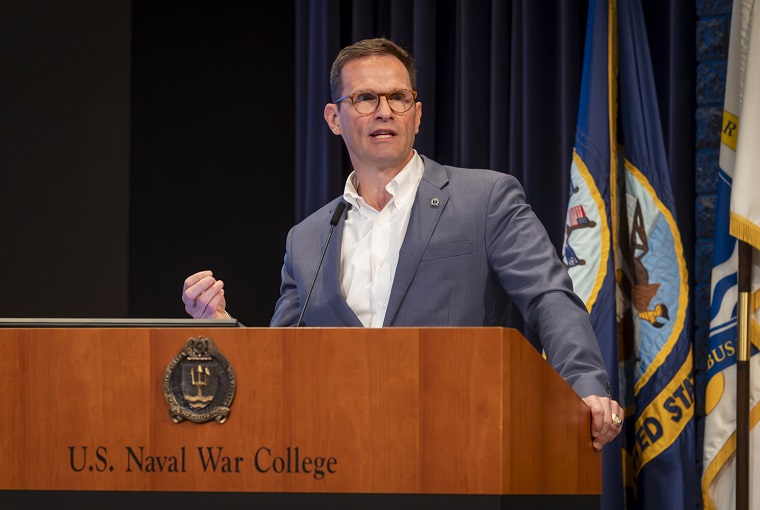
During the event, the faculty was formally introduced to the war college’s new provost – the institution’s top academic officer – retired U.S. Navy Capt. Michael O’Hara, Ph.D. O’Hara previously served as the dean of the college’s Center for Naval Warfare Studies (CNWS).
“As a military and civilian faculty team, we teach in rigorous ways to prepare officers to be critical thinkers,” O’Hara told the assembled faculty during Cloister. “We challenge them through readings, case studies, and seminar discussions to take estimates of situations, to express intent, to consider alternate points of view and counterarguments. We immerse them in practical problems to plan and integrate joint all-domain operations from seabed to space. We wargame them and pit them against thinking opponents who sharpen their abilities to think at the operational-level of war and at the strategic-level, too.”
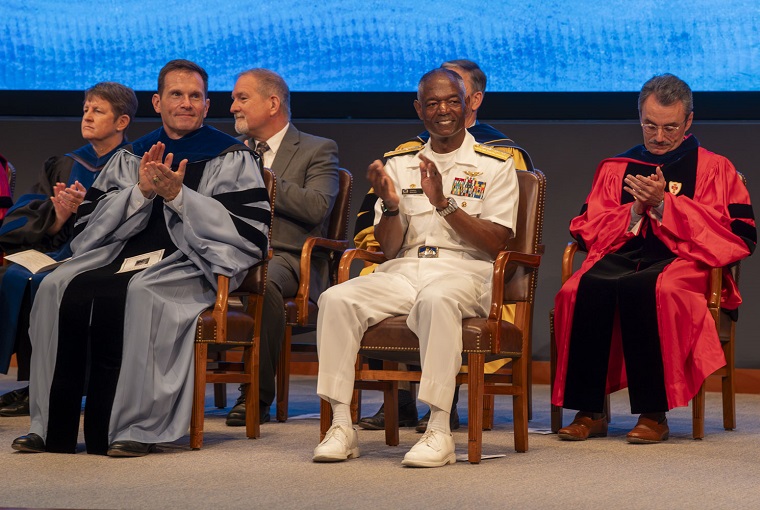
Also during Cloister, faculty members were recognized and presented awards for superior achievements in teaching and research related to their specific disciplines.
Among those recognized were Dr. Michael Poznansky, from CNWS’ Strategic and Operational Research Department (SORD) and Cyber and Innovation Policy Institute (CIPI), and U.S. Marine Corps Lt. Col. Marc Blankenbicker from CNWS’ War Gaming Department, who received the Civilian and Military Faculty Awards for Excellence in Research, respectively, for distinguishing themselves by formulating critical questions, investigating key data resources, and synthesizing and sharing innovative ideas.
Dr. Leigh Ann Perry of the College of Leadership and Ethics (CLE) and U.S. Navy Cmdr. Daniel Post of the Strategy & Policy Department received the Civilian and Military Faculty Awards for Excellence in Service, respectively, for providing excellent service to NWC and the greater community.
Prof. William Murray of SORD and the Halsey Bravo Research Group and U.S. Marine Corps Lt. Col. Matthew Rohlfing of the Maritime Advanced Warfighting School (MAWS) received the Civilian and Military Faculty Awards for Excellence in Teaching, respectively for providing a superb academic environment and educational experience for their students.
Retired U.S. Navy Capt. Thomas Mangold, Dr. Michael Martin, Dr. Robert Tomlinson, Dr. Mary Thompson-Jones and Dr. Donald Marrin were awarded status as emeritus professors, honorary titles that are carried into retirement and denote distinguished accomplishment during their careers as faculty.
Established in 1884, NWC informs today’s decision-makers and educates tomorrow’s leaders by providing educational experiences and learning opportunities that develop their ability to hedge aggressively, innovate continuously, fight distributively, delegate confidently, and command with clarity within complex battlespaces.
 Download


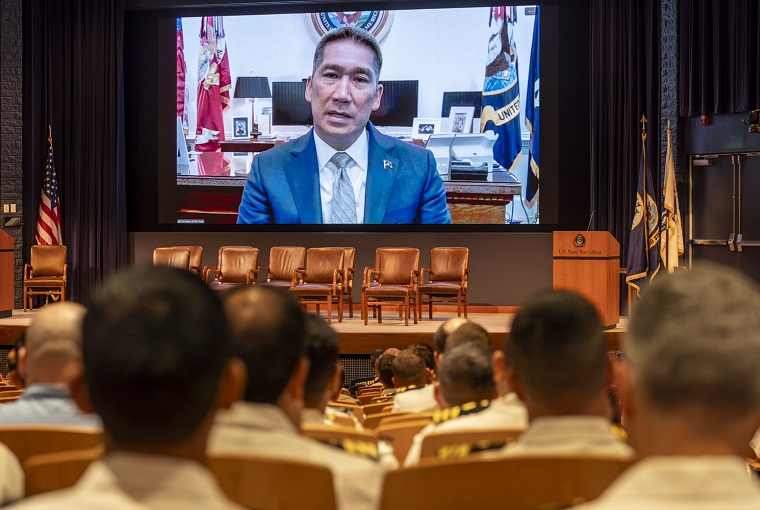
 “We’re coming in at a very particular time, with threats looming around the world, but our Navy and Marine Corps are doing the job and securing the pathways,” said Cao. “The strength of our military is not the equipment we have; it’s our Sailors and Marines. As leaders, our one call is to lead those young sailors and Marines the right way. The Naval War College is the leadership laboratory we need, because the first time you meet one another should not be on the battlefield— it should be in places like this where we’re able to share ideas and get to know each other.”
 Each year, nearly 500 in-resident students graduate, with 60 percent being selected for command of ships, squadrons and other military units. In the U.S., the college has also produced three Chairmen of the Joint Chiefs of Staff, 15 Chiefs of Naval Operations and 13 other service branch heads.
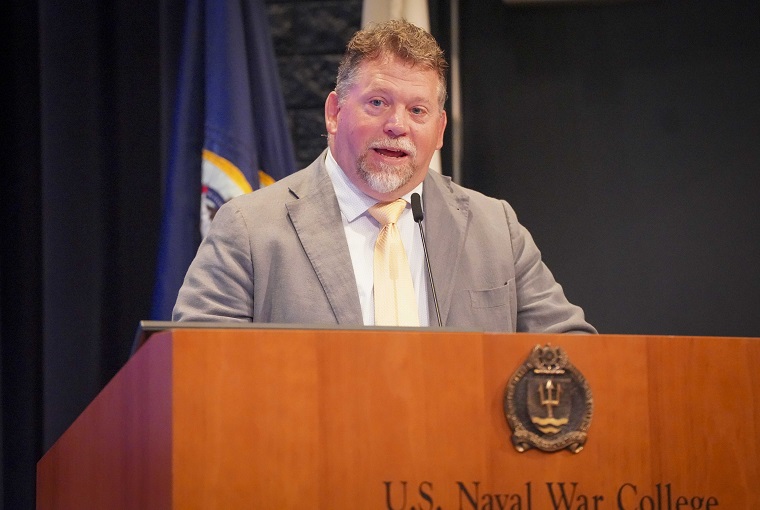 Also during Cloister, faculty members were recognized and presented awards for superior achievements in teaching and research related to their specific disciplines.