Defense News in Brief: 55th Wing arrives in Australia for Talon Shield, reinforcing global partnerships, combat readiness

Source: United States Airforce

Talon Shield centers on strengthening joint operational readiness and highlights the U.S. Air Force’s AFFORGEN model — a deliberate force presentation strategy designed to ensure mission-ready Airmen are trained, equipped and deployable on demand.

The 55th Wing has arrived in Australia, launching the execution of Talon Shield. This high-end training event reinforces the U.S. Air Force’s ability to project power, integrate with allies, and execute from forward locations. Talon Shield is part of the larger exercise, Talisman Sabre, which will bring together more than 30,000 personnel from 19 countries across the Indo-Pacific region.

Talon Shield centers on strengthening joint operational readiness and highlights the U.S. Air Force’s Air Force Force Generation, or AFFORGEN, model — a deliberate force presentation strategy designed to ensure mission-ready airmen are trained, equipped and deployable on demand. The 55th Wing is executing the exercise under a Strategic Deployable Combat Wing construct, demonstrating how smaller, agile teams can operate from distributed locations while remaining fully connected to the joint fight.

“We are grateful to our partners, the Royal Australian Air Force, for hosting our large contingent for Talon Shield,” said U.S. Air Force Col. Aaron Gray, 55th Wing commander. “We are learning from each other and demonstrating the ability to project power and deeply integrate anywhere on the globe. We are excited to be a part of such an expansive exercise demonstrating not only readiness, but the strength of our relationships.”
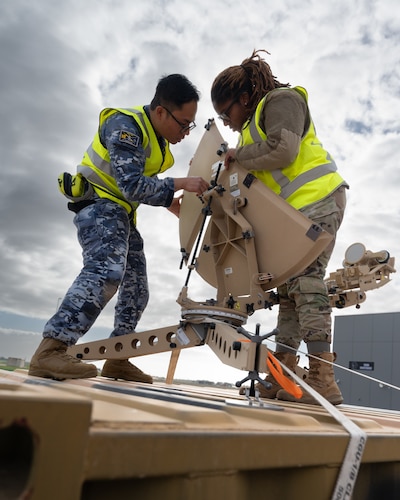
RAAF and U.S. Airmen setup a satellite dish.
Aircraftman Trung Nguyen, Royal Australian Air Force 10 Squadron network technician, and U.S. Air Force Senior Airman Iris Morris, 55th Communications Group client systems technician, sets up a satellite dish during Talon Shield at RAAF Base Edinburgh, South Australia July 10, 2025. The dish provides connection to secured satellites for a secret internet protocol router network. (U.S. Air Force photo by Tech. Sgt. Chris Thornbury)

Two key partners joined the 55th Wing: the 319th Reconnaissance Wing from Grand Forks Air Force Base, North Dakota, and the 552nd Air Control Wing from Tinker AFB, Oklahoma. Together, these wings deliver advanced intelligence, surveillance and reconnaissance, or ISR, airborne command and control, or C2, and electromagnetic warfare capabilities — key enablers in ensuring joint force superiority.

“Our integration with the 55th Wing and our Australian hosts underscores the real-world relevance of airborne battle management,” said U.S. Air Force Col. Kenneth J. Voigt Jr., 552nd Air Control Wing commander. “This exercise proves that our globe-spanning partnerships are more than symbolic; they are operationally decisive.”

Standing up a Strategic Deployable Combat Wing model in Australia demanded meticulous planning, cross-unit synchronization and a united logistics effort spanning three major wings across the continental United States. The combination of these three critical wings delivers unique capabilities and complex support requirements, which the team merged into a single, agile, forward-deployed force package.

The 55th Wing coordinated the deployment of nearly 200 personnel across multiple specialties essential to the mission, including aircraft maintenance, operations, intelligence, communications, security forces, logistics and personnel support. This diverse team formed the backbone of the Strategic Deployable Combat Wing, ensuring 24/7 operational readiness upon arrival.
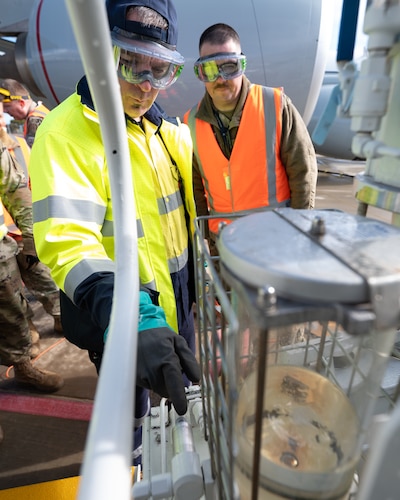
Fuel test performed before refueling an RC-135V/W Rivet Joint.
Aaron Semrau, UGL aircraft refueler, tests the fuel before refueling an RC-135V/W Rivet Joint with 319th Logistics Readiness Squadron fuels management Airmen at Royal Australian Air Force Base Edinburgh, South Australia, June 10, 2025. The test ensures that the fuel is free of water and other particulates that could damage aircraft. (U.S. Air Force photo by Tech. Sgt. Chris Thornbury.

Alongside the personnel deployment, the wing moved more than 55 tons of cargo — including mission-critical systems, maintenance equipment, aircraft support tools, communications infrastructure and sustainment supplies. Load plans, cargo tracking and customs documentation were meticulously executed to align international movements and ensure seamless setup at RAAF Base Edinburgh.

“Agile operations require more than speed; they require precision, trust and disciplined coordination,” Voigt said. “What we accomplished here wasn’t just a movement of forces; it was a demonstration of how strategic planning and interoperability give us the edge in contested environments.”

The scale of this deployment required inter-theater coordination, including direct collaboration with the U.S. Transportation CommandPacific Air Forces logistics planners and Australian base support teams. Lodging, local transportation, in-country movement of mission assets and 24/7 sustainment operations were pre-planned in close partnership with the RAAF, whose responsiveness and interoperability were essential to mission success.

Moreover, leveraging RAAF systems and infrastructure, from flightline equipment and communication systems to cargo handling, allowed the U.S. team to remain agile and minimize its footprint, further proving the effectiveness of allied integration in contested and resource-constrained environments.

“This was a full-scale logistical operation that spanned hemispheres,” said U.S. Air Force Col. Alfred Rosales, 319th Reconnaissance Wing commander. “Our ability to seamlessly arrive, set-up and operate with the RAAF shows what allied nation integration looks like in action. It’s not theory, it’s a capability realized.”

This operation wasn’t just about transportation and the timeline; it was about building a combat-ready team, fully integrated and postured to execute the mission from Day One. Across the Pacific, every moving piece — from aircraft and equipment to fuel plans and lodging — was orchestrated to ensure airmen could arrive, plug in and immediately contribute to the fight. That level of precision and purpose is what defines the 55th Wing’s approach to combat preparation.

“Standing up a Strategic Deployable Combat Wing takes relentless focus and a warfighter mindset from every Airman involved,” Gray said. “We mobilized, arrived ready, integrated with the BMC2 enterprise, other ISR assets and allies. We delivered a large force package of decisive airpower.”

This level of integration, complexity and speed demonstrates that the AFFORGEN model is not just a concept; it’s a reality in motion. Through Talon Shield, the 55th Wing and its partners are proving that globally integrated, rapidly deployable and interoperable airpower is not only possible, but operationally decisive.
 

Defense News in Brief: Talisman Sabre 2025 Begins with Record Participation and Enduring Purpose

Source: United States Navy

SYDNEY, Australia — Exercise Talisman Sabre 25 formally commenced today from the flight deck of HMAS Adelaide in Sydney Harbor, launching military activities involving 19 nations and over 30,000 service members across land, sea, air, space, and cyberspace. This marks the largest bilateral military training event between the United States and Australia to date.

Defense News in Brief: USS Mount Whitney Returns to Homeport

Source: United States Navy

GAETA, Italy – The Blue Ridge-class command and control ship USS Mount Whitney (LCC 20) returned to homeport in Gaeta, Italy, after operating in the Mediterranean Sea, Atlantic Ocean, and Baltic Sea. The underway underscored the U.S. Navy’s commitment to regional security and strong partnerships with European and African nations.

Defense News in Brief: Sea Breeze 25-2 Concludes Showcasing Unified Mine Warfare Capabilities off UK Coast

Source: United States Navy

PORTLAND PORT, England – Exercise Sea Breeze 25-2 officially concluded following two weeks of multinational mine countermeasure operations in the waters off the United Kingdom’s southern coast July 11, 2025.

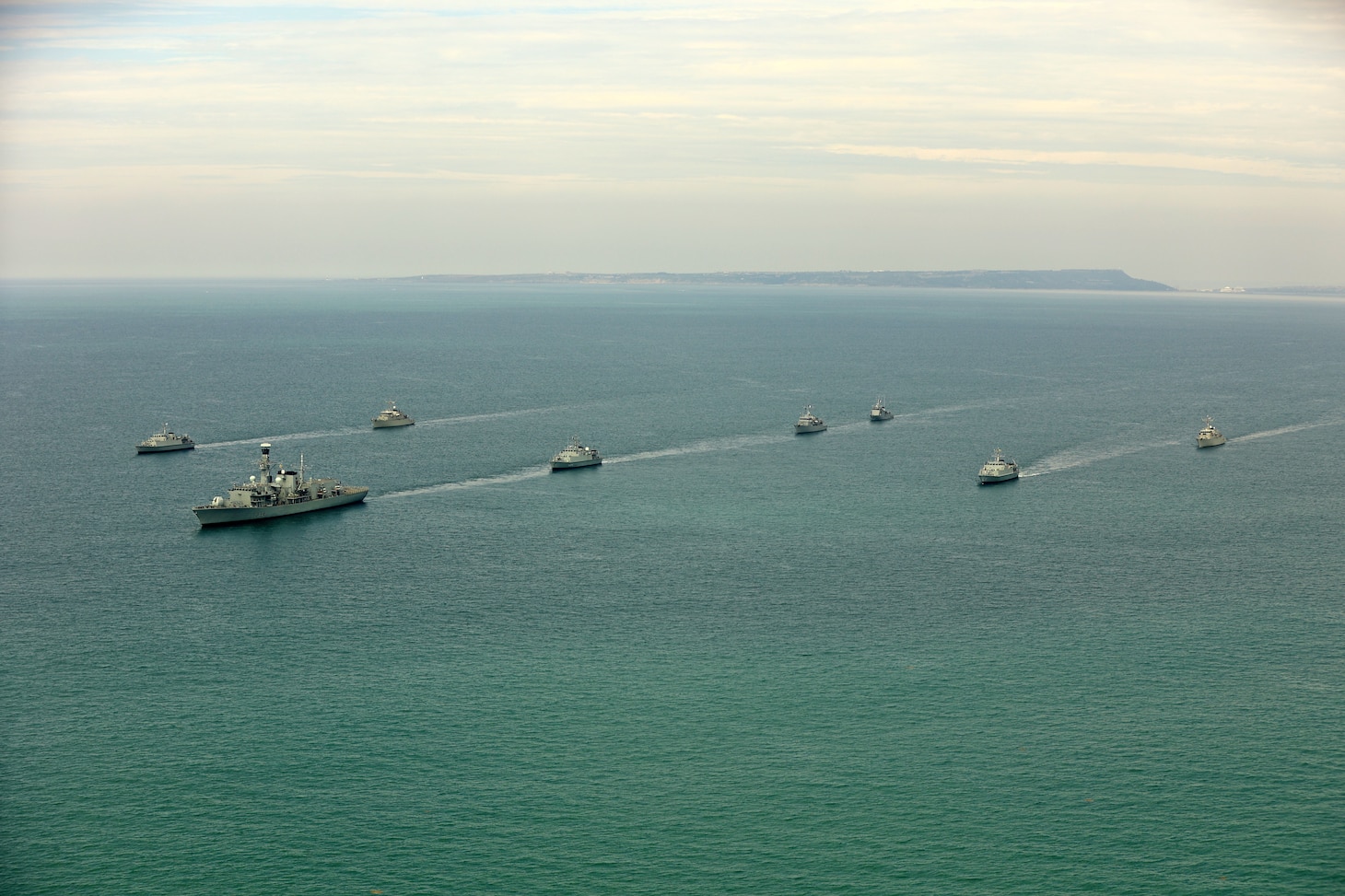
Ships assigned to the Sea Breeze 2025-2 Mine Countermeasures (MCM) Task Group sail in formation. Sea Breeze is an annual maritime exercise aimed at building collective capability and agility to restore security and stability in the dynamic Black Sea.
Ships assigned to the Sea Breeze 2025-2 Mine Countermeasures (MCM) Task Group sail in formation. Sea Breeze is an annual maritime exercise aimed at building collective capability and agility to restore security and stability in the dynamic Black Sea. Sea Breeze 2025-2 is focused on mine countermeasure, explosive ordnance disposal, dive operations, and unmanned underwater vehicles. (U.S. Navy Courtesy Photo)


Exercise Sea Breeze 25-2 officially concluded following two weeks of multinational mine countermeasure operations in the waters off the United Kingdom’s southern coast July 11, 2025. Naval forces from 14 nations, including NATO allies and partners, demonstrated coordination and enhanced interoperability in a dynamic maritime environment.

From June 30 to July 11, participating forces from Bulgaria, Denmark, Estonia, France, Georgia, Greece, Latvia, Poland, Spain, Sweden, Türkiye, the United Kingdom, and the United States conducted joint mine hunting operations, dive and salvage missions, explosive ordnance disposal, and the deployment of cutting-edge robotic and autonomous systems (RAS).

The culminating demonstration showcased a unified application of these capabilities, reinforcing the collective strength and cohesion of participating nations in high-intensity, multi-domain scenarios.

“The U.S. Navy’s mission is to keep the seas open. Mines restrict that. Our MCM force is small, so we rely heavily on partners and allies. These exercises ensure we can interoperate and conduct mine countermeasure operations together,” said Capt. William Williams, the commodore of Mine Countermeasures Group 6.

At the center of the exercise was a fully integrated, combined headquarters that executed advanced staff planning, targeting operations, and command-and-control across a coalition force. The inclusion of RAS, electronic warfare integration, and real-time situational awareness significantly expanded the participating nations’ capacity to operate across domains.

This year, Exercise Sea Breeze 2025 occurred in two iterations, Sea Breeze 25-1 and 25-2. The first iteration, Sea Breeze 25-1, was hosted by the Romanian Armed Forces at Smardan Range, Romania, June 1-20, 2025.

Since 1997, Exercise Sea Breeze has brought together Black Sea nations, NATO Allies and partners together to train and operate with NATO members in the pursuit of building increased capabilities. Exercise Sea Breeze 2025 is an annual multinational maritime exercise, involving sea, land, and air components co-hosted by the United States and Ukraine to enhance interoperability and capability among participating forces.

Commander, U.S. 6th Fleet, headquartered in Naples, Italy, conducts the full spectrum of joint and naval operations, often in concert with allies, international partners, and other U.S. government departments and agencies to advance U.S. national interests, security, and stability in Europe and Africa.

Defense News in Brief: SecAF, CSAF visit Whiteman AFB following Operation Midnight Hammer

Source: United States Airforce

Department of the Air Force leaders commended top performers within the 509th and 131st Bomb Wings during a visit to Whiteman AFB.

Secretary of the Air Force Troy Meink and Air Force Chief of Staff Gen. David Allvin visited Whiteman Air Force Base on July 10 to commend Airmen on the success of Operation Midnight Hammer.

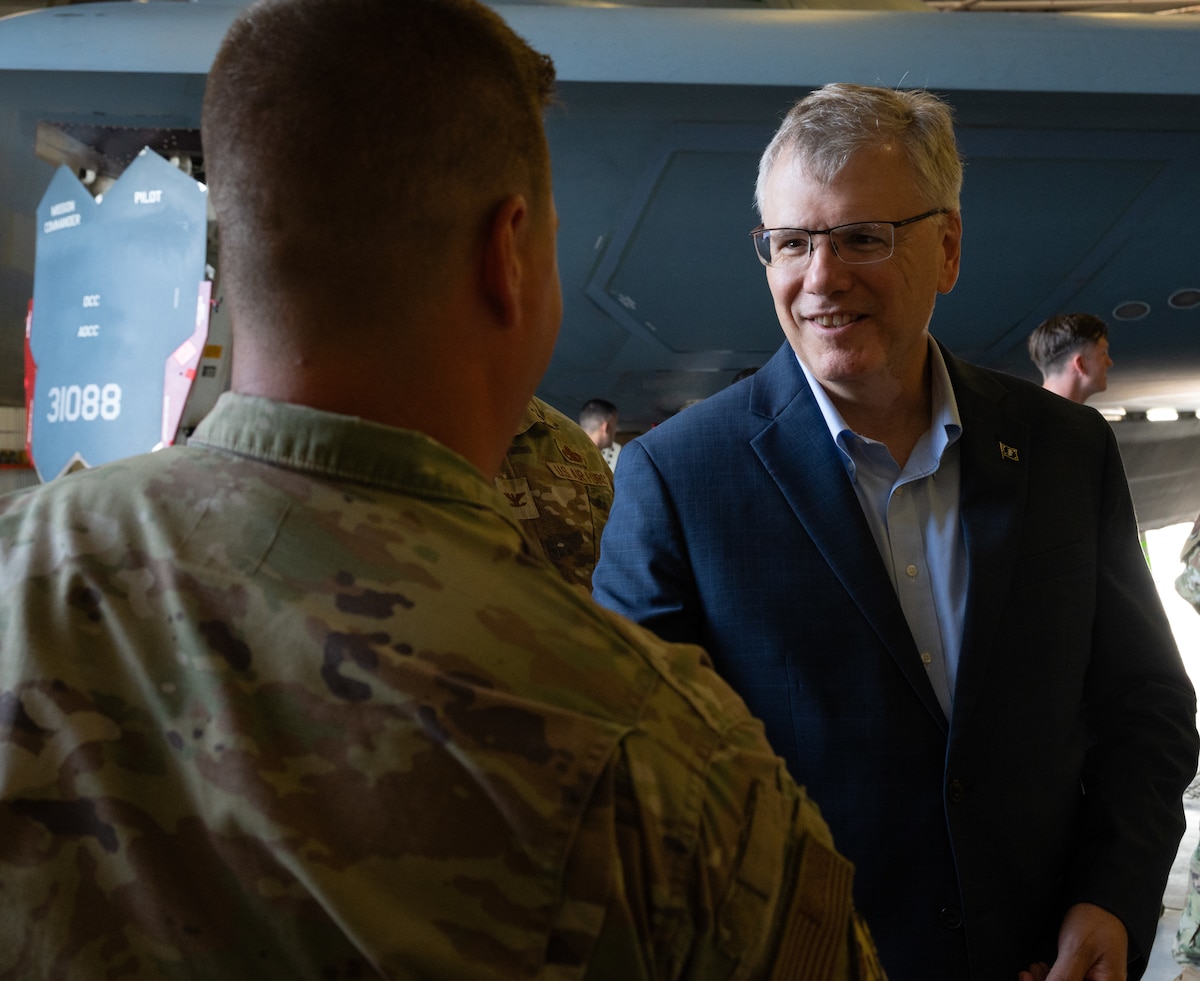
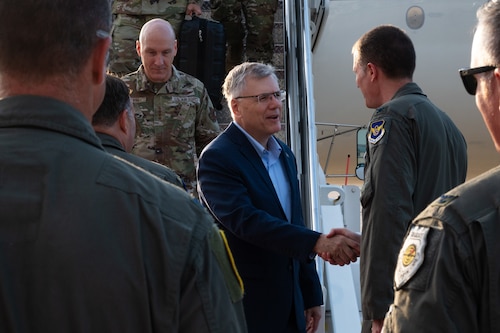
U.S. Air Force Col. Joshua Wiitala, 509th Bomb Wing commander, right, greets Secretary of the Air Force Troy Meink at Whiteman Air Force Base, Missouri, July 10, 2025.
Secretary of the Air Force Troy Meink is greeted by Col. Joshua Wiitala, 509th Bomb Wing commander, at Whiteman Air Force Base, Mo., July 10, 2025. Department of the Air Force leaders visited Whiteman AFB to commend members following Operation Midnight Hammer, the largest B-2 Spirit operational strike in U.S. history. (U.S. Air Force photo by Senior Airman Joseph Garcia)

The June 21 operation saw seven B-2 Spirit deliver an overnight strike on three Iranian nuclear facilities, the largest B-2 operational strike in U.S. history. In a timeline of just weeks, members of the 509th and 131st Bomb Wings turned strategic planning of an unprecedented operation into global execution.

“The success of this mission demonstrates the precision and potency of a combat-ready Air Force and strategic innovation,” Meink said. “The warfighting capability of the Total Force Airmen here and the B-2 Spirit was tested with the world watching, and Team Whiteman performed flawlessly.”

The complex operation incorporated decoy bombers that flew west over the Pacific Ocean. This deceptive tactic was known ahead of time by only a select few mission planners at Whiteman AFB and key leaders at the Pentagon and U.S. Central Command headquarters. The seven aircraft that executed the mission deployed a total of 14 GBU-57 Massive Ordnance Penetrators, which was the first operational use of the “bunker buster” bombs.

Secretary of the Air Force Troy Meink coins an Airman at Whiteman Air Force Base, Missouri, July 10, 2025.
Secretary of the Air Force Troy Meink coins an Airman at Whiteman Air Force Base, Mo., July 10, 2025. Department of the Air Force leaders visited Whiteman AFB to commend members following Operation Midnight Hammer, the largest B-2 Spirit operational strike in U.S. history. (U.S. Air Force photo by Senior Airman Joseph Garcia)

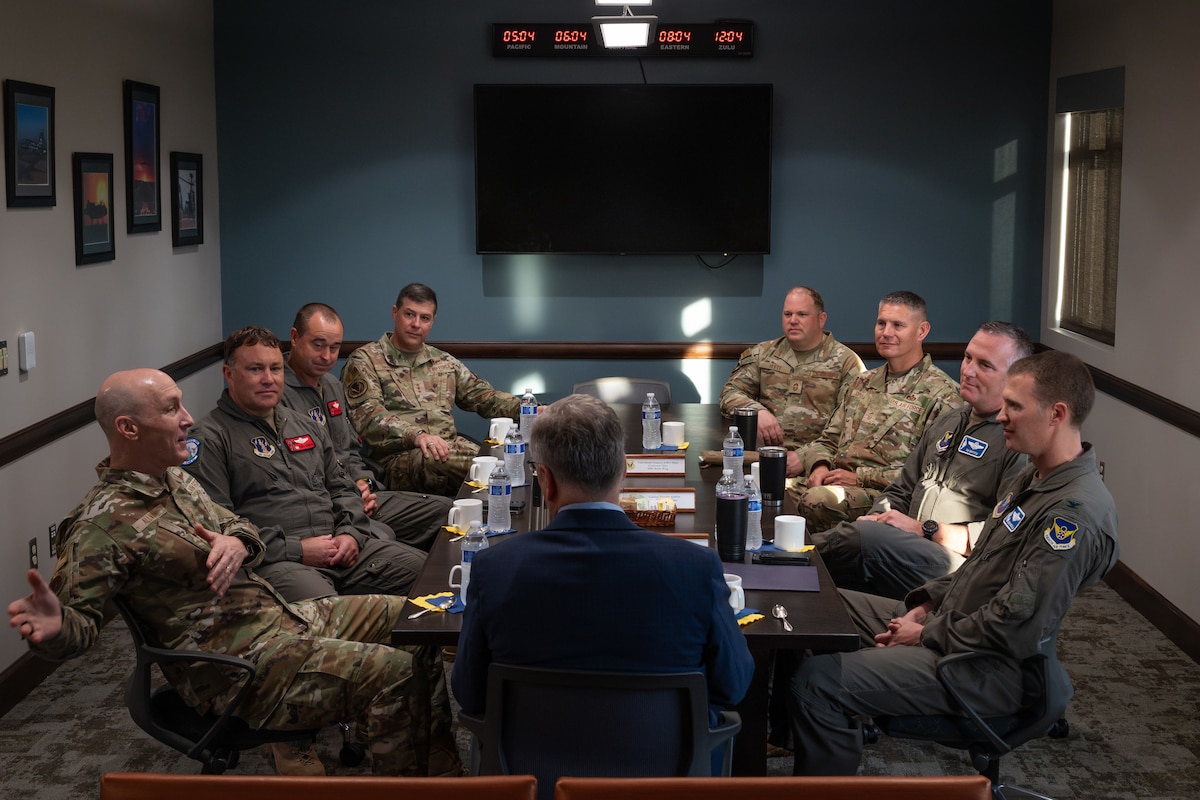
Secretary of the Air Force Troy Meink and Air Force Chief of Staff Gen. David Allvin meet with members of the 509th and 131st Bomb Wing leadership team at Whiteman Air Force Base, Missouri, July 10, 2025.
Secretary of the Air Force Troy Meink and Air Force Chief of Staff Gen. David Allvin meet with members of the 509th and 131st Bomb Wing leadership team at Whiteman Air Force Base, Missouri, July 10, 2025. Department of the Air Force leaders commended top performers within the 509th and 131st Bomb Wings during the base visit. (U.S. Air Force photo by Senior Airman Joseph Garcia)

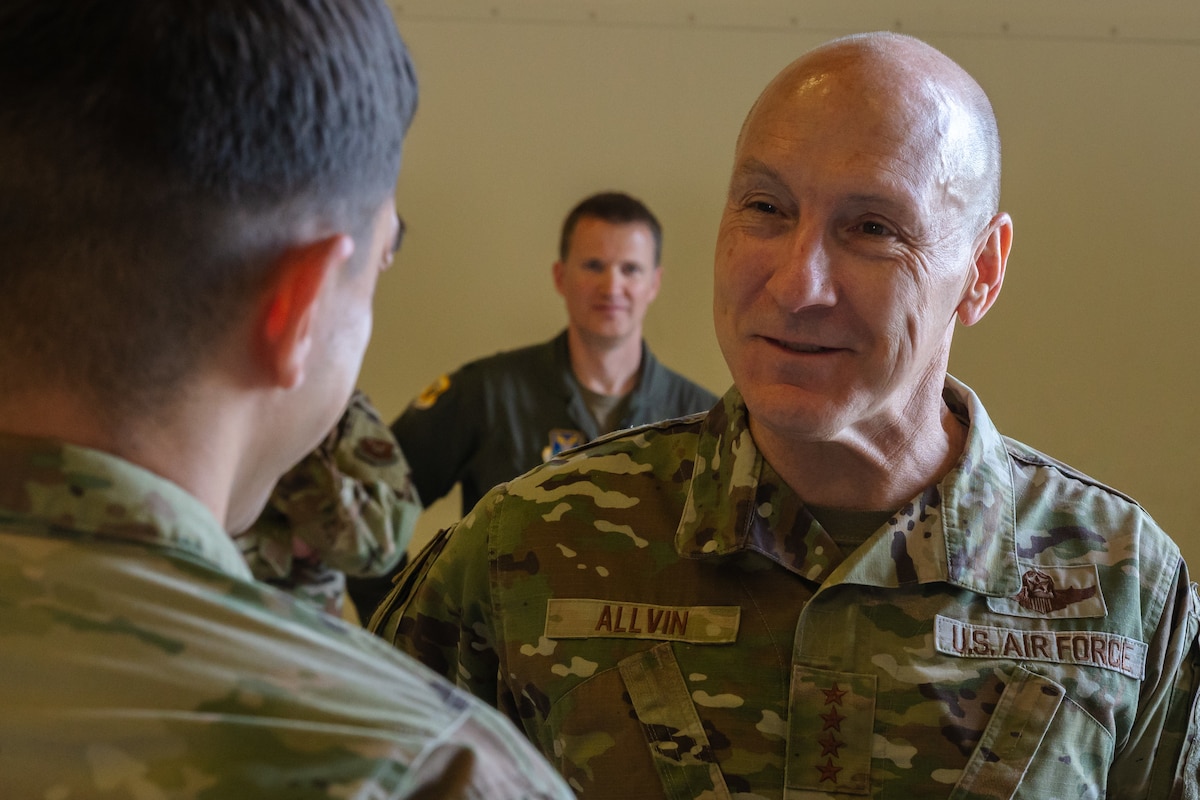
U.S. Air Force Chief of Staff Gen. David Allvin shakes hands with an Airman at Whiteman Air Force Base, Missouri, July 10, 2025.
Air Force Chief of Staff Gen. David Allvin shakes hands with an Airman at Whiteman Air Force Base, Mo., July 10, 2025. Allvin serves as the senior uniformed Air Force officer responsible for the organization, training and equipping of active-duty, Guard, Reserve and civilian forces serving in the U.S. and overseas. (U.S. Air Force photo by Senior Airman Joseph Garcia)

During their visit, the senior leaders thanked the members at Whiteman AFB who contributed to the operation and coined those who exemplified excellence throughout all stages of the mission.

“The U.S. Air Force’s ability to project airpower globally with minimal notice is unmatched,” Allvin said. “Our advantage stems from Airmen who are mission-focused and able to adapt to a rapidly evolving strategic landscape. The Airmen here have set the standard for operational precision and execution.”

U.S. Air Force Chief of Staff Gen. David Allvin speaks with Airmen at Whiteman Air Force Base, Missouri, July 10, 2025.
Air Force Chief of Staff Gen. David Allvin speaks with Airmen at Whiteman Air Force Base, Mo., July 10, 2025. Allvin serves as the senior uniformed Air Force officer responsible for the organization, training and equipping of active-duty, Guard, Reserve and civilian forces serving in the United States and overseas. (U.S. Air Force photo by Senior Airman Joseph Garcia)

The pressure of the high-stakes mission was not only felt by the B-2 pilots and operation’s planners. Given a deadline of nearly one week, Airmen assigned to the 509th Maintenance Group were tasked with building and loading the GBU-57 MOPs, refueling the aircraft, and performing preflight inspections ensuring the bombers could carry out their lengthy flights and deploy the weapons.

“I could not be prouder of the men and women of Team Whiteman,” said Col. Joshua Wiitala, 509th Bomb Wing commander. “Operation Midnight Hammer showed the world that we are ready to deliver precision global strike when called upon. We are humbled by the recognition the team is receiving from our nation’s leaders for their perseverance and dedication to our one-of-a-kind mission.”

Being the only installation in the world to operate a stealth bomber makes Whiteman AFB an integral component to U.S. Strategic Command’s mission of deterring strategic attack. As showcased by Operation Midnight Hammer, the B-2 is not only a visible shield, but an invisible sword, ready to deliver lethality – anytime, anywhere.

Defense News in Brief: 354th AEW provides combat airpower to REFORPAC 25

Source: United States Airforce

During the exercise the 354th AEW will rapidly deploy and regionally maneuver fifth-generation capabilities like the F-35A Lightning II while executing Agile Combat Employment techniques.

The 354th Air Expeditionary Wing is participating in exercise Resolute Force Pacific 25, to test its ability to quickly and effectively command and control air assets throughout the Pacific, July 10 – August 8.

REFORPAC 25 is the largest Air Force contingency training exercise in the Pacific, training military members to maintain readiness and execute missions under stress throughout multiple locations in the Pacific, including Guam, Japan, and international airspace.

“REFORPAC will demonstrate how our Airmen generate and employ lethal combat airpower at effective scale and scope to achieve combatant commander objectives,” said Col. Matthew Johnston, 354th Air Expeditionary Wing commander. “Collaborating with our allies, partners, and Joint Forces we will validate our ability to maintain robust command and control in the region while maneuvering our forces and executing missions.”

During the exercise the 354th AEW will rapidly deploy and regionally maneuver fifth-generation capabilities like the F-35A Lightning II while executing Agile Combat Employment techniques.

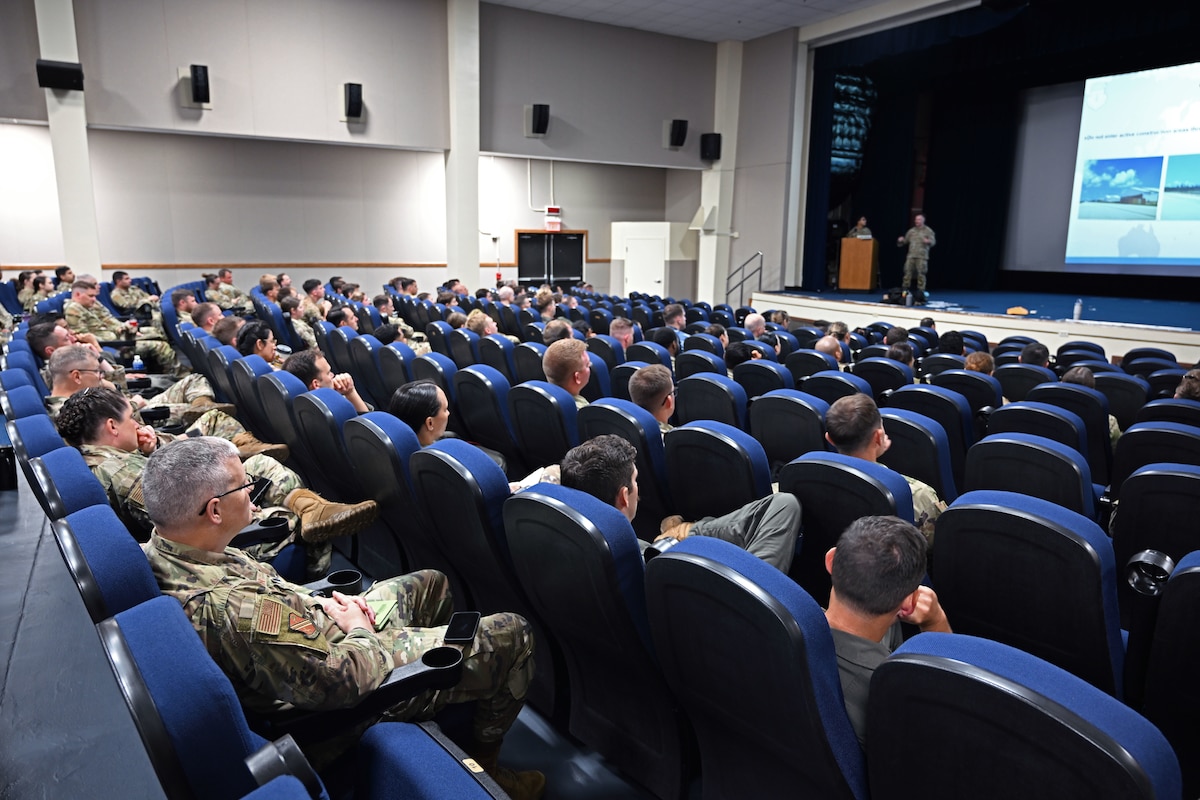
Airmen attend meeting.
Airmen with the 354th Air Expeditionary Wing attend a welcome brief with multinational and joint partners at Andersen Air Force Base, Guam, as Resolute Force Pacific 25 gets underway July 11, 2025. REFORPAC is part of the first-in-a-generation Department-Level Exercise series, employing more than 350 Joint and coalition aircraft and more than 12,000 members at more than 50 locations across 3,000 miles. (U.S. Air Force photo by Tech. Sgt. Andrea Posey)

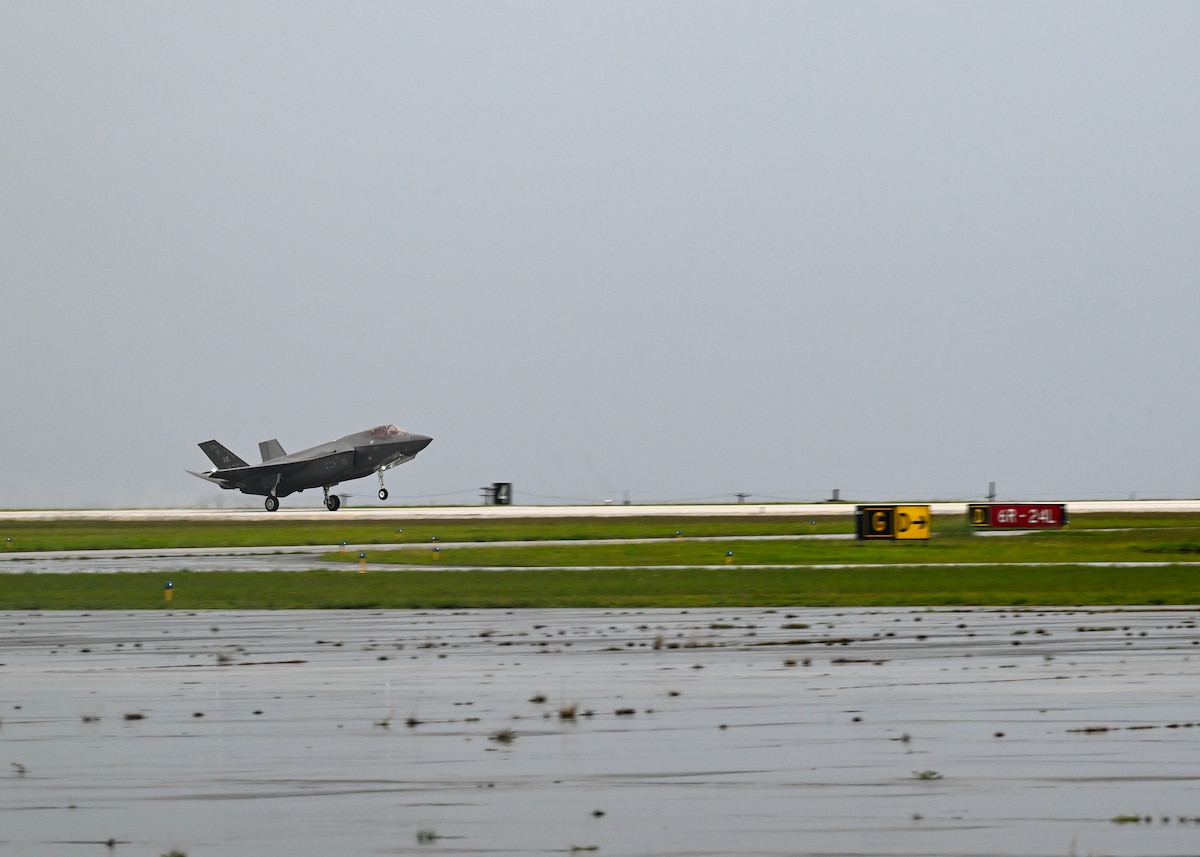
F-35 taking off from runway.
An F-35A Lightning II from the354th Air Expeditionary Wing arrives in Guam for exercise Resolute Force Pacific 25, July 12, 2025. REFORPAC is designed to deliver Air Force capabilities to the Indo-Pacific region at speed and scale, then demonstrate the ability to command and control agile combat employment operations across more than six time zones. (U.S. Air Force photo by Tech. Sgt. Andrea Posey)

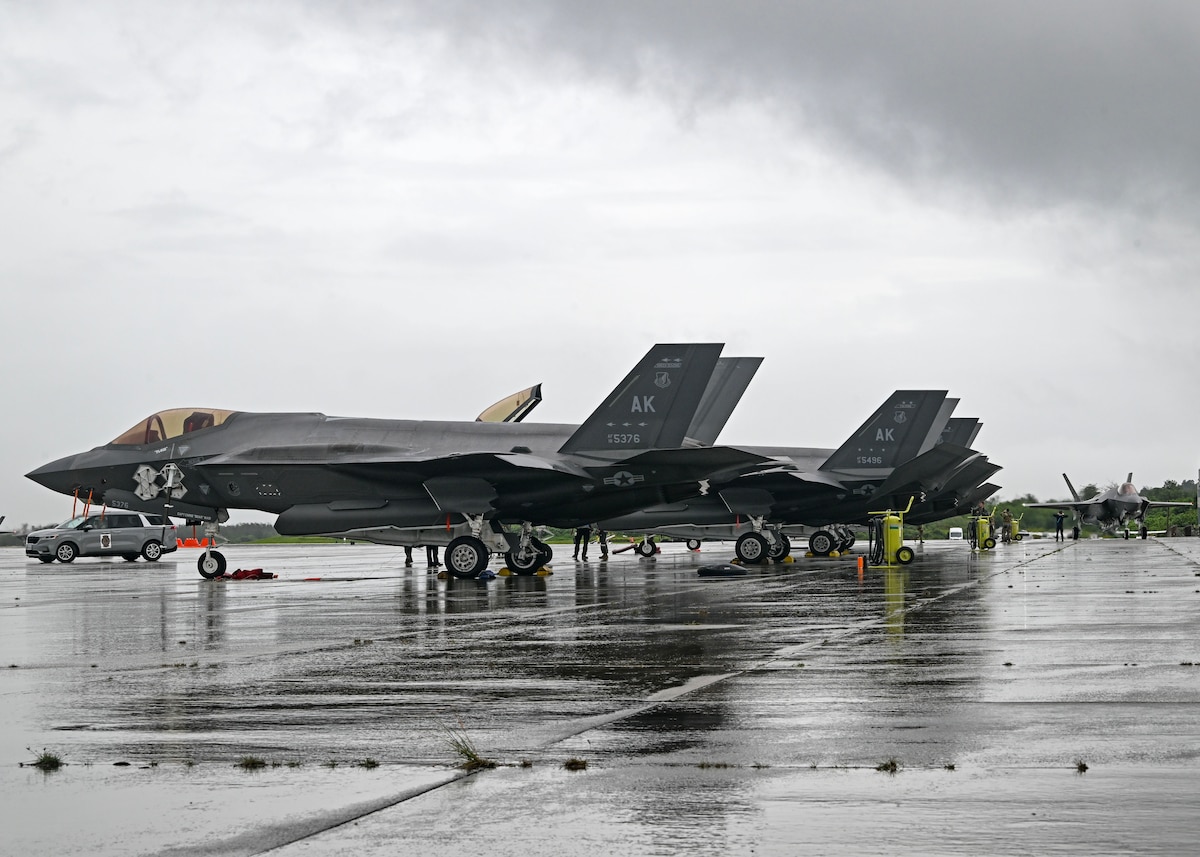
F-35s parked on flightline.
F-35A Lightning II’s from the 354th Air Expeditionary Wing park on the flight line in Guam for Resolute Force Pacific 25 exercise, July 12, 2025. REFORPAC is part of the first-in-a-generation Department-Level Exercise series, employing more than 350 Joint and coalition aircraft and more than 12,000 members at more than 50 locations across 3,000 miles. (U.S. Air Force photo by Tech. Sgt. Andrea Posey)

“The women and men of the 354th AEW are focused on generating combat airpower while optimizing and enhancing the asymmetric advantages we have in the free and open Indo-Pacific,” said Lt. Col Erik Gonsalves, 355th Mission Generation Force Element commander. “We’re using intense training exercises like REFORPAC to test and refine our skills in unique situations and austere locations, challenging us to solidify or update our gameplan to ensure we are ready to respond swiftly and effectively.”

Large scale exercises like REFORPAC make the 354th AEW more capable of delivering lethal airpower to combatant commanders in defense of national military objectives.

“REFORPAC demonstrates the U.S. commitment to the region by building interoperability, multilateral cooperative arrangements with our Allies and partners, advancing common interests, and ensuring a free and open Indo-Pacific region,” said Johnston. “By working with our multinational and joint partners the 354th AEW becomes a stronger and more capable wing that demonstrates our collective commitment to maintaining regional stability.”

REFORPAC is part of the first-in-a-generation Department-Level Exercise series, a new way of conducting operations in a contested, dynamic environment to build capabilities making a stronger, more lethal deterrent force. The DLE series encompasses all branches of the Department of Defense, along with allies and partners, employing more than 400 Joint and coalition aircraft and more than 12,000 members at more than 50 locations across 3,000 miles. 


Defense News in Brief: USS Omaha (LCS 12) Returns to Homeport

Source: United States Navy

From Petty Officer 2nd Class Kassandra Alanis and Lt.j.g. Tahj Clements

SAN DIEGO – The Independence-variant littoral combat ship USS Omaha (LCS 12) arrived at its San Diego homeport July 11, following a 10-month rotational deployment to the U.S. 7th Fleet area of operations.

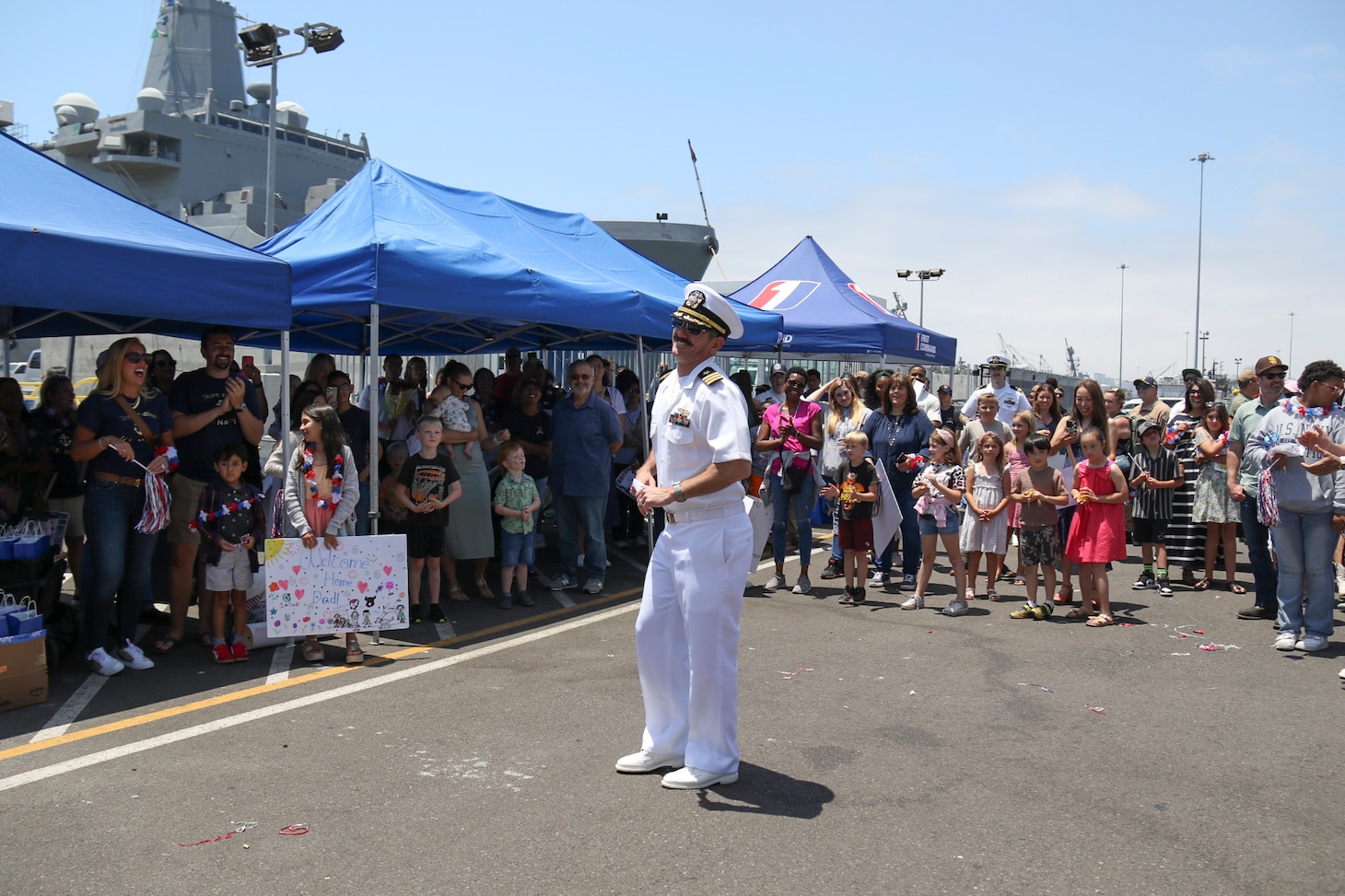
Cmdr. Ryan Doyle, commanding officer of the Independence-variant littoral combat ship USS Omaha (LCS 12), speaks to families as the ship is moored pierside at its homeport of Naval Base San Diego, July 11, 2025. The Omaha returns to Naval Base San Diego following a 10-month rotational deployment to the U.S. 7th Fleet area of operations in support of a free and open Indo-Pacific. Littoral combat ships are fast, optimally manned, mission-tailored surface combatants that operate in near-shore and open-ocean environments, winning against 21st-century coastal threats. (U.S. Navy photo by Mass Communication Specialist 2nd Class Kassandra Alanis)

Cmdr. Ryan Doyle, commanding officer of the Independence-variant littoral combat ship USS Omaha (LCS 12), speaks to families as the ship is moored pierside at its homeport of Naval Base San Diego, July 11, 2025. The Omaha returns to Naval Base San Diego following a 10-month rotational deployment to the U.S. 7th Fleet area of operations in support of a free and open Indo-Pacific. Littoral combat ships are fast, optimally manned, mission-tailored surface combatants that operate in near-shore and open-ocean environments, winning against 21st-century coastal threats. (U.S. Navy photo by Mass Communication Specialist 2nd Class Kassandra Alanis)


“I’m excited to welcome home the crew of this mighty warship, who showed incredible dedication and leadership during their deployment,” said Capt. Jose Roman, commodore, Littoral Combat Ship Squadron 1. “From multiple exercises with our partners to ensuring maritime security and freedom of navigation in critical waterways throughout the Indo-Pacific, Omaha has a great deal to be proud of.”

Throughout deployment, the Omaha participated in several multi-national events including the Oceania Maritime Security Initiative (OMSI), Cooperation Afloat Readiness and Training (CARAT) Brunei, the Republic of Palau 30th Independence Anniversary, a joint sail with the Royal Australian Navy (RAN), Exercise Noble Wolverine, Exercise Cobra Gold 2025, and Exercise Noble Dingo.

“It’s been an honor to serve with this crew as they’ve achieved outstanding operational milestones and risen to meet every challenge,” said Cmdr. Kevin Smith, commanding officer of the Omaha Gold crew. “Today we welcome home the USS Omaha and the Blue crew, and celebrate the commitment and perseverance of every Sailor onboard, as well as their families who support them.”

In August 2024, the Omaha participated in OMSI, a Secretary of Defense program aimed at diminishing transnational illegal activity on the high seas in the Pacific Island nations of Oceania’s Exclusive Economic Zones (EEZ), as well as increasing interoperability with partner nations. The Omaha’s range and capabilities allowed the embarked U.S. Coast Guard law enforcement detachment the ability to access the remote U.S. and Pacific Island nations’ EEZs.

The Omaha participated in CARAT Brunei 2024 alongside the Royal Brunei Armed Forces and other U.S. military assets. During the exercise, a variety of subject matter expert exchange events were conducted. They focused on topics such as cyber security, emission control, force protection, international maritime law, maritime domain awareness, and public affairs for humanitarian assistance and disaster response. Bilateral training opportunities included best practices for a medical evacuation; mine countermeasures; visit, board, search and seizure; underwater demolition; and other topics. CARAT Brunei 2024 focused on dynamic naval capabilities, featuring cooperative evolutions that highlighted the U.S.-Brunei partnership and their shared goals of ensuring a free and open Indo-Pacific.

The Omaha participated in several events which celebrated the 30th anniversary of the independence of the Republic of Palau, marking the Republic of Palau’s independence from the United Nations trusteeship administered by the U.S.

In the early months of 2025, the Omaha participated in Exercise Noble Wolverine, Exercise Cobra Gold 2025, and Exercise Noble Dingo. Noble Wolverine was a joint U.S. and Canadian exercise. During Cobra Gold 2025, Omaha, alongside Republic of Korea, Republic of Singapore, and Kingdom of Thailand navies conducted division tactics and crew exchanges. Noble Dingo included several operations as part of a joint sail with the RAN’s Hobart-class air warfare destroyer HMAS Sydney (DDG 42) in support of a free and open Indo-Pacific.

“These Sailors are returning home to their families with significant operational experience.,” said Cmdr. Ryan Doyle, commanding officer of the Omaha Blue crew. “I am particularly proud of the resiliency and self-sufficiency that our Sailors demonstrated throughout the deployments.”

During deployment, the Omaha conducted eight port visits, including six to partner and allied nations: Singapore, the Philippines, Thailand, Brunei, Malaysia, Guam, the Republic of the Marshall Islands, and Hawaii.

The Omaha is a fast, optimally-manned, mission-tailored surface combatant that operates in near-shore and open-ocean environments, winning against 21st-century threats. LCS integrate with joint, combined, manned and unmanned teams to support forward presence, maritime security, sea control, and deterrence missions around the globe.

For more news from Commander, Littoral Combat Ship Squadron 1, visit https://www.surfpac.navy.mil/comlcsron1/ or follow on Facebook at www.facebook.com/COMLCSRONONE/


Defense News in Brief: U.S. Indo-Pacific Commander Joins Trilateral Chiefs of Defense in South Korea

Source: United States Navy

SEOUL, South Korea — Adm. Samuel J. Paparo, commander of U.S. Indo-Pacific Command, visited South Korea on July 11, 2025, where he joined senior U.S., Japanese and South Korean military and government officials to underscore the criticality of trilateral military cooperation for addressing security challenges on the Korean Peninsula and in the Indo-Pacific.

Defense News in Brief: READOUT: Pacific Fleet Commander’s Travel to Republic of the Philippines July 9-11, 2025

Source: United States Navy

MANILA, Philippines – Adm. Steve Koehler, commander, U.S. Pacific Fleet, traveled to the Republic of the Philippines alongside Fleet Master Chief Don Davis, July 9-11, 2025 to reaffirm the steadfast and enduring U.S.-Philippine alliance which is critical to advancing the two countries’ shared interests, signaling unwavering resolve, and aligning efforts to preserve regional stability.

Defense News in Brief: USS Frank Cable Departs Suva, Fiji, following Port Visit

Source: United States Navy

SUVA, Fiji – Forward-deployed U.S. Navy submarine tender USS Frank Cable (AS 40) departed Fiji following a scheduled port visit on July 11, 2025. Frank Cable is underway supporting 7th Fleet, the U.S. Navy’s largest forward-deployed numbered fleet, operating with allies and partners in preserving a free and open Indo-Pacific region.