Defense News in Brief: RIAT 2025 highlights global readiness, cooperation

Source: United States Airforce

During the Royal International Air Tattoo, the U.S. Air Force, alongside NATO allies and partners from around the globe, showcased what the strength of multinational relationships can achieve.
The weather was calm and the sky was blue, yet thunder forced itself to be heard. From July 18-20, thousands of onlookers in the crowd gleefully braced themselves for a procession of roaring aerial acrobatics, helicopter rescue demonstrations, and raw airpower flooding the cloudy air above Royal Air Force Fairford.

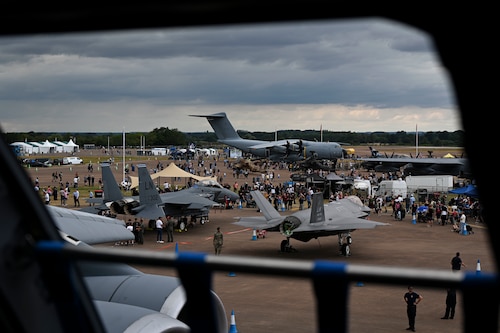
Photo of the flightline
Royal International Air Tattoo static aircraft displays of military aircraft are viewed from the fuselage of a C-5 Galaxy at RAF Fairford, England, July 19, 2025. The interaction and exchanges we have with allies and partners at events like RIAT allows us to learn from and leverage the strengths and capabilities our allies and partners bring to the table. (U.S. Air Force photo by Airman 1st Class Cody J. A. Mott)

The Royal International Air Tattoo is not only the largest air show in the world – it is a convention of lethality, ingenuity, and partnership. The U.S. Air Force, alongside NATO allies and partners from around the globe, showcased what the strength of multinational relationships can achieve.

“America’s international partners are one of its greatest strengths,” said U.S. Air Force Capt. Mercer Martin, 99th Expeditionary Reconnaissance Squadron U-2S pilot. “Spending our time meeting our partners in person while forging bonds and friendships is an extremely important addition to the relationships we have with our allied nations around the world.”
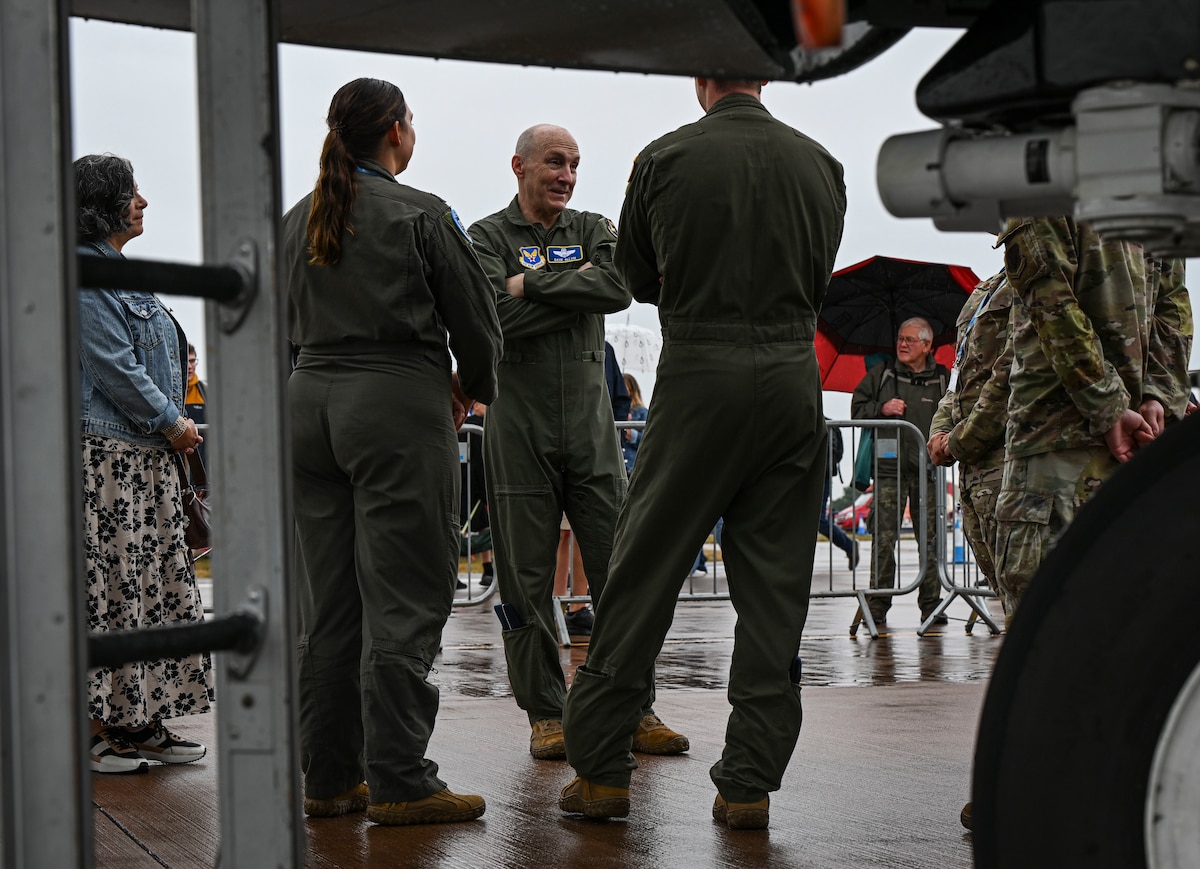
CSAF speaks with Airmen on flightline.
U.S. Air Force Gen. David Allvin, USAF Chief of Staff, speaks with Airmen assigned to the 95th Reconnaissance Squadron during the Royal International Air Tattoo at RAF Fairford, England, July 19, 2025. The interaction and exchanges we have with allies and partners at events like RIAT allows us to learn from and leverage the strengths and capabilities our allies and partners bring to the table. (U.S. Air Force photo by Airman 1st Class Cody J. A. Mott)
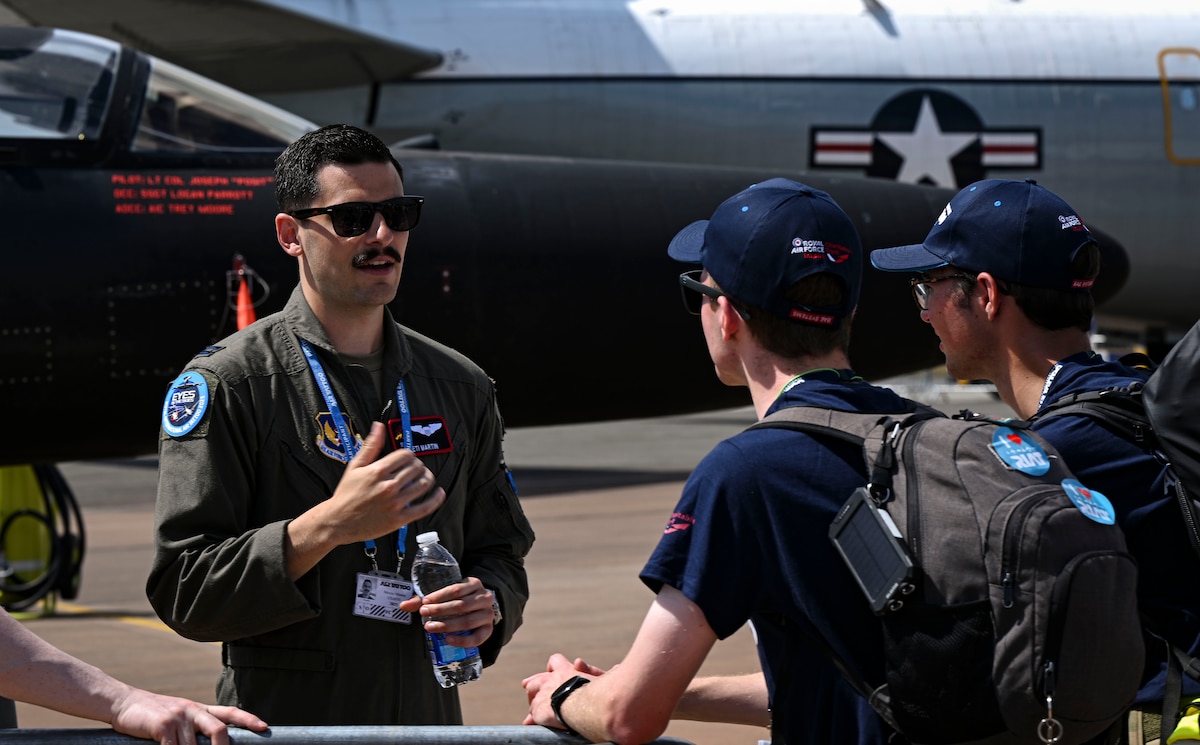
Pilot speaks with air show visitors about aircraft U-2S Dragon Lady.
U.S. Air Force Capt. “Yeti” Martin, 99th Expeditionary Reconnaissance Squadron U-2S pilot, explains the capabilities of the U-2S Dragon Lady to Royal Air Force cadets during the Royal International Air Tattoo at RAF Fairford, England, July 18, 2025. One of the many benefits of RIAT is exposing allies, partner nations and the general public to our aircraft and the aircrews who operate them. These aircraft demonstrate our vast capabilities and ability to rapidly respond to threats and assure allies and partners. (U.S. Air Force photo by Airman 1st Class Cody J. A. Mott)
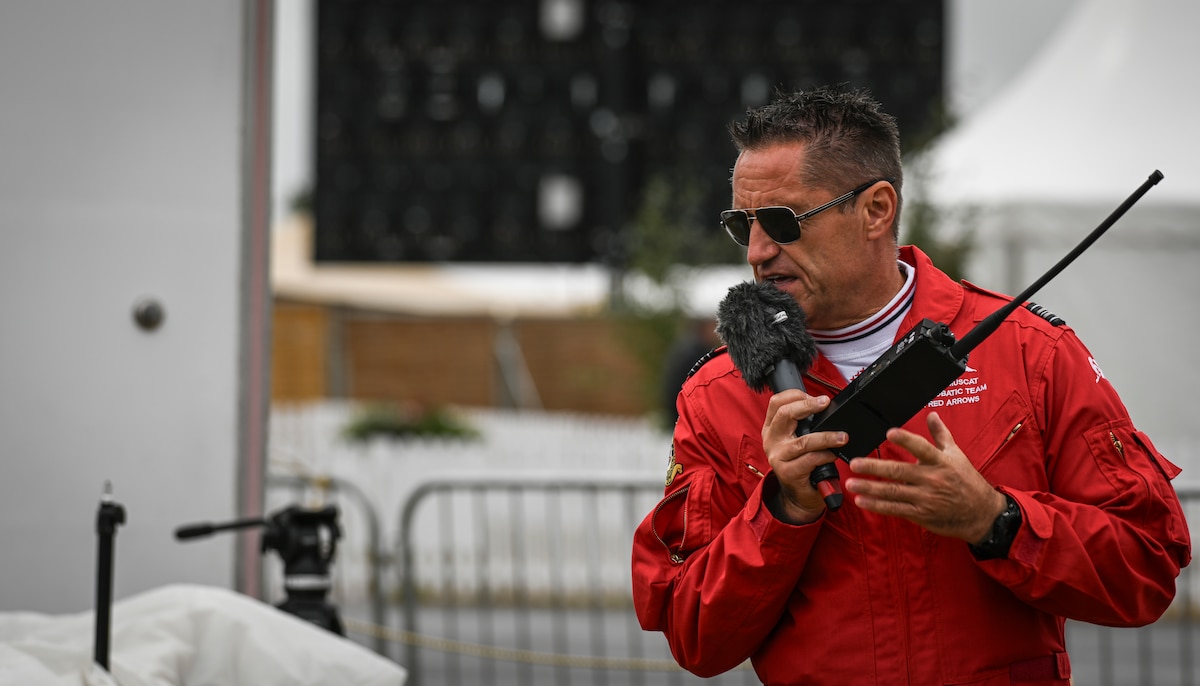
Man announces aerial demonstration.
RAF Red Arrow aerobatic team member Graeme Muscat, announces the pilot’s aerial demonstrations during the Royal International Air Tattoo at RAF Fairford, England, July 20, 2025. Through high-impact aerial displays and multinational participation, RIAT highlights the strategic reach and operational readiness of allied and partner air forces. (U.S. Air Force photo by Airman 1st Class Cody J. A. Mott)

Exposing both the U.S. and partner-nation personnel to diverse strategies and training methods strengthens the goal of a cohesive, interoperable force. These relationships play a key part in times of peace as much as they do in the theater of war.

“I enjoy flying an aircraft that’s so close in league with our American colleagues. It’s a real change of pace,” said an RAF Rivet Joint pilot. “Your training systems and operational focus into different deployable locations make it so U.S. Airmen are more versed on how it all works in different areas of the world. It’s nice to be exposed to that and fly more often with pilots who have different techniques.”

As in years past, one of RIAT’s greatest strengths this year was the access it provided allies, partner nations and the public to U.S. aircraft, aircrew, and the stories behind them. It was a rare chance for global audiences to witness both the capabilities and the humanity behind modern airpower. This visibility builds confidence, strengthens support, and reinforces the value of continued collaboration.

“As aircrew stationed in the United Kingdom, I’m flying tanker missions and working with NATO allies while refueling them in the air,” said U.S. Air Force Capt. Tobin Nelson, 100th Air Refueling Wing pilot. “Being on the ground and meeting them face-to-face at RIAT is amazing. Knowing I’ve worked with their people gives me the ability to network, plan new training missions, and forge new bonds through flying.”

RIAT 2025 served as a powerful reminder that diplomacy and military strength go hand in hand. By bringing together allies and partners in a shared celebration of innovation and skill, the air show fostered trust, mutual understanding, and camaraderie that extended far beyond the runway. The relationships built not only enhance all nations’ operational readiness but also promote a culture of cooperation and respect that is vital in today’s complex environments.

RIAT’s ability to inspire generations also underscores the profound impact of bringing military aviation into the public eye. For many attendees, witnessing these aircraft in action and hearing firsthand accounts from dedicated personnel sparks a passion for service and a belief in the importance of teamwork.
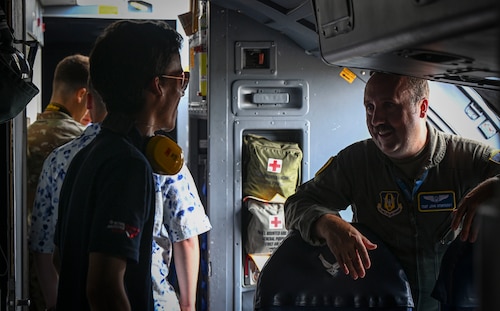
Flight engineer speaks with participant about career.
U.S. Air Force Tech. Sgt. John Stortecky, right, 337th Airlift Squadron flight engineer, speaks about his career to a Royal International Air Tattoo participant at RAF Fairford, England, July 19, 2025. RIAT is a means for us to remove barriers and foster a sense of solidarity and mutual support among allied and partner nations. This shared sense of purpose enhances the overall effectiveness of collective defense efforts, improving interoperability and strengthening trust among participating forces. (U.S. Air Force photo by Airman 1st Class Cody J. A. Mott)

“When you come here and see participants and children from every walk of life with a sparkle in their eye, you don’t ever want to stifle those dreams,” said U.S. Air Force Tech. Sgt. John Stortecky, 337th Airlift Squadron flight engineer. “Hopefully one day someone will say, ‘I had that tour through the aircraft and I saw them fly – and it inspired me to become who I am today.’”


Defense News in Brief: F-35 international interfly at Talisman Sabre 25 – A first for the USAF

Source: United States Airforce

Two U.S. Air Force pilots successfully flew Royal Australian Air Force F-35A Lightning II aircraft during an international interfly training mission during exercise Talisman Sabre 25, in Northern Territory, Australia, July 16.

This display of interoperability signified the first time USAF pilots flew 5th Generation aircraft belonging to a partnered or allied nation.

The U.S. Air Force pilots achieving this first-ever feat were Air Force Reserve Maj. Justin Lennon, 48th Fighter Wing, U.S. Air Forces in Europe-U.S. Air Forces Africa F-35A evaluator pilot, and Maj. Colby Kluesner, 388th Fighter Wing F-35A evaluator pilot.

“In the short term, Interfly events like this allow us to exchange information and best practices,” Lennon explained. “In the long term, as a coalition, normalizing Interfly gives commanders additional options for agility and versatility in a future conflict. In a prolonged conflict, airplanes are capable of flying more hours a day than a pilot. Having the added flexibility to put any pilot in any F-35 and generate combat airpower anywhere in the world adds to the F-35 coalition’s lethality.”

The RAAF has also increased its efforts in normalizing F-35 Interfly training among allies by the creation of its Lighting-X program: a 2023 initiative developed to take advantage of the mutual benefits provided to F-35 communities that Interfly concepts provide.

“[The Lightning-X program] allows RAAF commanders to treat our coalition counterparts as RAAF aircrew when we consider things like medical, dental, physiological issues, egress systems and human factors,” said RAAF Squadron Leader Nicholas Reynolds, No. 77 Squadron executive officer. “It is a big win to be able to seamlessly integrate here at Talisman Sabre 25 with 77 Squadron.”

In addition to the two USAF pilots, the RAAF also invited Royal Air Force Squadron Leader Daniel Goff, and U.S. Marine Corps Lt. Col. Johnny Rose, both F-35B instructor pilots, to participate in the international Interfly.

The USAF, USMC, and RAF pilots embedded with two of RAAF’s F-35 squadrons, No. 77 Squadron and No. 75 Squadron.

After a day of simulator training and academic courses, the four F-35 pilots were approved to conduct training exercises during Talisman Sabre 25 using RAAF’s F-35 aircraft.

“The crew are treated no differently than any other RAAF F-35 pilot during Talisman Sabre 25,” Lennon said. “The only way anyone might know it’s not an Australian in the RAAF F-35 is the accent on the radio.”

Lennon also added that familiar training and equipment usage in the F-35 makes adapting to another nation’s aircraft easier than one might think.

“Thanks to the commonality of F-35 variants, aligned training and operational practices between F-35 users, the flying portion is the easiest part,” Lennon explained. “Our visiting USAF pilots are able to execute and fly a RAAF F-35 no different from their Australian wingmen.”

This recent effort in pilot interchangeability by multiple branches and nations in the F-35 community is aimed at preparing the U.S. and its allies for future conflicts long into the future.

“Interfly has allowed the USAF to train partner nations on weapons systems they have purchased, as well as conduct exchange assignments,” Lennon said. “However, until now the USAF has never performed international interfly on an ad-hoc basis. This effort is part of a larger plan to normalize F-35 Interfly training with our allies.”

Talisman Sabre 25 is a large-scale, bilateral military exercise between Australia and the U.S. which advances a free and open Indo-Pacific by strengthening relationships and interoperability among key allies and enhances our collective capabilities to respond to a wide array of potential security concerns. This year marks the eleventh iteration of the exercise.

Defense News in Brief: Gerald R. Ford Carrier Strike Group and ESPS Canarias (F86) Transit Strait of Gibraltar

Source: United States Navy

MEDITERRANEAN SEA – The United States’ newest and world’s largest aircraft carrier USS Gerald R. Ford (CVN 78), Arleigh Burke-class guided-missile destroyers USS Winston S. Churchill (DDG 81) and USS Bainbridge (DDG 96), all assigned to Gerald R. Ford Carrier Strike Group (GRFCSG), transited the Strait of Gibraltar with Spanish Navy Santa Maria-class ESPS Canarias (F86), and fast combat support ship USNS Supply (T-AOE-6), July 19, 2025.

Defense News in Brief: REFORPAC 2025: US Air Force executes unprecedented surge into Pacific theater

Source: United States Airforce

Over the last week, U.S. Pacific Air Forces accomplished a rapid, mass deployment and reception of personnel, equipment and aircraft to multiple locations in the Indo-Pacific theater of operations for Exercise Resolute Force Pacific 2025.

“We’ve seen amazing global teamwork completing an incredible lift to kick off REFORPAC,” said Gen. Kevin Schneider, PACAF commander. “Airmen have innovated and overcome tough obstacles to get critical pieces in place, demonstrating our collective capability to project decisive air power into and throughout the Indo-Pacific with dramatic speed and scale.”

The U.S. Air Force, alongside its joint allies and partners, will continue to train and integrate over the next several weeks, enhancing interoperability and readiness across the Pacific theater. REFORPAC is part of the first-in-a-generation Department-Level Exercise series, a new way the Air Force is exercising to conduct large operations in contested, dynamic environments. The aim is to improve interoperability and multilateral cooperation, leading to a stronger, more capable, deterrent force.

The DLE series encompasses all branches of the Department of Defense, along with allies and partners, employing approximately 400 U.S. and coalition aircraft and more than 12,000 members at more than 50 locations spanning 3,000 miles.

The monumental effort is made possible by extensive planning and coordination efforts throughout the Air Force, along with joint, allied and partner forces, which have shown the ready ability of combined joint forces to mobilize in great numbers for any contingency. In lockstep with PACAF, Air Mobility Command has provided critical airlift, air refueling and command and control capabilities to project, connect, maneuver and sustain joint forces.

“We’re witnessing a complex operation in the Indo-Pacific driven by logistics – rapid, deliberate and mission-driven,” said Brig. Gen. Athanasia Shinas, mobilization assistant to PACAF’s director of logistics. “Our Total Force concept is critical to this capability, leveraging the unparalleled expertise and diverse talent drawn from every industry and sector of society through our Guard and Reserve. This integration creates extraordinary opportunities to strengthen our Total Force and coalition Airmen.”

Airmen are exercising robust contested logistics and engineering capabilities, sustainment over vast distances, fuel resupply and access to forward operating locations.

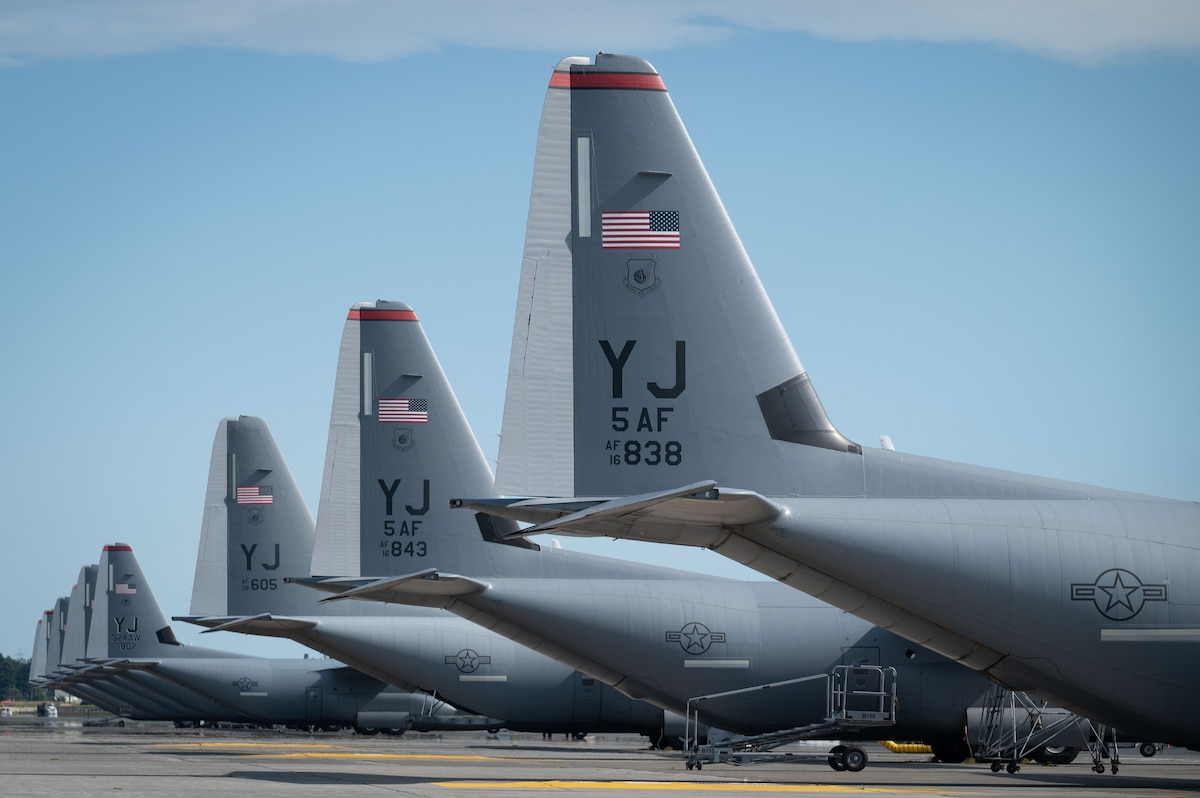
U.S. Air Force C-130J Super Hercules assigned to the 36th Airlift Squadron stand by for mission operations in support of Department-Level Exercise 2025 as part of the 374th Air Expeditionary Wing at Yokota Air Base, Japan, July 14, 2025. Through this DLE, the Department of the Air Force is preparing to be a stronger, more lethal deterrent force, to provide an advantage against competitors and adversaries across all domains, and to ensure regional stability in the Indo-Pacific and beyond. (U.S. Air Force photo by Airman Kayla Karelas)

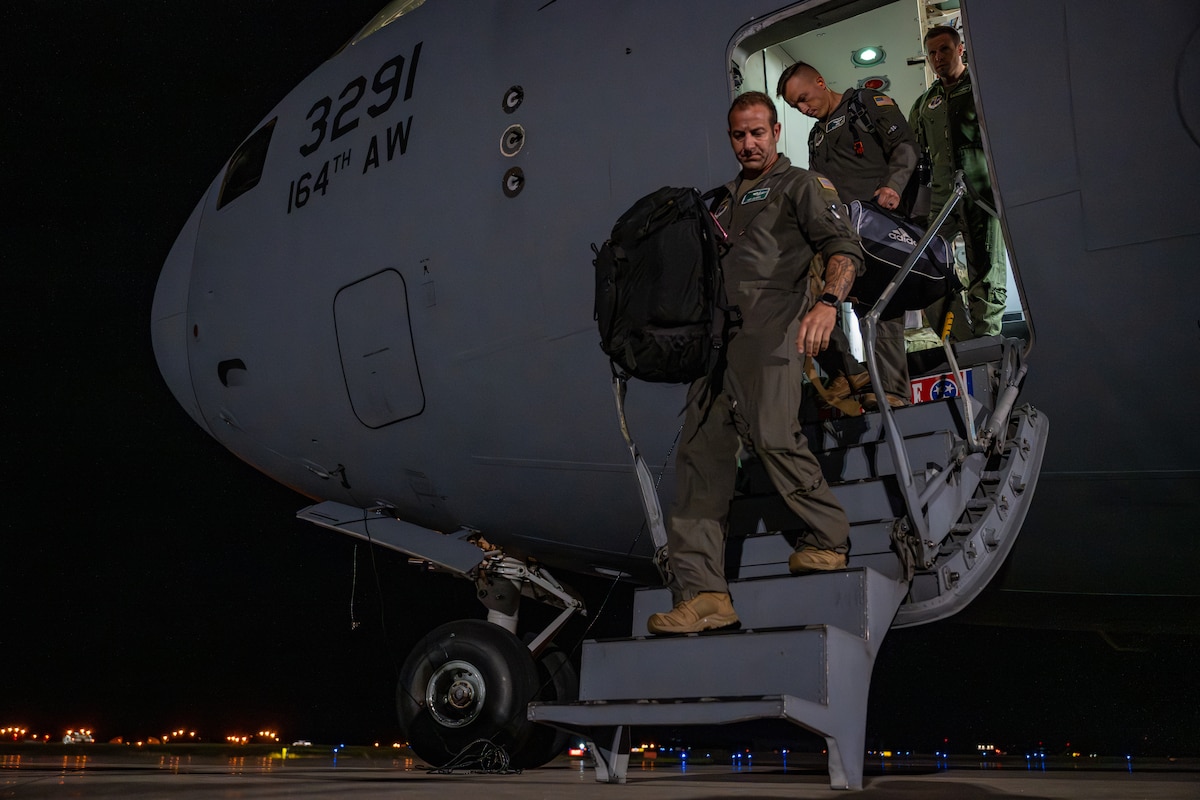
U.S. Airmen assigned to the 106th Rescue Wing disembark from a C-17 Globemaster III aircraft ahead of their support for exercise Resolute Force Pacific (REFORPAC) 2025 at Misawa Air Base, Japan, July 11, 2025. REFORPAC is part of the first-in-a-generation Department-Level Exercise series, employing more than 400 Joint and coalition aircraft and more than 12,000 members at more than 50 locations across 3,000 miles. (U.S. Air Force photo by Airman 1st Class Andre Medina)

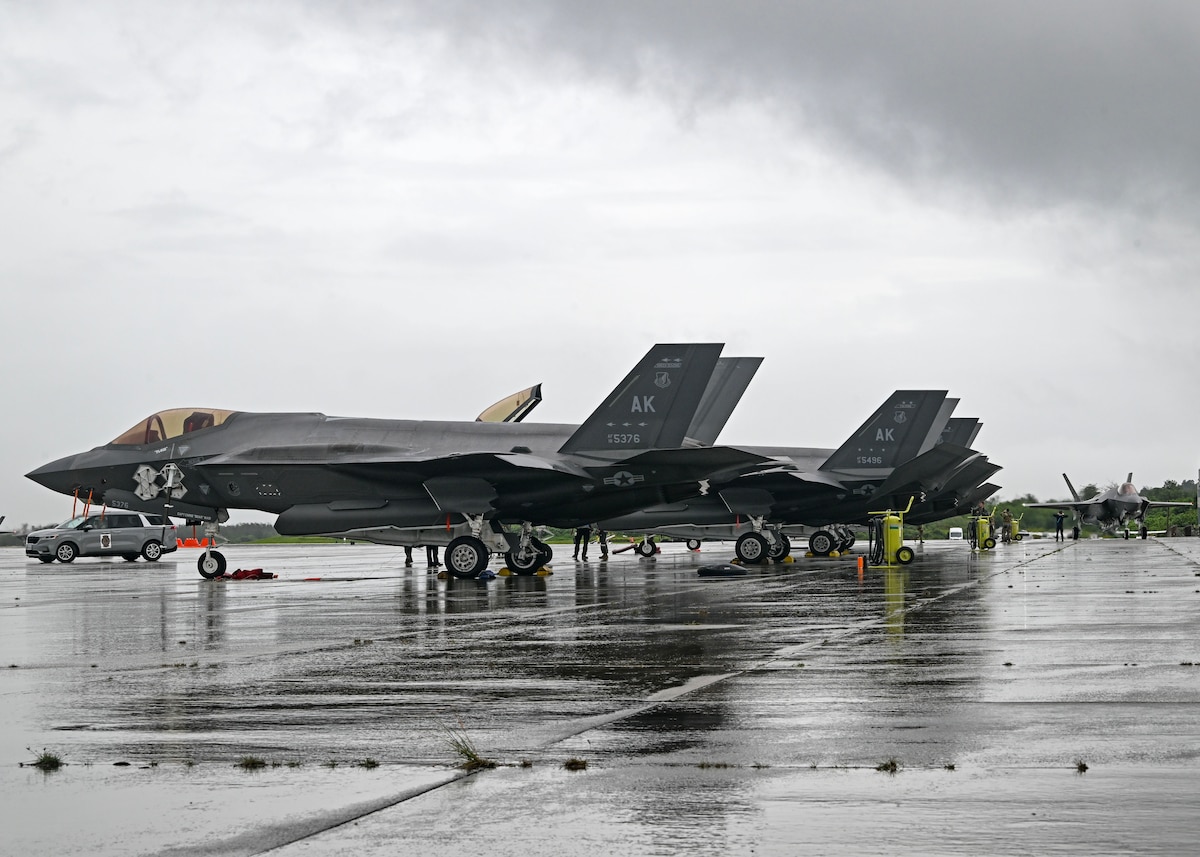
F-35s parked on flightline.
U.S. Air Force F-35A Lightning II’s from the 354th Air Expeditionary Wing park on the flight line in Guam for Resolute Force Pacific (REFORPAC) 25 exercise, July 12, 2025. REFORPAC is part of the first-in-a-generation Department-Level Exercise series, employing more than 350 Joint and coalition aircraft and more than 12,000 members at more than 50 locations across 3,000 miles. (U.S. Air Force photo by Tech. Sgt. Andrea Posey)

“This is a logistical movement at an unprecedented scale – an explosive surge into the theater driven by precision and a resilient joint network,” said Brig. Gen. Mike Zuhlsdorf, PACAF director of logistics, engineering and force protection. “What makes it exceptional is the partnership with local leaders abroad, as well as infrastructure; their participatory enthusiasm has turned REFORPAC into a truly integrated regional effort. This support brings essential access and shared purpose to an extraordinary training landscape.”

The tested Agile Combat Employment operational strategy, used to support joint operations, has prepared sites throughout the theater. ACE preparations have included shoring up building infrastructure and ensuring a constant flow of critical supplies, all to facilitate uninterrupted mission execution during the exercise.

“PACAF continually seeks to improve our readiness to respond to any contingency, defend the interests of the United States and work closely together with our allies and partners to ensure a free and open Indo-Pacific,” Schneider said.


Defense News in Brief: Rescue squadrons unite, strengthen interoperability during REFORPAC

Source: United States Airforce

Resolute Force Pacific highlights how exercises strengthen combined capability and coordination for real-world contingencies across the Indo-Pacific region.

Airmen of the Japan Air Self-Defense Force Air Rescue Wing, the U.S. Air National Guard’s 102nd Rescue Squadron, and the 130th Rescue Squadron came together for a cross-unit static display and capability exchange during exercise Resolute Force Pacific 2025 at Misawa Air Base, July 15.

The event featured aircraft from both nations, including a JASDF UH-60J helicopter and U-125A search-and-rescue coordination aircraft, as well as a U.S. Air Force HC-130J Combat King II from the 102nd Rescue Squadron.

“The goal of the capabilities briefing and aircraft tours was to enable partner nation integration and foster mutual understanding among our rescue squadrons,” said U.S. Air Force Tech. Sgt. Richard Conner, 130th Rescue Squadron HC-130J rescue loadmaster. “This lays the groundwork for future collaboration in the INDOPACOM area, which is a part of our unit’s mission.”

The static display was one of many engagements conducted as part of REFORPAC, a Pacific Air Forces-led contingency readiness exercise nested under the Department of the Air Force’s new Department-Level Exercise series. This DLE is a first-in-a-generation approach to preparing for operations in contested, dynamic environments, spanning more than 50 locations and involving more than 12,000 joint and coalition personnel and over 400 aircraft.


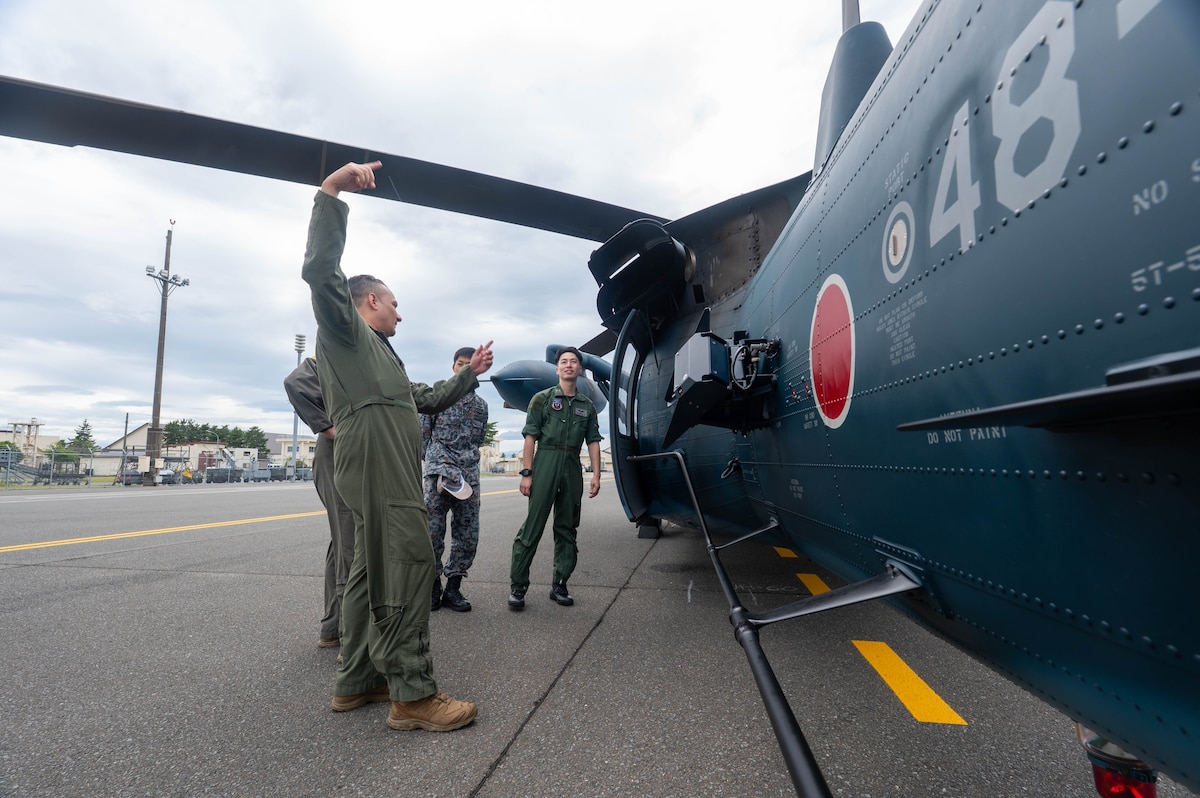
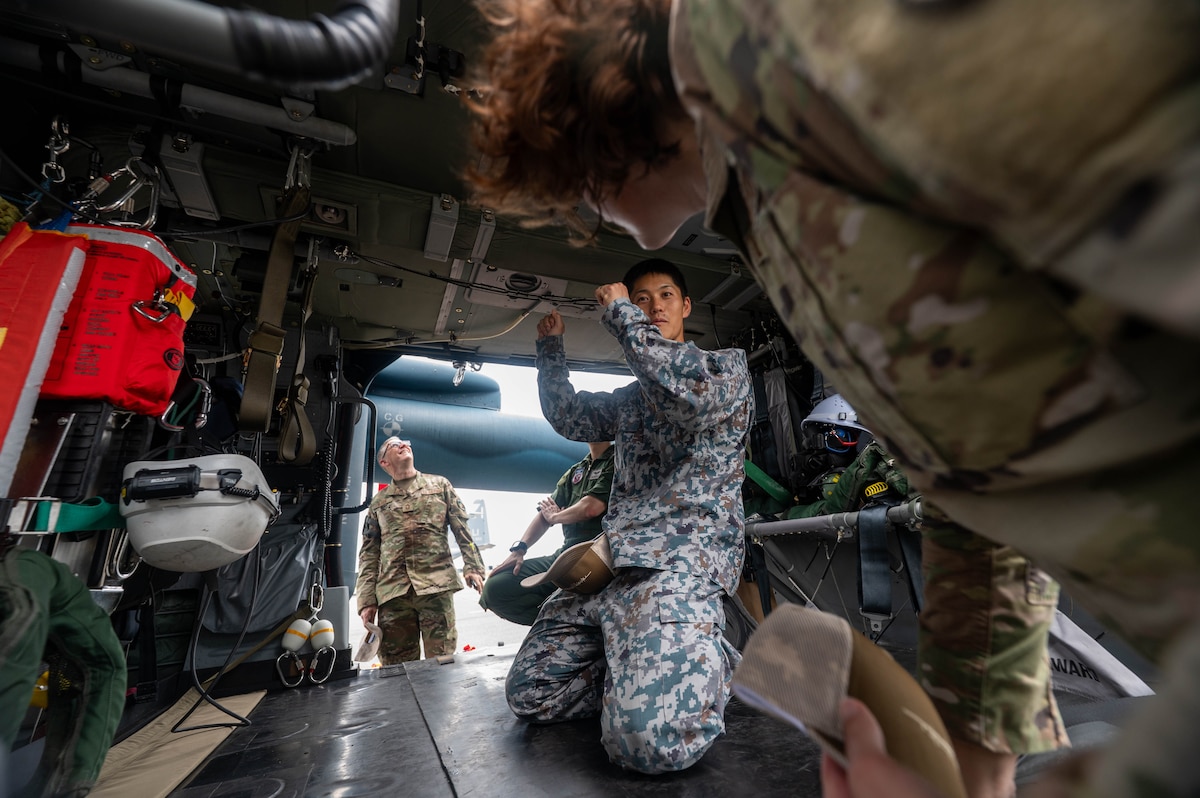
U.S. Air Force Airmen assigned to the 102nd and 130th Air Rescue Squadrons are shown a Japan Air Self-Defense Force (JASDF) Air Rescue Wing UH-60J helicopter for a cross-unit static display and capability exchange during exercise Resolute Force Pacific (REFORPAC) 2025 at Misawa Air Base, July 15, 2025.
U.S. Air Force Airmen assigned to the 102nd and 130th Air Rescue Squadrons are shown a Japan Air Self-Defense Force Air Rescue Wing UH-60J helicopter for a cross-unit static display and capability exchange during exercise Resolute Force Pacific 2025 at Misawa Air Base, July 15, 2025. The interaction reinforces REFORPAC’s goal to deepen allied coordination and advance shared security objectives in the Indo-Pacific. (U.S. Air Force photo by Airman 1st Class Koby Mitchell)

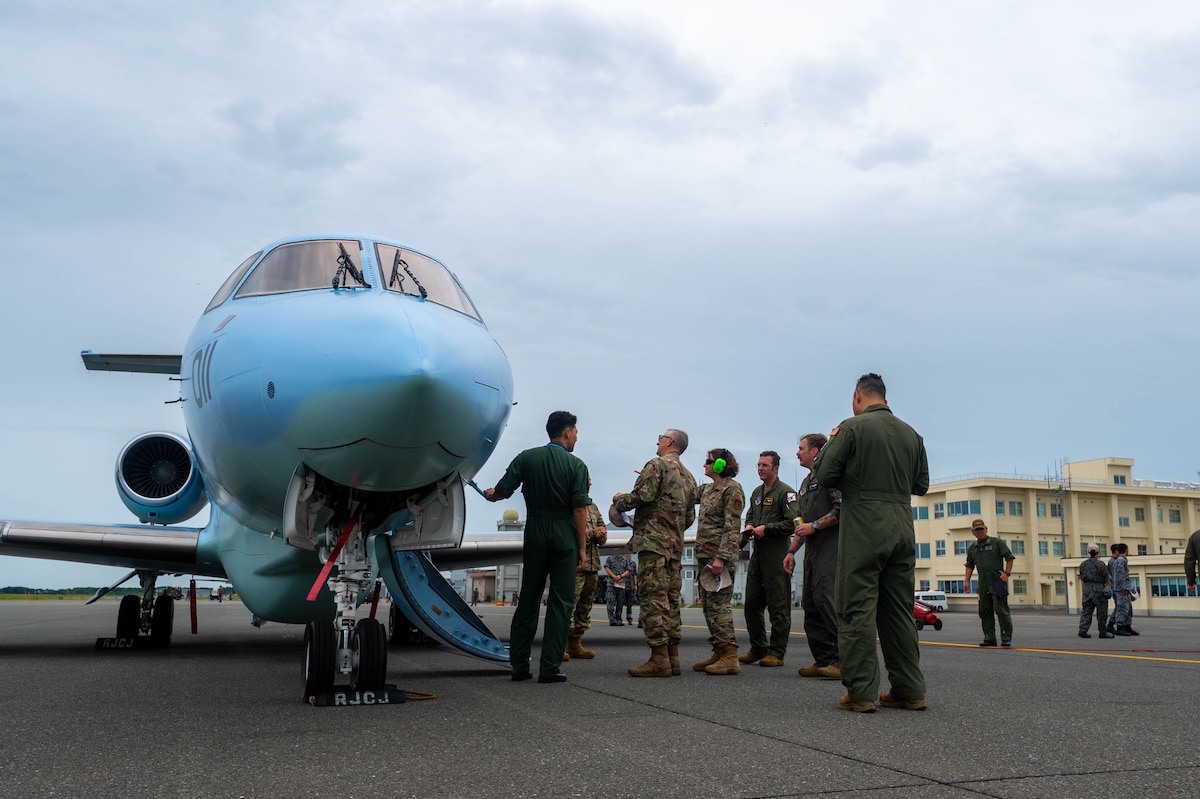
U.S. Air Force Airmen assigned to the 102nd and 130th Rescue Squadrons are shown a Japan Air Self-Defense Force Air Rescue Wing U-125A search-and-rescue coordination aircraft for a cross-unit static display and capability exchange during exercise Resolute Force Pacific (REFORPAC) at Misawa Air Base, July 15, 2025.
U.S. Air Force Airmen assigned to the 102nd and 130th Rescue Squadrons are shown a Japan Air Self-Defense Force Air Rescue Wing U-125A search-and-rescue coordination aircraft for a cross-unit static display and capability exchange during exercise Resolute Force Pacific (REFORPAC) at Misawa Air Base, July 15, 2025. Events like this highlight how REFORPAC strengthens combined capability and coordination for real-world contingencies across the Indo-Pacific region. (U.S. Air Force photo by Airman 1st Class Koby Mitchell)

A Japan Air Self-Defense Force Airman assigned to the Air Rescue Wing displays the internals of a UH-60J helicopter for a cross-unit static display and capability exchange during exercise Resolute Force Pacific (REFORPAC) 2025 at Misawa Air Base, July 15, 2025.
A Japan Air Self-Defense Force Airman assigned to the Air Rescue Wing displays the internals of a UH-60J helicopter for a cross-unit static display and capability exchange during exercise Resolute Force Pacific 2025 at Misawa Air Base, July 15, 2025. These exchanges support REFORPAC’s objective to improve understanding and reinforce multilateral response readiness in contested environments. (U.S. Air Force photo by Airman 1st Class Koby Mitchell)

Throughout the display, participating Airmen discussed aircraft capabilities and differences in personnel recovery methods.

“One notable difference is in the pararescue insertion methods,” Conner said. “JASDF Pararescue typically insert via hoist from the UH-60J, since their fixed-wing aircraft belong to the Airlift Command. Meanwhile, our HC-130J enables personnel airdrops, which allows our Pararescue to get to the fight.”

Conner also pointed out technical details that stood out during the tour.

“I was surprised to see the UH-60J outfitted with external fuel tanks — that really extends its loiter time,” he added.

More than a showcase of equipment, the event fostered personal relationships, improved operational communication and strengthened shared tactics.

“This event is extremely important in building a framework for further cooperation,” Conner said. “It puts faces and names to specific units and enables us to fly real-world missions together during REFORPAC. By briefing and mission planning together, we’re able to execute helicopter air-to-air refueling and speak the same language and brevity terms while flying in close formation over the Sea of Japan.”

The visit concluded with a group photo symbolizing shared commitment among the rescue units. A common thread across all participating squadrons stood out: their shared motto, That Others May Live.

“Everyone got a kick out of the fact that our units all share the same motto,” Conner said. “It’s a powerful reminder that no matter the uniform, our mission is the same.


Defense News in Brief: US, Australian C-17s spearhead multinational joint force entry during Talisman Sabre 25

Source: United States Airforce

Multiple U.S. Air Force and Royal Australian Air Force C-17 Globemaster IIIs executed a joint force-entry operation into Australia, deploying U.S. Army and international paratroopers in support of Talisman Sabre 25.

Originating from Joint Base Elmendorf-Richardson, Alaska, the mission spanned the immense distances of the Pacific, sustained by U.S. Air Force aerial refueling operations. It culminated in the precision insertion of 314 U.S. Army 11th Airborne Division, Australian Defence Force and German Army paratroopers into a designated drop zone in eastern Australia.

“We employ large formations to quickly and effectively place mass at the time and place of our choosing,” said U.S. Air Force Lt. Col. Christopher Bukowski, 535th Airlift Squadron, 15th Wing, director of operations. “Executing a drop like this at speed and scale, and in conjunction with our allies and joint partners, is crucial to honing that skill and sending a deterrent message to our adversaries.”

The one-way, trans-Pacific journey spanned over 6,200 miles and was conducted by 13 C-17 aircraft assigned to the 15th Wing, Pacific Air Forces, 437th Airlift Wing, Air Mobility Command, and 164th Airlift Wing, Tennessee Air National Guard, underscored the robust U.S.-Australia partnership and shared commitment to regional defense.

“Through the strategic employment of U.S. Air Force mobility aircraft, our highly proficient teams—operating in close coordination with partners and allies — refined the ability to project personnel and mission-critical material across the vast Pacific with precision and speed,” said U.S. Air Force Capt. Ana Donohue, 535th Airlift Squadron C-17 pilot. “This critical capability was showcased during a recent joint forcible entry operation, where the air domain proved to be the decisive bridge between strategic airlift and ground-based objectives, enabling the rapid achievement of essential outcomes across a geographically expansive and demanding operational theater.”

The meticulous planning required for this complex joint force-entry operation extended months in advance of the Talisman Sabre 2025 exercise, highlighting the extensive coordination between allied forces.

Talisman Sabre, the largest bilateral military exercise between Australia and the United States, is pivotal to advancing a free and open Indo-Pacific. It fortifies relationships and interoperability among key allies and partners, concurrently enhancing collective capabilities to address a spectrum of complex security challenges.

Defense News in Brief: U.S., the Philippines Conduct Maritime Cooperative Activity

Source: United States Navy

The Armed Forces of the Philippines (AFP), Philippine Coast Guard (PCG), and the U.S. Navy, conducted a bilateral Maritime Cooperative Activity (MCA) within the Philippines’ Exclusive Economic Zone, demonstrating a collective commitment to strengthen regional and international cooperation in support of a free and open Indo-Pacific, July 16.