Defense News in Brief: USS Thomas Hudner Returns from Deployment to 4th and 6th Fleet

Source: United States Navy

The Arleigh Burke-class guided-missile destroyer USS Thomas Hudner (DDG 116) returned to Naval Station Mayport July 23, concluding a five-month deployment across multiple geographic theaters, including the U.S. 4th and 6th Fleet areas of operations.

USS Thomas Hudner Returns from Deployment to 4th and 6th Fleet

The crew departed Feb. 18, 2025, with their mission focused on strengthening international maritime security and relations with partner nations in the U.S. Southern Command area of responsibility. Shortly after arrival on station, Thomas Hudner welcomed the Honorable Pete Hegseth, Secretary of Defense, who recognized Thomas Hudner’s high-performing Sailors during his tour of Naval Support Activity (NSA) Guantanamo Bay facilities.

Upon departing NSA Guantanamo Bay, Thomas Hudner conducted trilateral operations in the Caribbean Sea with the Ticonderoga-class guided-missile cruiser USS Normandy (CG 60), the United Kingdom Royal Navy River-class offshore patrol vessel HMS Medway (P 223) and the Royal Netherlands Navy Holland-class offshore patrol vessel HNLMS Groningen (P843), enhancing interoperability among Allied naval forces. Thomas Hudner also conducted freedom of navigation operations off the coast of Cuba, reinforcing the U.S. Navy’s commitment to unity, security, and stability in the Caribbean, Central and South American maritime regions.

“The crew of Thomas Hudner has consistently proven their unwavering commitment in safeguarding America’s national security interests and maintaining the U.S. Navy’s maritime dominance worldwide,” said Cmdr. Cameron Ingram, commanding officer of Thomas Hudner. “I could not be more proud of my team!”

Throughout their deployment in the U.S. European Command area of responsibility, Thomas Hudner’s crew trained and engaged in a variety of activities, from maritime security operations to joint exercises with Allied and partner navies in the European theater.

Thomas Hudner participated in several notable exercises, including Formidable Shield 2025, executed alongside 11 NATO Allies in the North and Norwegian Seas and North Atlantic Ocean. During Formidable Shield 2025, Thomas Hudner executed joint, live-fire Integrated Air and Missile Defense (IAMD) training utilizing NATO command and control reporting structures to enhance interoperability among Allied naval forces.

Thomas Hudner also conducted several port visits and collaborative operations with Norway, the United Kingdom, Spain and Greece, reinforcing the U.S. Navy’s commitment to unity, security and stability in the region. During the 81st anniversary of D-Day landings in Normandy, Thomas Hudner also had the honor of representing the U.S. Navy and hosting a reception with Adm. Stuart B. Munsch, commander, U.S. Naval Forces Europe-Africa, and various other distinguished government and military leaders in the European theater.

Following operations in U.S. 6th Fleet’s northern flank, Thomas Hudner was assigned to conduct national tasking in the Eastern Mediterranean supporting Operation Cobalt Shield. Through this mission, Thomas Hudner successfully conducted maritime security operations and promoted regional stability while executing ballistic missile defense operations.

Thomas Hudner served as the flagship for multiple distinguished visitors throughout her deployment, including the Honorable Pete Hegseth, U.S. Defense Secretary; Air Force Gen. Dan Caine, Chairman of the Joint Chiefs of Staff; Adm. Christopher Grady, Vice Chairman of the Joint Chiefs of Staff; Adm. Alvin Holsey, commander, U.S. Southern Command; Adm. Stuart B. Munsch, commander, U.S. Naval Forces Europe-Africa; and members of the German, French and Royal navies.

“Over the course of a five-month deployment, USS Thomas Hudner and her exceptional crew exemplified the strength of American naval power and international cooperation,” said Capt. Aaron Anderson, Commander, Naval Surface Group Southeast. “Their efforts reflect the strength of our commitment to maritime security and cooperation with our Allies.”

Thomas Hudner is a multi-mission air warfare, undersea warfare, naval surface fire support, surface warfare and ballistic missile defense surface combatant capable of supporting carrier battle groups and amphibious forces, operating independently, or operating as the flagship of a surface action group.

U.S. 2nd Fleet, reestablished in 2018 in response to the changing global security environment, develops and employs maritime ready forces to fight across multiple domains in the Atlantic and Arctic in order to ensure access, deter aggression and defend U.S., Allied, and partner interests.

For more U.S. 2nd Fleet news and photos, visit facebook.com/US2ndFleet, https://www.c2f.usff.navy.mil/, X – @US2ndFleet, and https://www.linkedin.com/company/commander-u-s-2nd-fleet.


Defense News in Brief: Operation Healthy Tennessee: Where readiness meets relief

Source: United States Airforce

More than 200 service members from the U.S. Air Force, Air National GuardU.S. ArmyU.S. NavyU.S. Army Reserve and U.S. Air Force Reserve participated in Operation Healthy Tennessee, as part of the Department of Defense’s Innovative Readiness Training program, held July 11–21. Over the course of the mission, they provided no-cost medical, dental, optometry and veterinary services to over 2,600 residents across Rhea, Bledsoe and area counties.

The IRT program is a unique U.S. DoD initiative that enhances military readiness through hands-on, real-world training while delivering critical services to communities in need.

“This is a great opportunity to not only get services that the community may not be able to afford but they can see what the military provides”, said Cathy Swafford, Rhea County community lead. “You can tell that [the military members] just really want to serve their community and give back.”

Operation Healthy Tennessee brought together service members across the joint force, fostering an environment to strengthen readiness while offering services such as medical, dental, optometry, nutrition counseling and veterinary care, all provided at no cost by credentialed professionals.

“We are providing a great level of service,” stated Maj. Ralph Garcia, Bledsoe County officer in charge. “It’s a collaborative joint effort to bring resources to underserved communities.”

The mission proved to be a powerful example of the program’s impact, making a strong contribution towards the IRT Program.

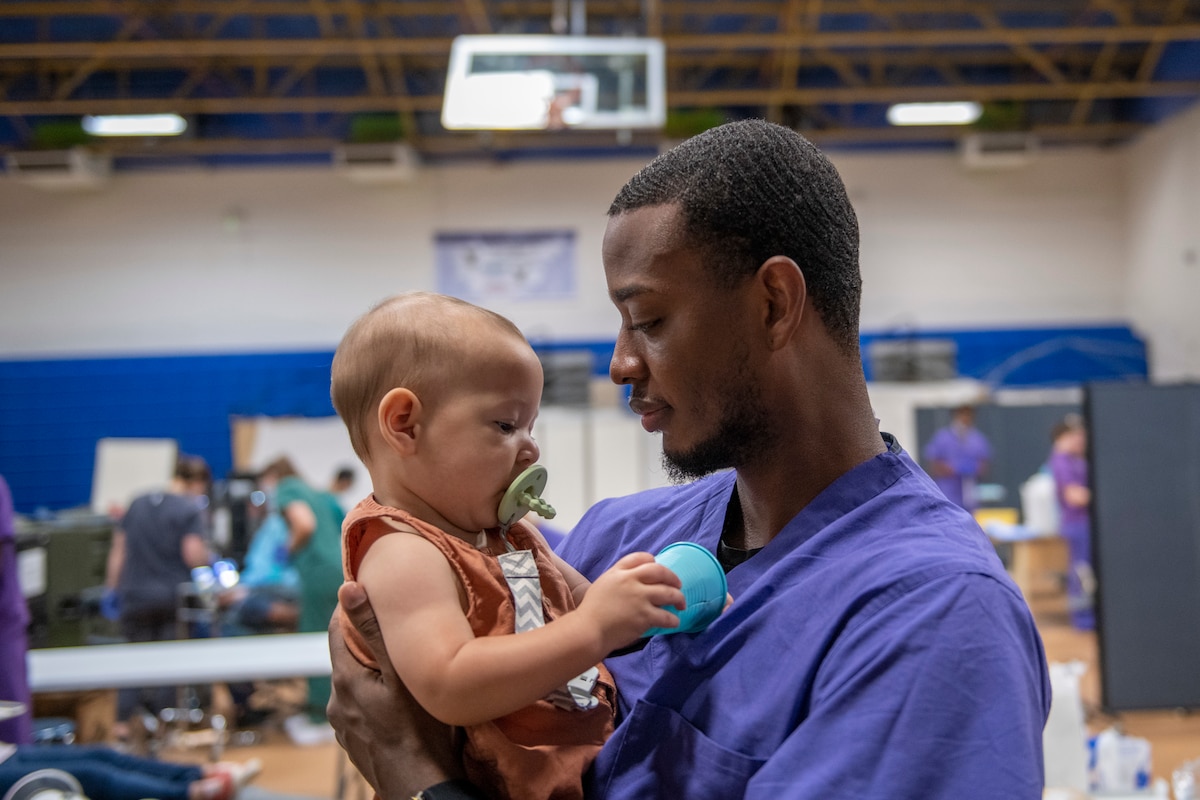
U.S. Air Force Senior Airman Shannando Harrison, a dental technician assigned to the 88th dental squadron, Oh., holds a baby while the baby’s mother receives dental care during Operation Healthy Tennessee, Bledsoe County High School, Pikeville, Tenn., July 18, 2025. Operation Healthy Tennessee provides no-cost medical, dental, vision and veterinary services to the residents of Bledsoe and Rhea County, as well as the surrounding areas while satisfying training requirements for active-duty, reserve and Air National Guard service members and units. (U.S. Air National Guard photo by SSgt. Sarah Stalder Lundgren)
U.S. Air Force Senior Airman Shannando Harrison, a dental technician assigned to the 88th dental squadron, Ohio, holds a baby while the baby’s mother receives dental care during Operation Healthy Tennessee, Bledsoe County High School, Pikeville, Tenn., July 18, 2025. Operation Healthy Tennessee provides no-cost medical, dental, vision and veterinary services to the residents of Bledsoe and Rhea County, as well as the surrounding areas while satisfying training requirements for active-duty, reserve and Air National Guard service members and units. (U.S. Air National Guard photo by SSgt. Sarah Stalder Lundgren)

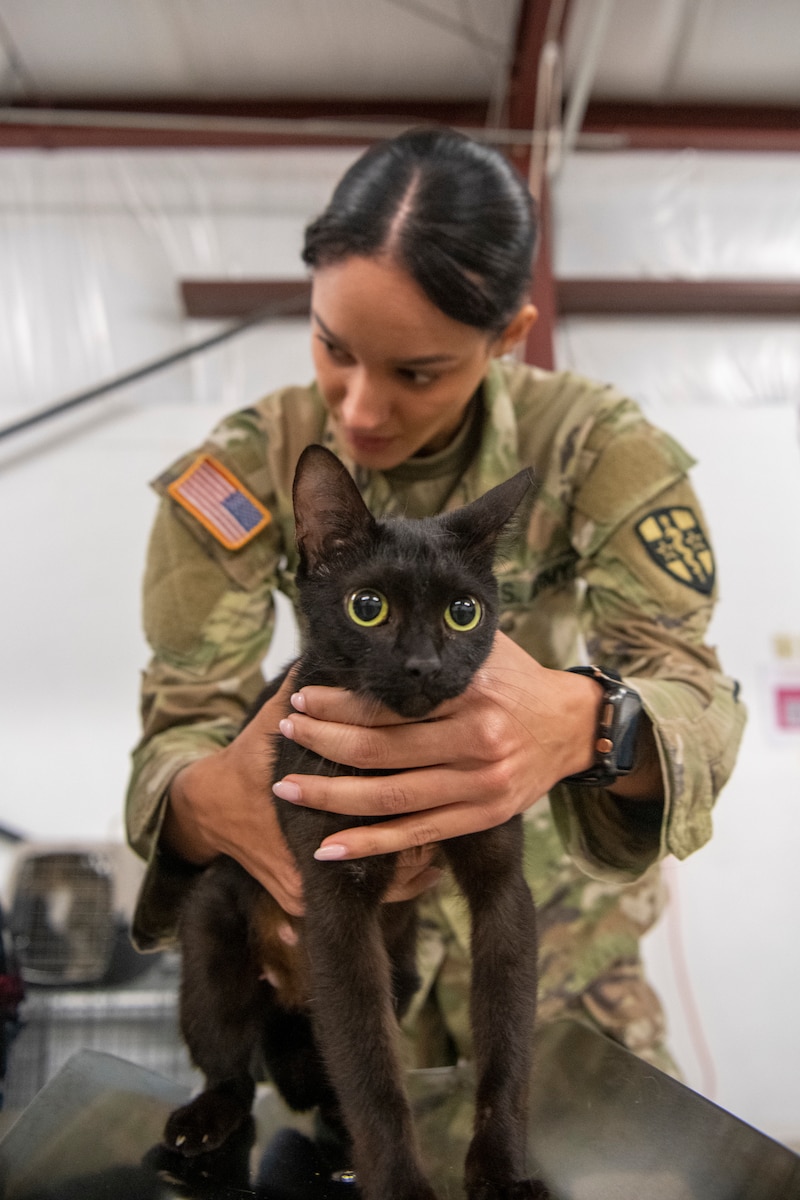
U.S. Army Sgt. Yeneidee Charriez Hernandez, an animal care specialist, assigned to the 7350th Veterinary Detachment, Ala., weighs a cat during veterinary care during Operation Healthy Tennessee, Rhea County Fair Grounds, Rhea County, Tenn., July 21, 2025. Operation Healthy Tennessee provides no-cost medical, dental, vision and veterinary services to the residents of Bledsoe and Rhea County, as well as the surrounding areas while satisfying training requirements for active-duty, reserve and Air National Guard service members and units. (U.S. Air National Guard photo by SSgt. Sarah Stalder Lundgren)

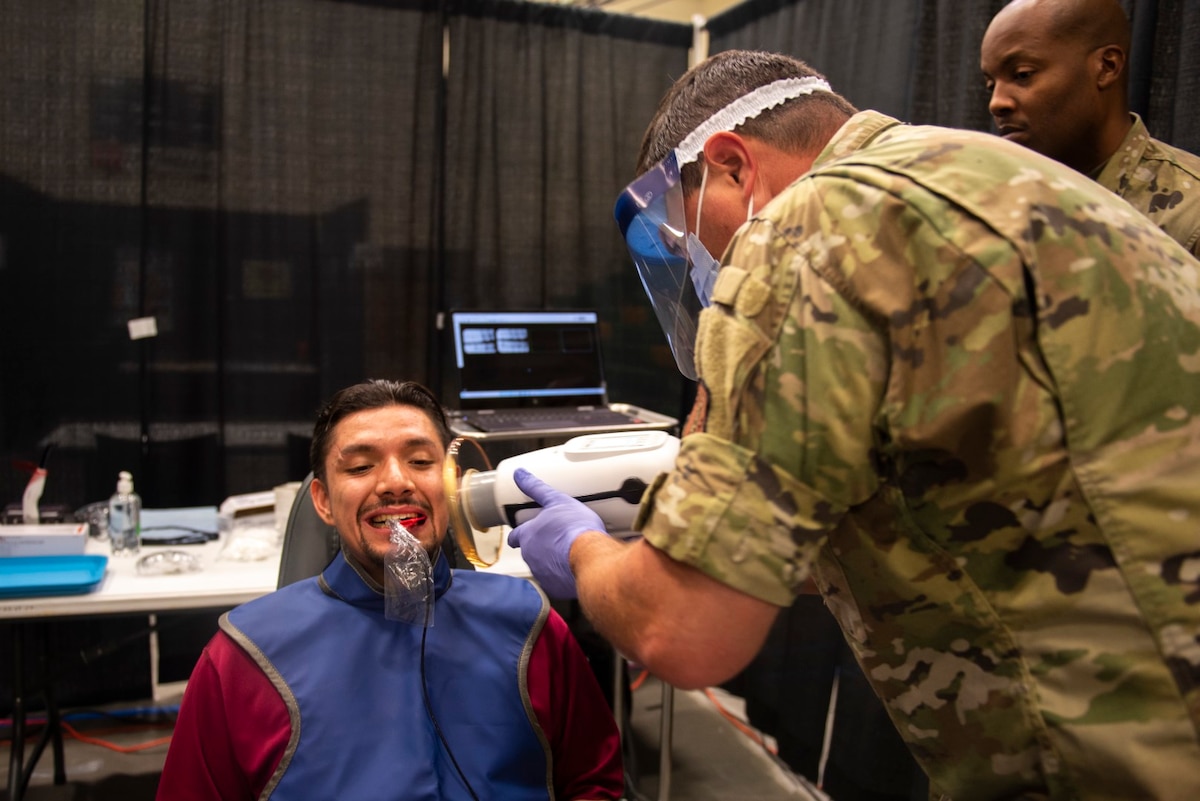
U.S. Air Force dental technician completes a dental X-ray for a local resident during Operation Healthy Tennessee, Rhea County Middle School, Evensville, Tenn., July 10, 2025.
A U.S. Air Force dental technician completes a dental X-ray for a local resident during Operation Healthy Tennessee, Rhea County Middle School, Evensville, Tenn., July 10, 2025. Operation Healthy Tennessee provides no-cost medical, dental, vision and veterinary services to the residents of Bledsoe and Rhea County, as well as the surrounding areas while satisfying training requirements for active-duty, reserve and Air National Guard service members and units.

In just 10 days, two medical clinic locations served 2,000 patients and completed more than 15,000 medical, dental and optometry procedures. The veterinary team treated 677 pets, delivering services valued at $314,465. A specialized optometry team, assigned to the mission as part of a Naval Ophthalmic Readiness Activity, built and distributed more than 770 pairs of glasses for those in need.

The fair market value of all medical and veterinary services provided is totaled at $1.9 million.

“Training is such an important part of an IRT,” said Lt. Danielle Lloyd, Operation Healthy Tennessee officer in charge. “Although we are providing much needed medical care to this community, at the same time, we are training to make sure we are staying mission ready.”

The operation logged more than 25,000 training hours across categories including readiness, certification, clinic skills, ad-hoc tasks and hands-on training.

IRT missions, like Operation Healthy Tennessee, often represent a once-in-a-career opportunity, and participants are encouraged to fully embrace the collaborative environment, network with fellow service members and connect with the public to which we are caring for to maximize the experience.

“Now that we’ve had our last day of clinical care and we’re able to see the final numbers, it’s such a good feeling to see that we’ve helped so many community members,” Lloyd said. “There’s no better feeling than seeing someone who desperately needed care and being able to provide it at no cost.”


Defense News in Brief: Air Force stands up A6 for warfighter communications, cyber systems

Source: United States Airforce

The Department of the Air Force has created a new AF/A6 Deputy Chief of Staff office dedicated to warfighter communications and cyber systems.

 This structure is designed to address operational communications and cyber needs effectively throughout the force.

The creation of the AF/A6 office separates the responsibilities for communications and cyber systems from the previous A2/6 framework, marking one of the most significant reorganizations of the Air Staff in over 30 years.

According to Air Force leaders, the change is designed to improve readiness, resilience and operational effectiveness by aligning resources and risk management with mission requirements.

“We created the A6 to ensure communications and cyber systems are available, secure and aligned with warfighter priorities,” said Air Force Chief of Staff Gen. David W. Allvin. “This office will help us focus resources and oversight where it matters most — supporting the mission in contested environments.”

The AF/A6 aligns with broader Department of Defense efforts to advance command and control capabilities, including the DAF Battle Network and Combined Joint All-Domain Command and Control. The office is also expected to provide enterprise-level advocacy on requirements, architecture and funding decisions.

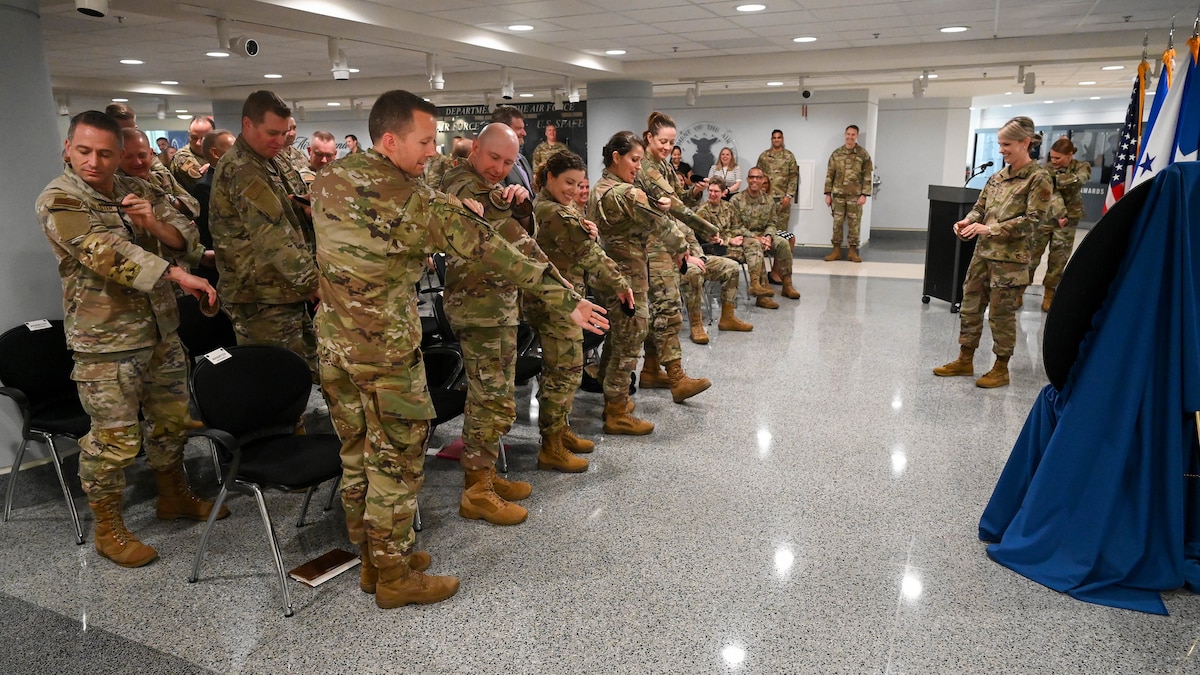
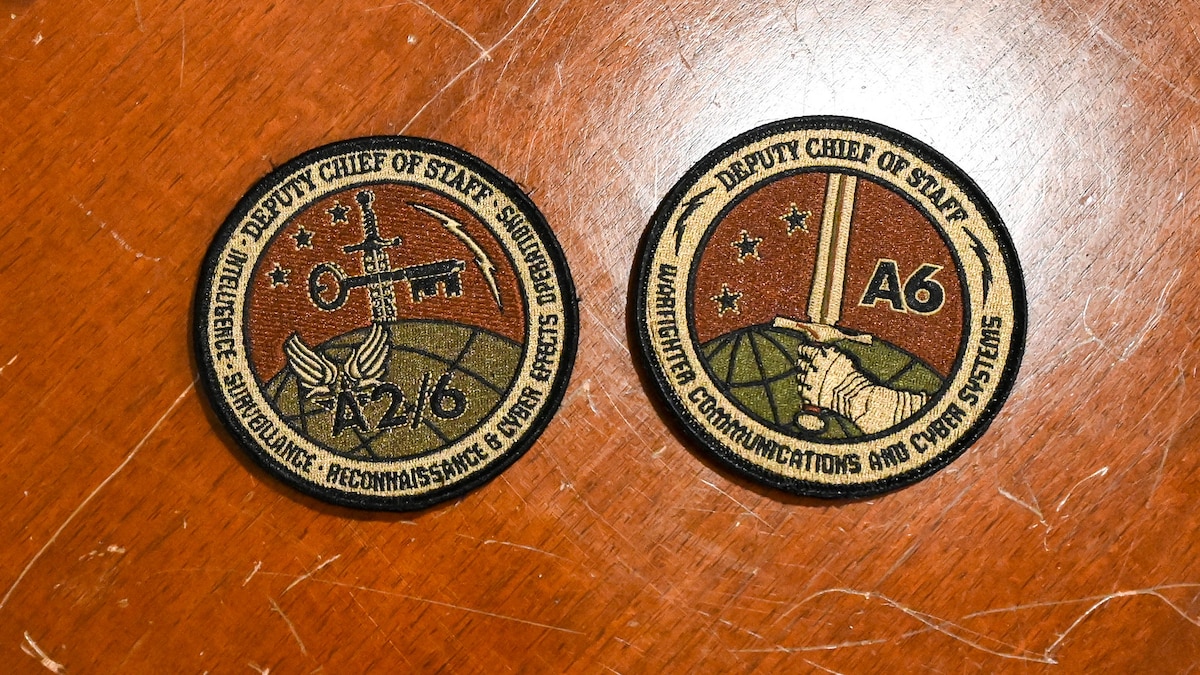
Service members stand and replace their patches with new ones.
Members of the new Deputy of the Chief of Staff Warfighter, Communications and Cyber Systems remove their old patches and replace them with new ones at the Pentagon, Arlington, Virginia, July 23, 2025. The creation of the AF/A6 office separates the responsibilities for communications and cyber systems from the previous A2/6 framework, marking one of the most significant reorganizations of the Air Staff in over 30 years. (U.S. Air Force photo by Staff Sgt. Stuart Bright)

A photo of the new patch
The new Deputy of the Air Force Warfighter, Communications and Cyber Systems patch is displayed at the Pentagon, Arlington, Va., July 23, 2025. The new Air Force A6 logo was designed by Master Sgt. Michael Williams, 85th Engineering Installation Squadron. The creation of the AF/A6 office separates the responsibilities for communications and cyber systems from the previous A2/6 framework, marking one of the most significant reorganizations of the Air Staff in over 30 years. (U.S. Air Force photo by Staff Sgt. Stuart Bright)

Lt. Gen. Leah Lauderback, former Deputy Chief of Staff for Intelligence, Surveillance, Reconnaissance and Cyber Effects Operations, said the A6 will serve as a critical link between operational feedback and strategic planning.

“Standing up the A6 allows us to manage risk, prioritize limited resources and advocate for warfighter needs using data from across the enterprise,” Lauderback said. “It’s a necessary step to treat communications and cyber as the operational enablers they are.”

Maj. Gen. Michelle Edmondson has been appointed to serve as the first standalone Deputy Chief of Staff for AF/A6. Her experience in operations, training and strategic planning is expected to help the office’s focus on delivering integrated, resilient communications capabilities across domains.

“Our mission is to ensure warfighters have the reliable, secure communications they need to succeed in a complex and contested environment,” Edmondson said. “We’re building an enterprise that connects people, systems and decisions at the speed required by today’s operational demands.”

The office will coordinate with various stakeholders, including the department’s chief information officer, the principal cyber advisor, major command A6 offices, acquisition program offices and other operational and functional communities.

Officials emphasized the AF/A6 will be organized around a warfighter-centric model, designed to support current capabilities while informing future investment decisions and force design initiatives.


Defense News in Brief: US-Philippine Airmen strengthen ties during Cope Thunder 25-2

Source: United States Airforce

PACAF participated in Cope Thunder 25-2, a unique platform that integrates U.S. and Philippine Air Forces and enhances interoperability through bilateral fighter training, subject matter expert exchanges and key leadership

engagements.

U.S. Pacific Air Forces and Philippine Air Force members participated in Cope Thunder 25-2, a bilateral training conducted across multiple locations in the Philippines. The exercise aimed to strengthen partnerships and support the Philippine Air Force’s modernization efforts, promoting regional and global stability.

Established in the Philippines in 1976, Cope Thunder provides a unique platform to integrate U.S. and Philippine Air Forces and enhance interoperability through bilateral fighter training, subject matter expert exchanges and key leadership engagements. Cope Thunder 25-2 also marked the first time a U.S. Air Force F-35A Lightning II squadron has deployed to the Philippines.

“It’s obvious that this isn’t a relationship that’s simply on paper,” said Lt. Col. Bryan Mussler, 421st Mission Generation Force Element commander. “We’ve been integrating with them for a long time, and their mentality and approach to operations is very similar to ours.”

Subject matter expert exchanges during the exercise enabled U.S. and Philippine Airmen in similar career fields to share best practices and effective techniques aimed at improving day-to-day operations for both forces. These exchanges included maintenance, firefighting, airfield operations, electromagnetic warfare and basic fighter maneuvers, with U.S. and Philippine pilots flying side by side.

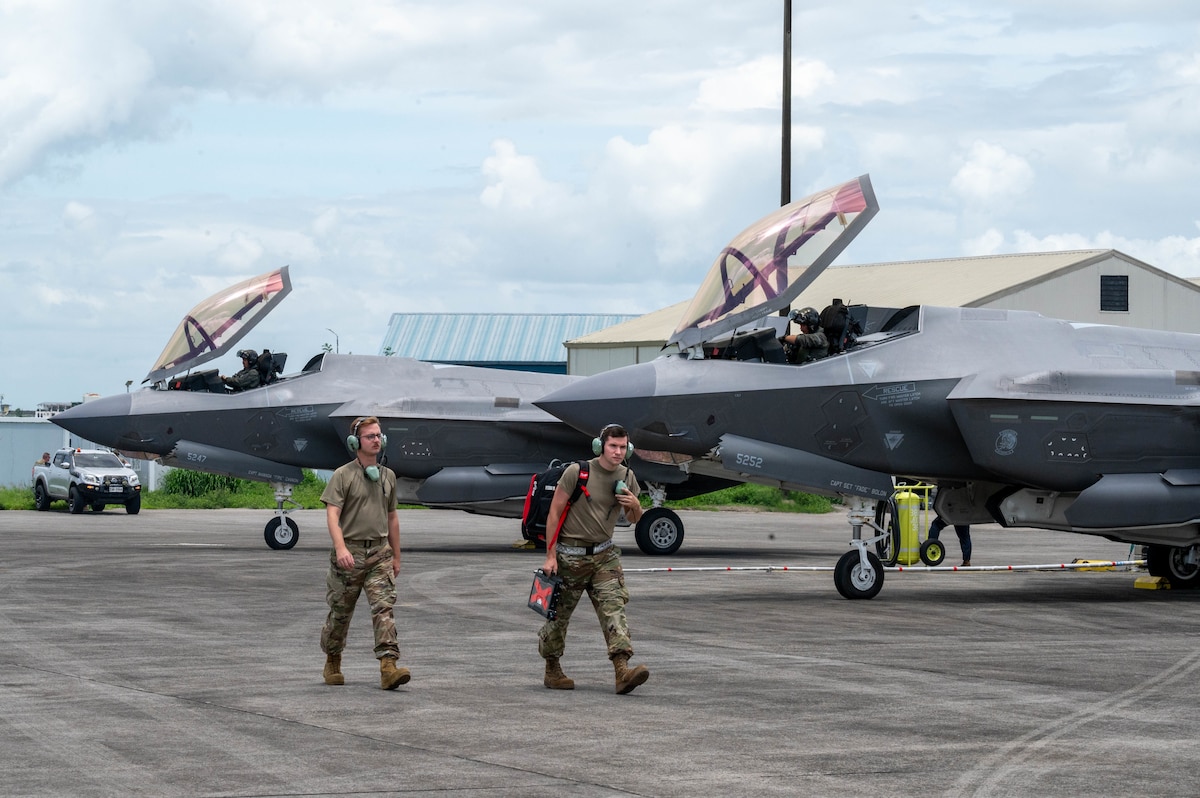
U.S. Air Force maintainers, assigned to the 421st Mission Generation Force Element, depart the flightline after conducting preflight operations on an F-35A Lightning II during Cope Thunder 25-2 at Clark Air Base, Philippines, July 7, 2025. The exercise enhances interoperability between the U.S. Air Force and the Philippine Air Force and supported the Armed Forces of the Philippines' modernization efforts. (U.S. Air Force photo by Airman 1st Class Aden Brown)
U.S. Air Force maintainers, assigned to the 421st Mission Generation Force Element, depart the flightline after conducting preflight operations on an F-35A Lightning II during Cope Thunder 25-2 at Clark Air Base, Philippines, July 7, 2025. The exercise enhances interoperability between the U.S. Air Force and the Philippine Air Force and supported the Armed Forces of the Philippines’ modernization efforts. (U.S. Air Force photo by Airman 1st Class Aden Brown)

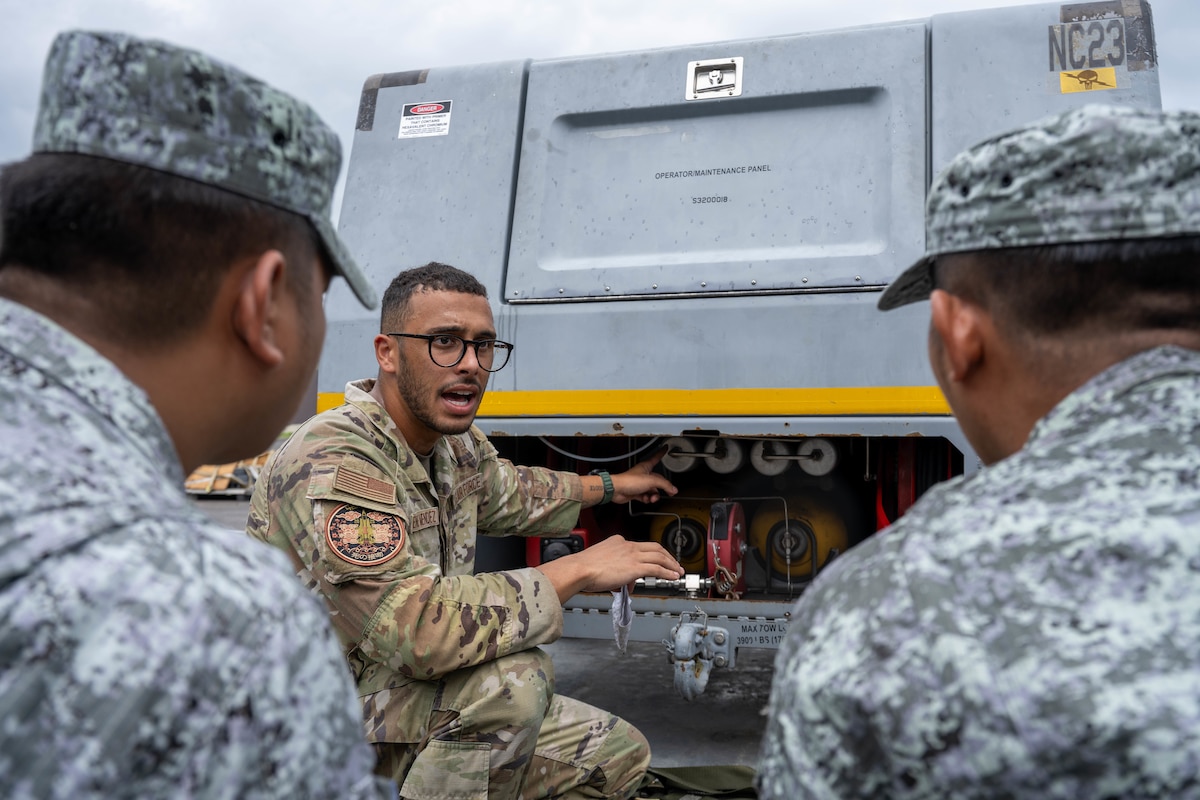
U.S. Air Force Staff Sgt. Arnaldo Puente Mendez, 421st Mission Generation Force Element aerospace ground equipment maintainer, briefs Philippine Air Force airmen on a self generating nitrogen servicing cart during Cope Thunder 25-2 at Clark Air Base, Philippines, July 9, 2025. During the subject matter expert exchange, U.S. Airmen provided valuable insight into equipment used for aircraft maintenance, supporting Armed Forces of the Philippines’ modernization efforts. (U.S. Air Force photo by Airman 1st Class Aden Brown)
U.S. Air Force Staff Sgt. Arnaldo Puente Mendez, 421st Mission Generation Force Element aerospace ground equipment maintainer, briefs Philippine Air Force airmen on a self-generating nitrogen servicing cart during Cope Thunder 25-2 at Clark Air Base, Philippines, July 9, 2025. During the subject matter expert exchange, U.S. Airmen provided valuable insight into equipment used for aircraft maintenance, supporting Armed Forces of the Philippines’ modernization efforts. (U.S. Air Force photo by Airman 1st Class Aden Brown)

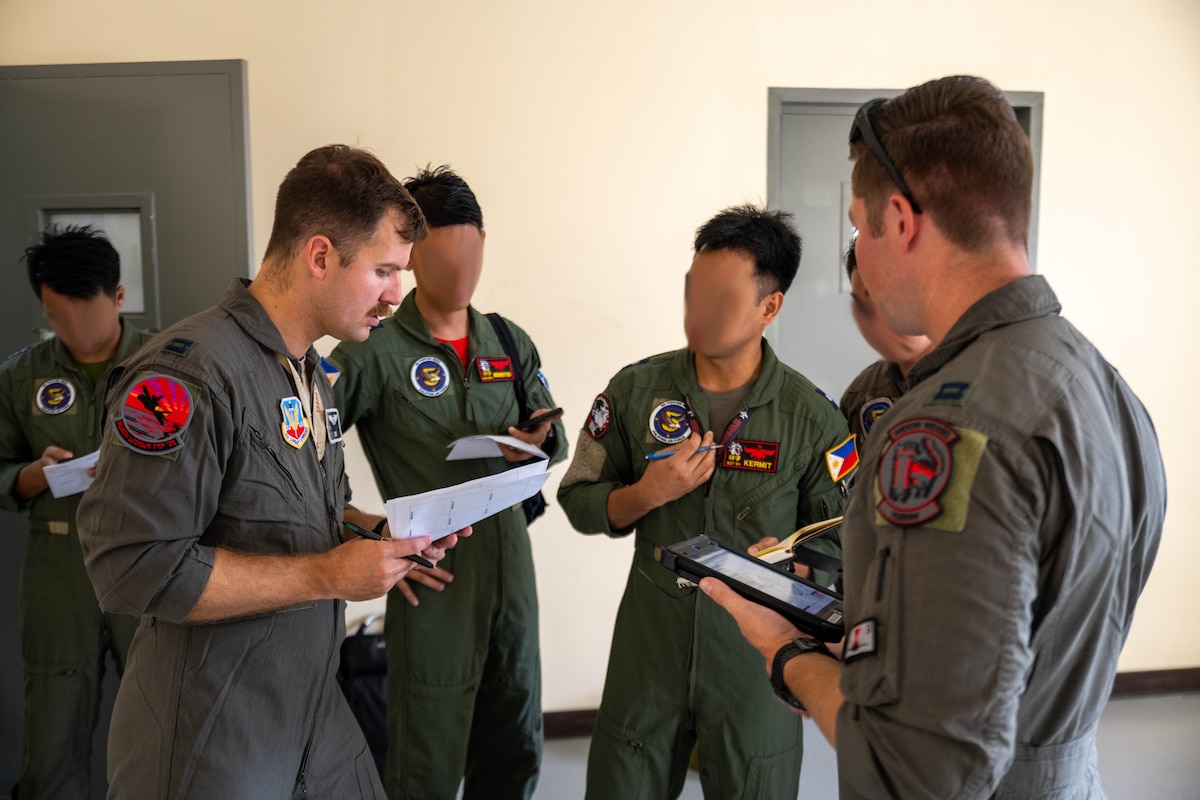
U.S. Air Force Capt. Tyler Rico (2nd left) and Capt. Toney Fisher (right), 421st Mission Generation Force Element F-35A pilots, coordinate flight plans with Philippine Air Force pilots during the Cope Thunder 25-2 exercise at Clark Air Base, Philippines, July 7, 2025. The training conducted between the U.S. and Philippine Air Force strengthens both the ability to respond together for potential future crises, contingencies and natural disasters. (U.S. Air Force photo by Airman 1st Class Aden Brown) (Image blurred for operational security)
U.S. Air Force Capt. Tyler Rico, second to the left, and Capt. Toney Fisher, right, 421st Mission Generation Force Element F-35A pilots, coordinate flight plans with Philippine Air Force pilots during the Cope Thunder 25-2 exercise at Clark Air Base, Philippines, July 7, 2025. The training conducted between the U.S. and Philippine Air Force strengthens both the ability to respond together for potential future crises, contingencies and natural disasters. (U.S. Air Force photo by Airman 1st Class Aden Brown) (Image blurred for operational security)

“We worked closely with the PAF pilots, and it was clear they are professional and highly capable aviators that employ their weapon systems with skill and precision,” said Capt. Tobey Fisher, 421st Mission Generation Force Element F-35A instructor pilot. “Additionally, this exercise afforded the 421st MGFE the opportunity to operate at a remote airfield with minimal support.”

The F-35A maintenance team supported Cope Thunder 25-2 with a lean, agile team, operating with roughly one-third of the personnel they typically have at their home station.

“It’s really cool to see such a small team come here and execute the mission,” said Maj. Clinton Bialcak, 421st Fighter Generation Squadron commander, referring to executing the F-35 maintenance mission. “I think everyone in the region, in the world and in the Department of Defense sees that we can do it and they can rely on us.”

The U.S. Air Force’s participation reflects ongoing efforts to strengthen coordination with regional allies and partners.


Defense News in Brief: Holloman medics enhance fitness and expeditionary capabilities in Medic-X exercise

Source: United States Airforce

By incorporating field tactics and wartime medical practice in a Medic-X exercise, the 49th Medical Group added a new layer of depth to their monthly training day.

The medics of the 49th Medical Group added a new layer of depth to their monthly training day by incorporating field tactics and wartime medical practice in a Medic-X exercise on July 16, 2025.

The training consisted of 16 stations and substations that ranged from spinal immobilization to infection control to post-mortem protocol, all scenarios that are critically important for a medic to know but unlikely to experience in a clinical setting such as the clinic at Holloman Air Force Base.

“Gone are the days when a medic would only be expected to perform duties within their specific specialty – our medics need to be versatile and better equipped to provide speedy and effective support to the warfighter,” said U.S. Air Force Chief Master Sgt. Jason Estrada, 49th MDG senior enlisted leader. “That versatile mindset is what our medical group education and training team has used to shape our Medic-X and other hands-on training.”

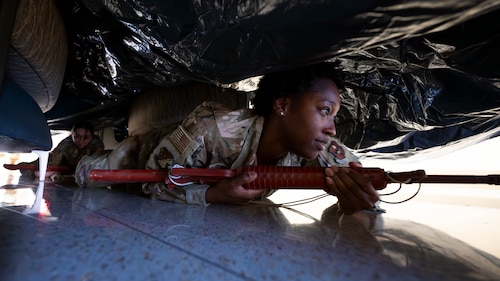
U.S. Air Force Airman 1st Class Da’Ja Thomas, 49th Healthcare Operations Squadron mental technician, low-crawls through an obstacle course during a Medic-X exercise at Holloman Air Force Base, New Mexico, July 16, 2025.
U.S. Air Force Airman 1st Class Da’Ja Thomas, 49th Healthcare Operations Squadron mental technician, low-crawls through an obstacle course during a Medic-X exercise at Holloman Air Force Base, N.M., July 16, 2025. This iteration of Medic-X integrated field exercises for medics who typically perform clinical and administrative duties, allowing them to sharpen their tactical skills while supporting lethal warfighters downrange. (U.S. Air Force photo by Tech. Sgt. Victor J. Caputo)

The Air Force is one of the most lethal parts of the Department of Defense, and the flipside of lethality is the medical skill needed to keep the warfighters in the fight downrange. This more hands-on approach to training was brought about after an education and training member went through the intense two-week Tactical Combat Casualty Care Tier 3 course and realized how important it would be to bring lessons learned to the entire medical group.

“We’re focusing on operating in an austere environment where it’s not going to be calm, it’s not going to be like day-to-day clinic operations,” said U.S. Air Force Capt. Natasha Lindbloom, 49th MDG education and training flight commander. “You could tell somebody to recite the alphabet, but if it’s stressful, they’re going to mess it up. We want our people to be able to do this until they can perform these simple tasks under pressure.”

Although we cannot mirror a battlefield environment, we can put our medics in situations where critical thinking and a sense of urgency fuels their training to ‘kick in.’Chief Master Sgt. Jason Estrada, 49th MDG senior enlisted leader

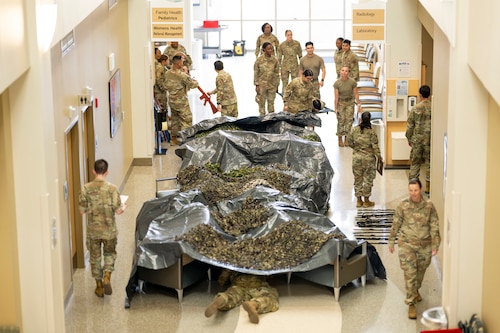
Coupled with the chance to exercise underutilized but combat-effective skills, the exercise served to underscore the importance of medics who are fit to fight and capable of doing what’s needed when it’s needed in a stressful and possibly deadly environment. A low-crawl obstacle course was put together using furniture and gear inside the clinic, streamlining the flow of training and simulating a more realistic urban environment.

Airmen from the 49th Medical Group rotate between stations during a Medic-X exercise at Holloman Air Force Base, New Mexico, July 16, 2025.
Airmen from the 49th Medical Group rotate between stations during a Medic-X exercise at Holloman Air Force Base, N.M., July 16, 2025. This exercise allowed every member of the medical group to sharpen field skills they are not able to practice every day while providing critical clinical support to Team Holloman. (U.S. Air Force photo by Tech. Sgt. Victor J. Caputo)

“Although we cannot mirror a battlefield environment, we can put our medics in situations where critical thinking and a sense of urgency fuels their training to ‘kick in,’” Estrada said. “Since so few of our current medics possess the real-world experience, it’s our training team that brings these scenarios to life with realism and pressure-induced decision making, which results in the desired sets & reps our teams need to build muscle memory.

Constant Improvement

Medic-X training exercises are not a new concept for medical personnel; in fact, Medic-X was rolled out across the enterprise two years ago and has provided quarterly training objectives to all Defense Health Agency members. The ever-changing global environment and nature of future warfare were other driving factors in the 49th MDG collectively getting ahead of the curve and practicing these critical wartime skills on top of staying adept at their daily clinical duties.

“I’m hoping this gives people the mindset of ‘Hey, I know I’m in this job right now and I’m comfortable, but I’m not always going to be comfortable if we’re put in these situations in real life,’” said U.S. Air Force Senior Airman Claire Pruitt, 49th MDG education and training program manager.

All Airmen take TCCC Tier-1 training that covers the basics of what was formerly known as self-aid and buddy care, while all medics are required to take Tier-2 training to gain more expertise in the ability to treat wounds sustained in combat. Tier-3 training is optional but available for all medics and provides a realistic, grueling experience of austere field conditions and the physical limits that medics can be pushed to in wartime.

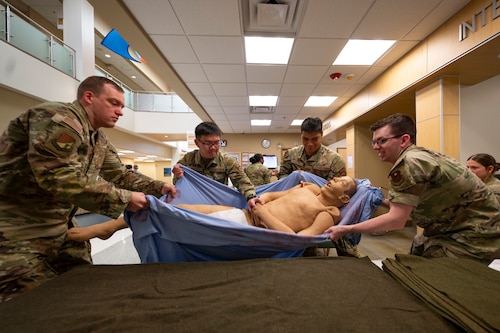
Airmen from the 49th Medical Group transfer a 200-pound training dummy from a gurney to an operating table during a Medic-X exercise at Holloman Air Force Base, New Mexico, July 16, 2025.
Airmen from the 49th Medical Group transfer a 200-pound training dummy from a gurney to an operating table during a Medic-X exercise at Holloman Air Force Base, N.M., July 16, 2025. This exercise allowed every member of the medical group to sharpen field skills they are not able to practice every day while providing critical clinical support to Team Holloman. (U.S. Air Force photo by Tech. Sgt. Victor J. Caputo)

“There’s going to be a bit of a shock factor for people working in a clinic, where even though we’re incredibly busy, a lot of it is just administrative work instead of intense, hands-on medical practice,” Pruitt said. “I’m trying to integrate some of the things that they did with us in a physical aspect at the Tier 3 training so that these Airmen have more experience and understand that if they have to do this in real life tomorrow, it’s not going to be easy. They’ll have to think about getting the patient out of the combat zone, treating their wounds, stopping the bleeding, loading them onto a helicopter, etc.”

The success of the first iteration of integrated field work with Medic-X has laid the groundwork for an ever-improving series of exercises to better prepare Team Holloman’s medics for unpredictable and challenging fights of future conflict.

“Today’s potential adversaries are better equipped and more prepared than any potential foe has ever been,” Estrada said. “For that reason, every uniform-wearing member of our military needs to understand that he/she is one bad day, one ill-guided decision, one perceived threatful action away from finding themselves, in support of our country, inside a combat environment where the old rules may not apply.”


Defense News in Brief: Surging airpower in the Pacific: Lamontagne observes allied mobility in action

Source: United States Airforce

The commander of AMC visited the 515th AMOW squadrons during the U.S. Air Force Department-Level Exercise, to see how the Pacific-oriented AMC wing conducts an operational surge.

Gen. Johnny Lamontagne, Air Mobility Command commander, visited the 515th Air Mobility Operations Wing during a recent stop in the Indo-Pacific theater to observe the U.S. Air Force’s 2025 Department-Level Exercise series — this first-in-a-generation exercise series is designed to test the service’s ability to rapidly deploy at speed and scale and sustain global operations.

The 515th AMOW, headquartered in Hawai’i, plays a pivotal role in enabling air mobility across the Indo-Pacific region. Lamontagne’s visit focused on how air mobility squadrons operate during surge conditions and how they integrate with Allies and partners to move critical capabilities where they are most needed.

“Hosting Gen. Lamontagne was a great chance to show how our Airmen rise to the challenge,” said Col. Jens Lyndrup, 515th AMOW commander. “They surge, adapt and deliver — with our allies by their side — and they do it with incredible precision and pride.”

Lamontagne echoed that sentiment, praising the dedication and resilience of Airmen across the theater.

“The Airmen are what impress me, period,” Lamontagne said. “The Airmen of the air mobility squadrons are fully executing the mission in tough environments during a very challenging exercise, helping the Department of the Air Force come together in a big way.”

With contested logistics becoming a central theme in defense planning, Lamontagne emphasized the 515th AMOW’s unique role in scaling operations and reinforcing key nodes in support of U.S. and Allied objectives.

“We couldn’t execute this large-scale exercise without the AMOW out here in the Pacific,” he said. “There’s no way we could project power at this scale without the 515th AMOW. They do an indispensable job surging capability where it’s needed, delivering greater throughput, capacity and operational reach.”

Close coordination with international partners was also a key focus of the visit. Lamontagne highlighted the strong relationship between the 730th AMS, based at Yokota Air Base, Japan, and the Japan Air Self-Defense Force.

“The 730th AMS has a great relationship with their Japanese counterparts, and we had the opportunity to meet with a couple of their three-stars who run their Air Defense Command and Air Support Command,” Lamontagne said. “They help us present forces at the tactical level and enable success at the operational and strategic levels very effectively each and every day.”

As competitors challenge U.S. military advantage in the region, Lamontagne emphasized the scale, speed and effectiveness of American airpower.

“No other air force can do it at the scale and on the timeline that our Air Force can,” he said. “Operating as one big Air Force to do what our nation needs us to do is really where it’s at.”

From enabling deterrence to sustaining operations at the tactical edge, the 515th AMOW and its network of mobility Airmen remain a critical part of the United States’ ability to project power — anytime, anywhere.


Defense News in Brief: USNS Comfort Departs Dominican Republic After Fourth CP25 Mission Stop

Source: United States Navy

PUERTO PLATA, Dominican Republic – The Mercy-class hospital ship USNS Comfort (T-AH 20) departed from Puerto Plata, Dominican Republic, July 21, 2025, after a four-day mission stop during Continuing Promise 2025 (CP25).

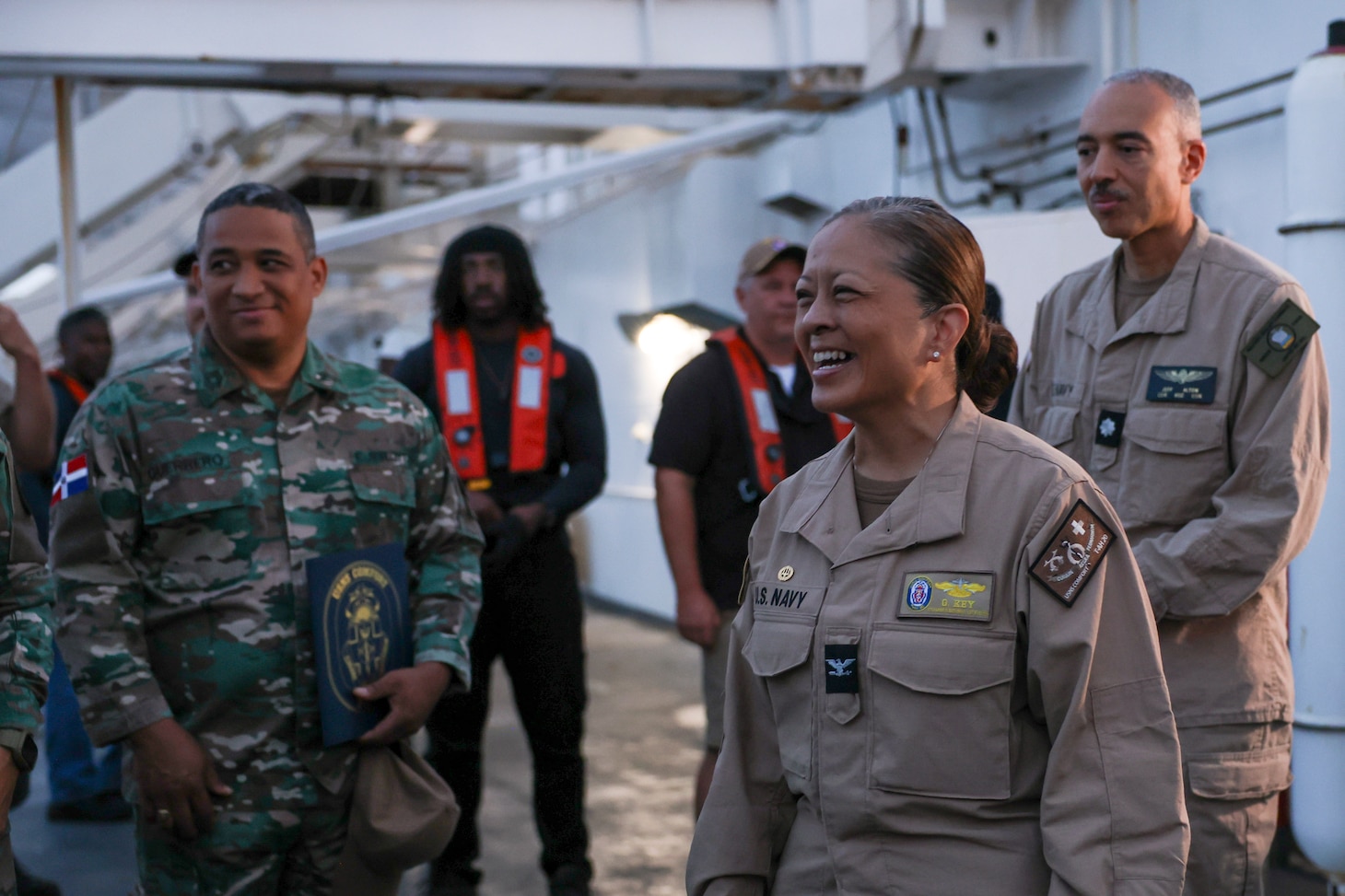
PUERTO PLATA, Dominican Republic (July 20, 2025) Capt. Grace Key, commanding officer, USNS Comfort Medical Treatment Facility, says goodbye to the Dominican Republic medical team as they depart the Mercy-class hospital ship USNS Comfort (T-AH 20) off the coast of Puerto Plata, Dominican Republic during Continuing Promise 2025, July 20, 2025. Continuing Promise 2025 is the 16th iteration of the U.S. 4th Fleet/U.S. Naval Forces Southern Command-led mission since 2007, which aims to foster goodwill, strengthen existing partnerships with partner nations, and form new partnerships between host nations, non-federal entities, and international organizations. (U.S. Navy photo by Mass Communication Specialist 2nd Class Rylin Paul)


At the Dominican mission stop, Comfort’s team provided medical and dental care, veterinary subject matter exchanges, medical subject matter exchanges, a humanitarian aid and disaster response workshop, band performances, and a beach clean-up event. During CP25, a Dominican military medical team embarked with Comfort, where they worked side-by-side with the ship’s crew to provide care to patients at each site visit of the mission.

“The collaboration we experienced here exemplifies what’s possible when partners come together with a shared commitment to service,” said Capt. Grace Key, commanding officer, USNS Comfort Medical Treatment Facility. “It’s through teamwork like this that we achieve a lasting impact.”

U.S. and Dominican providers together encountered 1,588 patient at the Puerto Plata medical site. Comfort’s medical and dental teams completed 248 dental cleaning and fillings, filled 1,158 pharmaceutical prescriptions, and distributed 160 assistive devices to Dominican patients. Additionally, 24 surgeries were performed aboard Comfort. A standout moment came from one of Comfort’s hospital corpsmen who, as a child, received dental treatment at a medical site in the Dominican Republic during a Continuing Promise mission stop in 2007. Hospitalman Flor Jones Garcia, assigned to Comfort, had a tooth extracted in the Dominican Republic by the Continuing Promise medical team when she was seven years old.

“It was awesome being back here,” said Jones Garcia, “I was able to see my mother and this was the first time she saw me in uniform, so I was pretty excited. It is absolutely astounding for me to be on the other side and provide medical care. It means everything to me and I know it does to the people of Puerto Plata as well.”

The mission stop also featured the U.S. Fleet Forces Band, “Uncharted Waters,” who had the opportunity to play alongside Dominican Republic ‘Oleaje’ band and Fuerza Aérea de República Dominicana band for Dominican citizens. They performed four concerts at Central Park of Puerto Plata, Dominican Republic with a total audience of 645 people.

“It’s a great opportunity to not only share cultural aspects in terms of dance and music, but it is also to highlight the work the other lines of effort are doing for the Dominicans,” said Ens. Chris McGann, assistant director of the U.S. Fleet Forces Band.

U.S. Army veterinarians from the 248th Medical Detachment Veterinary Service Support also hosted subject matter expert exchanges while in the Dominican Republic. They trained 187 members of the Fuerza Aérea de República Dominicana in K-9 tactical combat casualty care, as well as Dominican dairy farmers on proper cattle care and sanitization techniques. Furthermore, Comfort Sailors taught a tactical combat casualty care course to Armed Forces of the Dominican Republic members and Comfort’s preventive medicine team took part in a two-day health fair hosted by the Dominican Republic’s Ministry of Public Health.

Field training exercises and a beach clean-up were also conducted in Puerto Plata. The combined efforts for the beach clean-up resulted in the 366 hours of work and the removal of 3,152 pounds of trash from the local beaches. Humanitarian Assistance and Disaster Relief (HA/DR) held Search and Rescue (SAR) field training exercises with 160 Dominican participants, including federal firefighters and paramedics.

Following the mission stop in Dominican Republic, Comfort is scheduled to arrive in Limon, Costa Rica for CP25’s fifth mission stop.

CP25 marks the 16th mission to the region since 2007 and the eighth aboard USNS Comfort. The mission will foster goodwill, strengthen existing partnerships with partner nations, and encourage the establishment of new partnerships among countries, non-federal entities, and international organizations.

U.S. Naval Forces Southern Command/U.S. 4th Fleet supports U.S. Southern Command’s joint and combined military operations by employing maritime forces in cooperative maritime security operations to maintain access, enhance interoperability, and build enduring partnerships in order to enhance regional security and promote peace, stability and prosperity in the Caribbean, Central and South American region.

Learn more about USNAVSOUTH/4th Fleet news and photos, visit facebook.com/NAVSOUS4THFLT, https://www.fourthfleet.navy.mil/, X – @ NAVSOUS4THFLT, and https://www.linkedin.com/company/u-s-naval-forces-southern-command-u-s-4th-fleet

Defense News in Brief: CNRC Launches “Top Doc” in Fort Lauderdale

Source: United States Navy

FORT LAUDERDALE, Fla. — Navy Recruiting Command launched its national initiative pilot program, “Top Doc,” showcasing Medical Corps capabilities and career paths at Nova Southeastern University’s Fort Lauderdale campus on Saturday, July 12.

“Top Doc,” is designed to draw in a wide variety of people in various stages of their medical career path. This includes medical students, residents, residency program leaders and staff, and attending physicians in any type of practice or specialty.

“The involvement of a scholarly team of professionals, enabled by Nova Southeastern University’s prestigious health sciences programs, is a cornerstone of our excitement for launching the ‘Top Doc,’ pilot in South Florida, where we’ve received unparalleled community support,” said Capt. Tara Mcginnis, medical officer programs officer, Navy Recruiting Command. “This event captivates Florida residents by showcasing Navy Medicine’s advanced emergency care techniques, directly relevant to the state’s veteran and active-duty communities. It offers local medical professionals and students the chance to explore rewarding careers in Navy Medicine, while residents take pride in the military-civilian partnerships fostered here.”

Mcginnis believes the “Top Doc” initiative prioritizes the Medical Corps by attracting top medical talent from medical schools, residencies, and direct accessions.

“The experience offers military medical trainees and staff the opportunity to collaborate with civilian healthcare programs, foster a mutual exchange of knowledge, innovation, and service,” said Navy Counselor (Recruiting) 1st Class Jason Catano, assigned to the Hometown Medical Recruiter pilot program with Medical Accessions, Navy Recruiting Command. “The whole intent with this is to bring that all to the table and also give an opportunity to have hands-on training with the different professionals that are here from different career fields.”

Navy Bureau of Medicine and Surgery (BUMED), the headquarters for Navy Medicine, was represented at “Top Doc,” by surgeons, an anesthesiologist, and a dermatologist. Tactical Combat Casualty Care (TCCC) instructors, Nurse Corps officers, and enlisted hospital corpsmen also lent their experience and expertise to the event.

Matthew Chenworth, senior director of military affairs for Nova Southeastern University and Marine Corps veteran, believes ensuring connecting the university’s students, faculty, and staff with the military is a top priority. Chenworth says NSU’s collaboration on “Top Doc,” and the long-standing relationship with NTAG Miami helps to achieve that goal.

“We’ve been coordinating a lot of scholarship opportunities specifically with our medical students who are looking to serve their country as a medical officer with the United States Navy upon their graduation,” said Chenworth. “We introduced [“Top Doc”] to our pre-medicine students, our nursing students, and to those who are currently within our health profession division that are going to be [Doctor of Osteopathic Medicine, Medical Doctors, and Physician Assistants]. We also extended the invite to our public safety office as well because those might be skills that our security officers here on campus may need.”

This joint effort brought in local medical professionals and community leaders, adding to the value of the event. Dr. Joshua Lenchus, former Florida Medical Association president, and Dr. Aeyal Oren, general surgeon in private practice, spent time working with simulation manikins and leading procedural demonstrations.

“It was a big role to step into, but I have prior experience doing simulation experience with my training down in Miami as well as dealing with the military because we ran trauma simulations there as well,” said Lenchus. “I think that the opportunities in the military are tremendous and there’s never enough gratitude that we can pay to the people who choose to put on the uniform and serve this country.”

Lenchus believes that while financial aid is extremely important, the leadership development gained through the military’s specialized training and coursework—often not available in the civilian sector—is equally vital.

Those in attendance gained insights from active-duty and reserve healthcare professionals working in the fleet.

Navy Medicine personnel presented specialized training capabilities on simulation tools, such as the TCCC Cut Suit, used to train medical personnel in treating battlefield traumas. Several presenters shared information sessions explaining the availability and requirements of medical officer programs and how they applied those programs in their careers.

Lt. Gahen Pendlebury, a full-time out-service medical officer and, emergency medicine resident, facilitated at the event.

“What I’ve realized through talking with civilian colleagues is that there are a lot of misconceptions [about military careers],” said Pendlebury. “Some people think that they’re too old, and they are no where near that. Some think that because they went to a Caribbean school, they can’t join as physicians. There are all sorts of entryways. These types of events really help not only expand Navy branding, but really help people understand that it’s not too late and that there are different pathways.”

Pendlebury believes there is a need for these kinds of events where interested people can obtain information about different career paths in Navy Medicine whether as active duty or reserve Sailors.

David Missel, a first-year optometry student at NSU and Navy medical officer applicant, said he attended “Top Doc,” to learn more about Navy Medicine and to celebrate his commitment to serve upon graduation.

“I decided to come here today because I’ve really had a passion for the Navy ever since I was a little kid,” said Missel. “I didn’t even know that I could be an optometrist in the Navy until very recently. Speaking to a recruiter and other people in the Navy, the more I learned about it the more I realize that this is such an amazing program and it’s a wonderful career opportunity. I’m just really looking forward to diving into this.”

Navy Medicine, represented by more than 44,000 highly trained military and civilian health care professionals, provides enduring expeditionary medical support to the warfighter any time, any place.

Missed the event but want to learn about Navy Medicine opportunities? Visit www.navy.com/navy-medicine or call 1-800-USA-NAVY for information.

NTAG Miami, has 38 recruiting locations throughout South Florida, Puerto Rico and the Virgin Islands, with the combined mission to recruit the highest caliber Sailors to meet the needs of the Fleet.

Navy Recruiting Command consists of a command headquarters, two Navy Recruiting Regions, Navy Recruiting Reserve Command, and 26 NTAGs that serve more than 970 recruiting stations around the world. Their mission is to attract the highest quality candidates to assure the ongoing success of America’s Navy.