Concord Man Sentenced To Eighteen Years Of Imprisonment For Violent Extortion Scheme And Shooting At Federal Officers

Source: United States Department of Justice Criminal Division

OAKLAND – Joel Dowen was sentenced today to eighteen years in federal prison, for engaging in a violent extortion scheme, shooting at a federal officer, drug dealing, and bank fraud.  Co-defendant Micah-Luc Almeida was sentenced to three years in federal prison for conspiring to deal drugs with Dowen

Ex-CBP Officer Sentenced for Opening His Inspection Lane to Cartel Drug Smugglers

Source: United States Department of Justice Criminal Division

SAN DIEGO – Former U.S. Customs and Border Protection Officer Jesse Clark Garcia was sentenced in federal court today to nine years in prison for allowing drug-laden vehicles to pass through his inspection lane at the Tecate Port of Entry on behalf of the Sinaloa Cartel. The sentencing follows a long‑term, multi‑agency investigation that uncovered a significant corruption scheme involving Garcia and his co-defendant, then-Customs and Border Protection (CBP) Officer Diego Bonillo. Both officers pleaded guilty in July 2025, with Garcia admitting that since at least 2021, he provided the Sinaloa Cartel-linked drug trafficking organization with his duty schedules and lane assignments so vehicles carrying cocaine, methamphetamine, and fentanyl could pass through his lanes unchecked. Bonillo was sentenced to 15 years in prison in November 2025.

Defense News in Brief: Air Force delivers on acquisition transformation, redesignates executives as PAEs

Source: United States Airforce

Two moves, made in the right order, will break portfolios — and eventually the acquisition system as a whole — out of the compliance trap, writes Timothy Cooke in this op-ed.

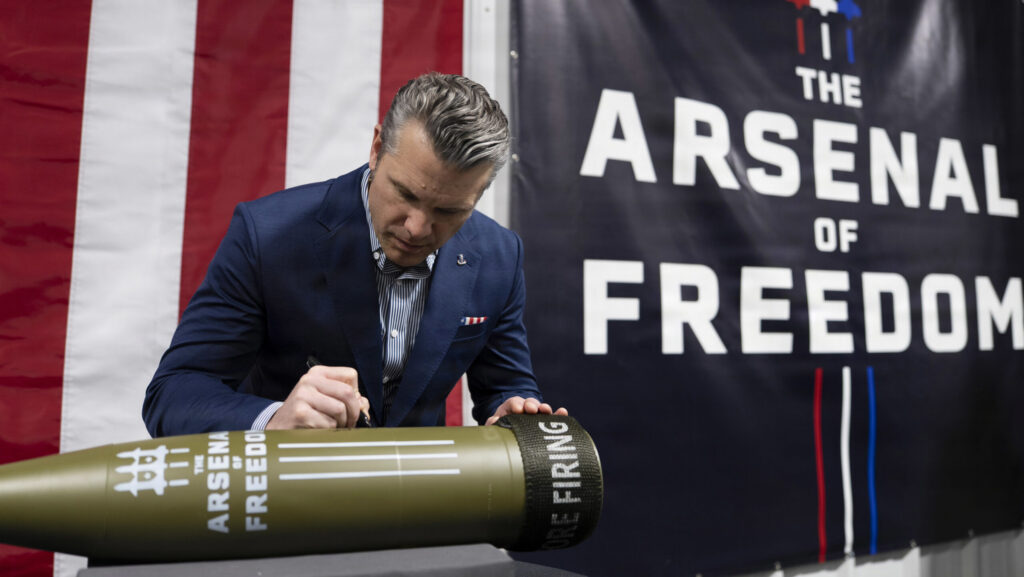
Sec. Pete Hegseth signs a 155 mm howitzer shell during his “Arsenal of Freedom” speaking tour of American defense industry. (DoD photo by US Navy Petty Officer 1st Class Alexander Kubitza)

What will it take for acquisition reform to finally succeed? New org charts aren’t enough: The people in the organization need new incentives.

Since last fall, in a sweeping organizational overhaul, all three military departments have replaced program executive officers with Portfolio Acquisition Executives (PAEs). The Army stood up six, the Navy nine. The Space Force completed its transition in July with nine. The Air Force redesignated all of its program executive officers as PAEs effective July 4.  These new executives have the power to launch sustainable reform that, at long last, shifts defense acquisition from a focus on procedural compliance to one on accomplishing the mission — if and only if they use that power to take two crucial and complementary steps. First, they must provide believable, executable top cover for contracting officers, not just lip service about taking risks. Second, they must refocus performance metrics to measure whether and how quickly acquisition outcomes produce mission results.

Both moves fall within the PAEs’ authority under Section 1802 of the fiscal 2026 National Defense Authorization Act. Modeling of acquisition workforce behavior shows that the two together break a portfolio out of the compliance trap; neither one alone does.

RELATED: Service acquisition leaders: Why this time will be different for defense acquisition

Prior reforms aimed at the acquisition workforce, but none changed the conditions under which it worked. What the PAEs do next will determine whether 30 years of acquisition reform produces yet another wave of promise, then reverts back to the bureaucratic mean, or delivers the change previous waves promised.

The PAE is the first acquisition official made responsible by statute for delivering capability across a portfolio rather than simply for milestone compliance on individual programs.

Compliance culture is not an attitude problem. The acquisition workforce is not timid or indifferent — it is rational. Consider the contracting officers (COs) in any PAE’s portfolio today. The COs aren’t ignorant: They know the Federal Acquisition Regulation (FAR) permits commercial procedures, oral presentations, Other Transaction Agreements (OTAs), and statements of objectives (SOOs) instead of detailed statements of work (SOWs). They know that the Revolutionary FAR Overhaul, triggered by Executive Order 14275, signed in April 2025, has expanded that legal operating space, stripping non-statutory content from most of the FAR. They know the Defense Secretary’s November 2025 directive [PDF] launched the transition to a Warfighting Acquisition System, with speed of capability delivery as the organizing principle.

That’s well and good, but when COs exercise flexible methods and face a protest, an audit, or a congressional inquiry, they are personally exposed. They’re the ones who sign for the government: Their name is literally on the line. When COs follow standard procedures and an acquisition produces a poor outcome, bad career consequences rarely follow. Under those conditions, rational COs default to the safest available procedure — not from cowardice, but from judgment. Compliance remains the smart choice.

Section 1802 alters that calculus. The PAE now holds direct authority over the program managers (PMs) and COs within a portfolio: a group of related programs managed together so resources can shift across them as missions evolve. Section 1802 makes the PAE responsible for capability delivery across that portfolio as a whole, not just for milestone compliance on any single program.  For the first time, the leaders with institutional authority over COs have a mission that requires them to provide real top cover, because the PAE’s own success depends on the outcomes that cover enables.

This is what every past reform lacked. The Federal Acquisition Streamlining Act, the Office of Federal Procurement Policy’s procurement innovation guidance, and the Section 809 Panel each sought to enable better behavior at the CO level. But none altered the chain of authority above the CO to link senior leaders’ performance to portfolio outcomes. Section 1802 does. That is the structural difference.

Of course, top cover and outcome metrics are not new ideas. The reform literature has called for them for decades. What simulating the acquisition system reveals, and previous reform efforts missed, is that the order of deployment determines whether the reforms take off or are absorbed.

Deploy outcome metrics first, and the CO sees a dashboard that measures behaviors the system still punishes. The metrics are accurate. The career risk is unchanged. The CO does not move.

Deploy top cover first, and the CO begins exercising flexible methods, because the risk that mattered most — professional exposure — has been removed. When metrics arrive, they make the resulting outcomes visible. The PAE can see what is working. Resources flow toward what works. The loop closes.

Simulation showed that top cover paired with outcome metrics revolutionized portfolio management, a “phase change” as dramatic as solid ice melting into liquid water. But neither one alone was sufficient to break the hold of compliance culture.

A second simulation finding sharpens the urgency: Building the outcome culture is harder than losing it. It takes roughly twice the institutional commitment to establish the new pattern as to maintain it. Reforms that fail to reach the threshold collapse, and the system reverts, as it has after every previous reform wave. Reforms that cross the threshold stick.

The system is now closer to that threshold than at any point in three decades, but it has not yet crossed it.

The PAE is the binding constraint. The first decision — whether to provide real institutional protection for contracting officers who exercise flexible methods — determines whether everything else can be sustained or is absorbed by the old pattern.

Top cover is not a memo encouraging innovation or a speech about speed. It is a written, public commitment by the PAE, by name, to defend specific contracting decisions made in good faith using specific flexible methods. It specifies which methods the institution will support, from oral presentations to OTA prototype agreements. It commits dedicated legal resources and senior leadership engagement when a flexible-method award is challenged. It assures that a CO acting in good faith, with a documented rationale, will not face career consequences for an imperfect outcome or a sustained protest. And it changes how COs are evaluated.

Documented business judgment replaces procedural perfection as the standard, with mission delivery and procedural compliance carrying equal weight.

Three metrics constitute a viable starting set. First, time-to-mission-effect tracks elapsed time from a validated operational need to capability in the operator’s hands — the full pipeline that traditional metrics like procurement administrative lead time (PALT) cannot capture, since it runs only from solicitation to award. Second, post-award mission satisfaction, a structured assessment conducted by the requiring activity at six and 12 months, links the contract to the operator’s lived experience of how the product actually performs, rather than to technical acceptance alone. Third, competitive yield, the number and quality of offers received, makes visible the firms that did not bid because the solicitation signaled that innovative vendors were unwelcome.

None of this requires new authorities now that the system structure has changed with the creation of PAEs. It requires a decision to measure what matters.

The PAE does not need to push every program through Other Transaction Authority or exotic procurement vehicles. Moving the portfolio’s default requirements format from the detailed SOW to the outcome-focused SOO, paired with credible cover, is sufficient. A CO who can describe what the operator needs rather than which technical solution to pursue, and who is protected when the resulting award attracts a protest, will make the trades that get capability to the warfighter faster.

This is well within Section 1802 authority. All that’s needed to start the journey is the decision, the top-cover document, and the outcome metrics.

The PAE need not transform an entire portfolio at once. Pick one or two programs as pathfinders. Apply maximum cover and flexibility. Measure the results. The first successful pathfinders become seeds visible to the next CO, the next PM, the next portfolio, and the effects propagate.

The authority exists. The regulatory space exists. The leadership signal exists. The statutory foundation exists. The system is closer to the threshold than it has ever been.

The question is whether this generation of acquisition leaders will push it across.

Timothy W. Cooke is president and CEO of ASI Government LLC, which advises federal agencies on acquisition strategy and organizational transformation.
U.S. Attorney’s Office Filed 107 Border-Related Cases This Week

Source: United States Department of Justice Criminal Division

SAN DIEGO – Federal prosecutors in the Southern District of California filed 107 border-related cases this week, including charges of bringing in aliens for financial gain, reentering the U.S. after deportation, and importation of controlled substances. The U.S. Attorney’s Office for the Southern District of California is the fourth-busiest federal district, largely due to a high volume of border-related crimes. This district, encompassing San Diego and Imperial counties, shares a 140-mile border with Mexico. It includes the San Ysidro Port of Entry, the world’s busiest land border crossing, connecting San Diego (America’s eighth largest city) and Tijuana (Mexico’s second largest city).

Former USDA Program Director Sentenced in $400,000 Fraud Scheme

Source: United States Department of Justice Criminal Division

Kirk Perry, 62, a former United States Department of Agriculture (USDA) program director, was sentenced today to 24 months in prison in connection with a kickback scheme in which he and his nephew, Jamarea Grant, 32, of Cleveland, Ohio, conspired to bill the government nearly $400,000 for work that Grant did not actually perform, announced U.S. Attorney Jeanine Ferris Pirro. 

Master of Shadow Fleet Tanker Sentenced in D.C. for Evading U.S. Coast Guard During Weeks-Long Pursuit

Source: United States Department of Justice Criminal Division

Avtandil Kalandadze, 47, the former ship master of a shadow fleet tanker Bella 1 that historically transported Iran- and Venezuela-origin oil for the ultimate benefit of U.S. adversaries, was sentenced today in U.S. District Court to 10 months imprisonment in connection with refusing to obey orders from the U.S. Coast Guard during a multi-week pursuit from the Caribbean Sea through to the North Atlantic Ocean, announced U.S. Attorney Jeanine Ferris Pirro. 

Defense News in Brief: Navy Region Commander, Yokosuka Mayor take an alliance road trip

Source: United States Navy

From Mass Communication Specialist 1st Class Brian G. Reynolds

From July 25 to Aug. 1, 2026, the U.S. Navy provided Mayor of Yokosuka Katsuaki KAMIJI a rare opportunity to see the inner workings of the alliance during a trip to Washington D.C. and Hawaii. He was accompanied by Rear Adm. Ian Johnson, commander, U.S. Naval Forces Japan/Navy Region Japan (CNFJ/RJ) and representatives from Commander, Submarine Group 7 and Commander, U.S. 7th Fleet.


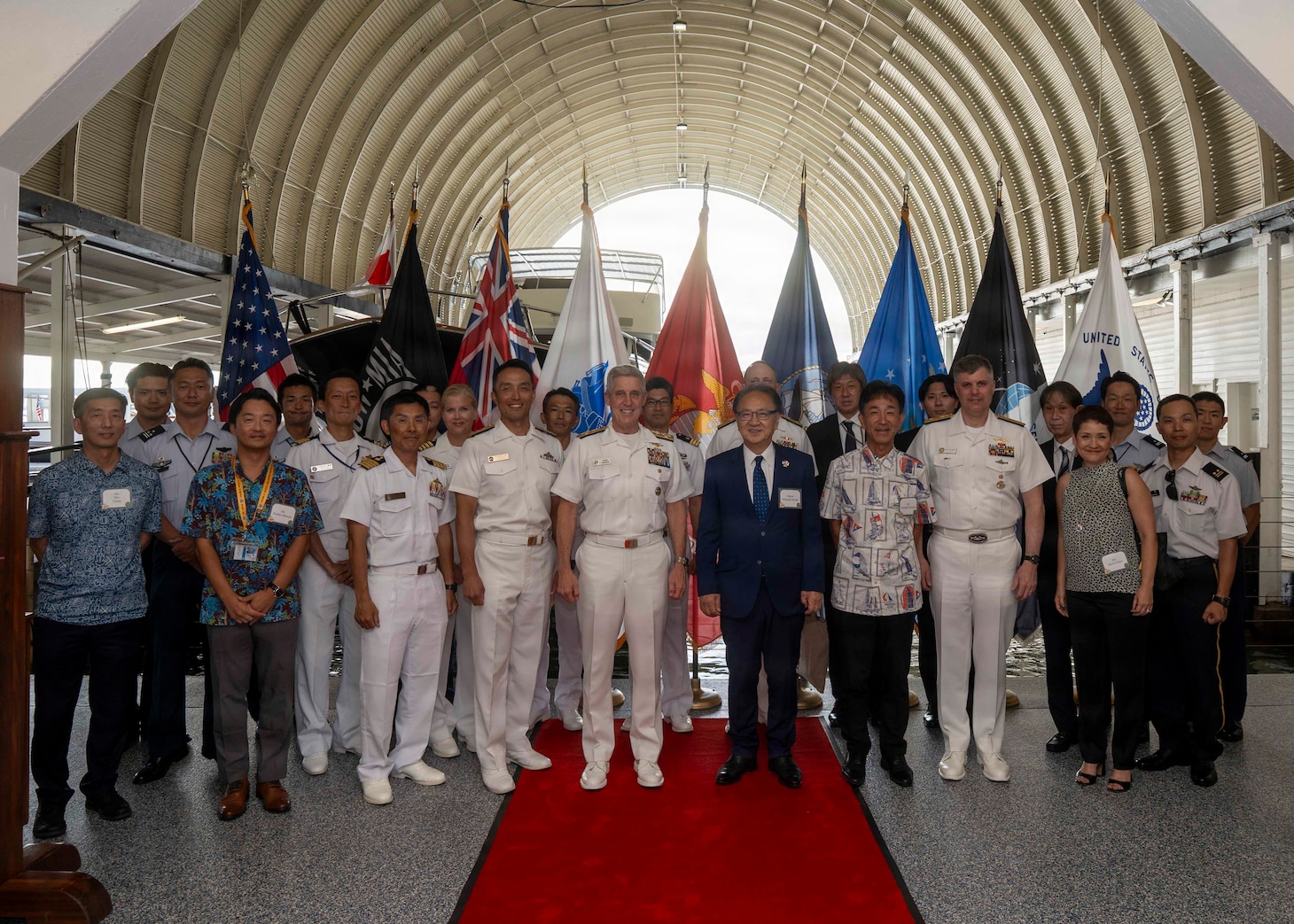
U.S. Navy Adm. Steve Koehler, commander, U.S. Pacific Fleet, center left, Katsuaki Kamiji, mayor of the city of Yokosuka, Japan, center right, members of Koehler’s staff, and sailors from the Japan Maritime Self Defence Force pose for a photo at the PACFLT boathouse on Joint Base Pearl Harbor-Hickam, Hawaii, July 29, 2026.

U.S. Navy Adm. Steve Koehler, commander, U.S. Pacific Fleet, center left, Katsuaki Kamiji, mayor of the city of Yokosuka, Japan, center right, members of Koehler’s staff, and sailors from the Japan Maritime Self Defence Force pose for a photo at the PACFLT boathouse on Joint Base Pearl Harbor-Hickam, Hawaii, July 29, 2026. Mayor Kamiji is visiting U.S. Navy and U.S. government leaders, demonstrating the key role the city of Yokosuka plays in the U.S.-Japan security partnership. PACFLT delivers combat-ready naval forces to defend the homeland and U.S. interests, provide credible deterrence, and strengthen U.S. alliances and partnerships to ensure a secure and prosperous region. (U.S. Navy photo by Mass Communication Specialist 2nd Class Christopher Sypert)


YOKOSUKA, Japan (Aug. 3, 2026) – Some alliances are built in conference rooms. Others are built over generations. The strength of the U.S. – Japan Alliance is often measured in ships, aircraft, and combined operations. Its foundation is built on something less visible: enduring relationships between people, communities, and leaders.

For nearly 80 years the city of Yokosuka has been a foundational building block of the U.S. Navy’s steadfast relationship with the Japan Self-Defense Force and the government of Japan.

From July 25 to Aug. 1, 2026, the U.S. Navy provided Mayor of Yokosuka Katsuaki KAMIJI a rare opportunity to see the inner workings of the alliance during a trip to Washington D.C. and Hawaii. He was accompanied by Rear Adm. Ian Johnson, commander, U.S. Naval Forces Japan/Navy Region Japan (CNFJ/RJ) and representatives from Commander, Submarine Group 7 and Commander, U.S. 7th Fleet.

The visit was focused on the alliance with Japan and relationships with U.S. Navy and U.S. government leaders, demonstrating the key role the city of Yokosuka plays in the U.S.– Japan security relationship. The visit also addressed the continued focus on nuclear safety regarding nuclear-powered warships forward deployed in the area.

“The U.S.– Japan Alliance is strengthened not only through our military cooperation, but through the enduring relationships we share with our host communities,” said Johnson. “Mayor KAMIJI’s visit reflects our mutual commitment to understanding one another, strengthening our partnerships and ensuring that Yokosuka remains a cornerstone of peace, stability and security throughout the Pacific.”

In Washington, D.C., KAMIJI met with Adm. Daryl Caudle, Chief of Naval Operations, and Vice Adm. Scott Gray, commander, Navy Installations Command, to strengthen mutual trust that is imperative to maintaining the alliance between the Navy and the city of Yokosuka.

“Yokosuka is far more than the home of our forward-deployed naval forces – it’s a community whose friendship, generosity, and steadfast support have strengthened the U.S.-Japan alliance for generations. Meeting with Mayor KAMIJI in Washington – and continuing our conversations over dinner – gave us the opportunity to speak candidly, strengthen mutual trust, and deepen

the personal relationship that underpins our institutional partnership,” said Caudle. “Alliances are ultimately built on trust between people, not just agreements between governments. Those enduring relationships help ensure that our navies, our governments, and our communities continue to stand together in preserving peace, stability, and security throughout the Pacific.”

“Everyone I met spoke about the importance of Yokosuka to the U.S.- Japan alliance and expressed their deep appreciation for the city,” said KAMIJI.

Fleet Activities Yokosuka has hosted the U.S. Navy’s sole forward-deployed nuclear aircraft carrier for the past 18 years. That ship is currently Nimitz-class aircraft carrier USS George Washington (CVN 73). Nuclear safety is an ongoing point of relevance, not only for the installation, but for the citizens of Yokosuka.

KAMIJI also met with Adm. William Houston, director, Naval Nuclear Propulsion Program, Adm. Karl Thomas, U.S. Fleet Forces Command, Vice Adm. Richard Seif, commander, Submarine Force/Submarine Force Atlantic Fleet/Allied Submarine Command, and Rear Adm. Daryle Cardone, Director, Operations and Plans (N3) Office of the Chief of Naval Operations. The Mayor also met with the Japanese Ambassador to the U.S., as well as several national security leaders in the Nation’s capital.

“Yokosuka is the only city outside of the United States where a nuclear-powered aircraft carrier is forward-deployed,” said KAMIJI.“I believe the very presence of this nuclear-powered aircraft carrier is a symbol of the Japan – U.S. Alliance. It is important that nuclear-powered aircraft carriers continue to be operated safely and stably.”

Houston agreed, emphasizing that the safety of nuclear propulsion remains the Navy’s highest priority and is fundamental to maintaining the trust of the people of Yokosuka.

“Our unwavering commitment to safety and environmental stewardship is at the heart of our special relationship with the people of Yokosuka,” said Houston. “Our meetings gave us the opportunity to talk about these shared interests and strengthen our long-standing partnership.”

On July 29, the group departed Washington and arrived at Pearl Harbor, home of the U.S. Pacific Command. While in Hawaii, the group visited with Adm. Stephen Koehler, commander, U.S. Pacific Fleet, Rear Adm. Erik Eslich, Director for Operations (J3) U.S. Pacific Command, and the Consulate General of Japan in Honolulu, as well as Submarine Force U.S. Pacific Fleet. The group also participated in a wreath-laying event at USS Arizona Memorial at the Pearl Harbor National Memorial.

“Standing at Pearl Harbor is a reminder of how far our two nations have come,” said Johnson. “What was once a place marked by conflict now stands as a symbol of one of the world’s strongest alliances. That transformation is possible because generations of Americans and Japanese have chosen partnership over division, and it is our responsibility to continue building that legacy.”

As the delegation returned to Yokosuka, the visit served as more than a series of official engagements. It reaffirmed the enduring partnership between the United States and Japan – one built through decades of trust, shared values and a mutual commitment to peace and security in the Pacific. For the people of Yokosuka, the journey offered a deeper understanding of the relationships that continue to strengthen one of the world’s most enduring alliances.

CNFJ/RJ’s primary responsibility is to provide shore readiness to the fleet; to liaison with the Japanese government; and to strengthen ties with the Japan Maritime Self-Defense Force. CNRJ is responsible for the Navy installations at Atsugi, Misawa, Okinawa, Sasebo, Yokosuka in Japan, and support activities in Diego Garcia, Singapore, and Australia.